
Table of Contents
Introduction
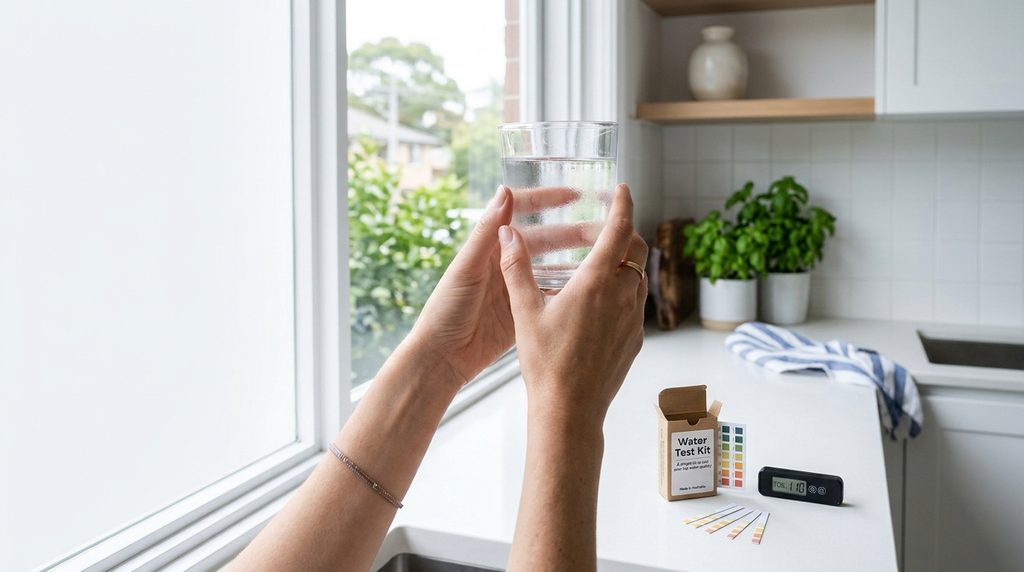
Your tap water may look clear, smell normal, and taste fine, but these signs don’t guarantee it is free of harmful contaminants. Certain bacteria, dissolved metals, and chemicals cannot be detected without appropriate testing.
Understanding how to test your household water quality can reveal important information about what you are drinking and whether further investigation is needed. In Australia, the best testing method depends on your water source, your plumbing condition, and the specific contamination concerns for your property.
Why Testing Your Household Water Matters More Than You Think
Water quality is influenced by the surrounding environment, plumbing condition, and the quality of the water source itself. Testing helps identify potential hazards instead of relying on appearance or assumptions.
Clear Water Does Not Always Mean Safe Water
Water can carry bacteria, pesticides, dissolved metals, and other contaminants without any visible indication. E. coli contamination, for example, does not affect the color, taste, or smell of water.
This is especially important for properties that rely on rainwater tanks or private bore water, where animal waste or agricultural runoff could enter the system. Visual inspection may help identify obvious issues, but it cannot verify drinking water safety.
Hidden Contaminants Can Affect Health Over Time
Some waterborne microorganisms can cause illness relatively quickly, while certain chemicals or metals can cause more serious health effects with prolonged exposure. The risk depends on the contaminant type, its concentration, and the duration of exposure.
Testing helps you identify specific problems before choosing a treatment solution. Infants, older people, and people with weakened immune systems may be more vulnerable to certain contaminants, so taking appropriate precautions matters.
Water Quality Can Change as It Travels Through Your Household Plumbing
Even when mains water is properly treated and monitored, your property’s internal plumbing can affect its quality. Some older plumbing materials can introduce metals into drinking water, and water that sits in pipes during periods of inactivity can change quality before it reaches the tap.
If you suspect a plumbing-related issue, testing water from a specific tap within the property provides more relevant information than reviewing a general supply report from your water authority alone.
What Should You Test for in Household Water?
No single test covers every possible contaminant. The most appropriate approach depends on your water source, local conditions, and the specific concern you want to investigate.
Bacteria and Other Microbial Contaminants
Microbiological testing can indicate contamination risks from sewage, animal waste, or other environmental sources. E. coli is a key indicator of fecal contamination and may signal the presence of disease-causing microorganisms.
Testing is especially important for private borewater or rainwater tanks after flooding, heavy rainfall, or any interference with the water storage system.
Heavy Metals: Lead and Arsenic
Lead, arsenic, and similar metals can enter water through natural geological conditions, environmental pollution, and plumbing materials. You can’t detect them by appearance or taste, so you need laboratory testing.
Lead is most commonly a concern in older plumbing systems, while arsenic can occur in some groundwater sources. Testing should be based on the actual risk factors relevant to your specific property rather than general assumptions.
pH, Hardness, and Total Dissolved Solids (TDS)
These basic measurements help in understanding water properties, taste, and how the water interacts with pipes and appliances.
pH: Indicates the acidity or alkalinity of water and affects corrosion behavior and treatment performance.
Water hardness: Reflects the concentration of dissolved calcium and magnesium and can contribute to limescale deposits in pipes and appliances.
Total dissolved solids (TDS): Indicates the overall concentration of dissolved substances in water. A TDS reading does not identify which specific substances are present, only that a certain total amount exists.
Turbidity: Measures water clarity based on suspended particles. Changes in turbidity can indicate shifts in water quality over time.
Chloramine: Some Australian water authorities use chloramine as a secondary disinfectant. To confirm its presence or concentration, check with your laboratory whether chloramine testing is available; standard home test strips may not provide a complete assessment.
PFAS: Per- and polyfluoroalkyl substances are persistent synthetic chemicals that can enter water from certain environmental sources. Standard home testing kits do not test for PFAS, so specialised laboratory analysis is required when contamination is a concern.
Fluoride: Fluoride levels vary by water source and local treatment practices. If you need to confirm fluoride concentration, request a specific fluoride test rather than assuming it is included in a standard water quality report.
While these measurements provide useful information, none individually confirms that water is completely safe. A combination of targeted tests based on your specific situation provides the most useful picture.
How to Test Water Quality at Home: Practical First Steps
Home testing provides useful initial information about general water properties, but the appropriate method depends on your specific concerns.
Start by Assessing Your Water Source
Identify whether your water comes from the mains supply, a rainwater tank, bore water, or another source. Then assess potential contamination points such as cracked pipes, open water tanks, dirty gutters, or proximity to sewage infrastructure.
For private water supplies, agricultural activity and runoff near the source may also be relevant factors to consider.
Use Water Test Strips for Basic Measurements
Water test strips provide readings for basic parameters such as pH, hardness, and chlorine, depending on the strip type. Dip the strip in a water sample and compare the color to the manufacturer’s chart.
Follow the manufacturer’s timing instructions carefully, as reading the result at the correct interval affects accuracy. Performance varies considerably between products, and test strips cannot replace laboratory testing for complex or health-critical contamination concerns.
Understand the Limitations of Digital Water Testers
Digital testers measure specific parameters such as pH, electrical conductivity, or TDS depending on the device. They are convenient for monitoring trends over time, but each instrument provides only a specific set of measurements.
A TDS meter, for example, estimates total dissolved solids through electrical conductivity. It cannot identify which specific substances are present or detect bacterial contamination. If you have a health-related concern, ensure you select the tests that are designed to detect the specific contaminant you are investigating.
Australian Tap Water vs Private Water Supplies: Why the Difference Matters
Your water source significantly affects what you should test for and how often.
Main Water Supply
Australian water authorities regularly monitor public water supplies against the Australian Drinking Water Guidelines. Many authorities publish water quality reports covering their supply areas.
Start by reviewing the information available from your water supplier and any local notices that may affect water quality. However, general supply reports do not necessarily reflect conditions within your individual property. If you notice a significant change in your water’s color, odor, or taste, contact your supplier or consult a licensed specialist rather than assuming a home filter will fix it.
Rainwater Tanks and Bore Water Need Particular Attention
Private water supply owners are generally responsible for maintaining the safety of their water source and storage systems.
Rainwater can collect dust, leaves, and animal waste from roofs and gutters. Bore water may contain naturally occurring minerals or other substances depending on local geology and surrounding land use. Surface water from dams or rivers can be affected by microorganisms or agricultural runoff.
Testing frequency depends on your water source, local contamination risks, and any changes in quality you observe. Households relying on rainwater tanks or private bore water should follow relevant local guidance and establish a regular testing schedule. Consider additional testing after flooding, heavy rainfall, plumbing changes, or suspected contamination events.
For mains water, review your supplier’s water quality reports and consider property-specific testing if you have concerns. The Australian Drinking Water Guidelines emphasize protecting water sources and managing risk through preventive measures. If contamination is suspected, use a safe alternative for drinking and food preparation while arranging proper testing and investigation.
When Should You Get Your Water Professionally Tested?
Home test kits provide useful initial information, but proper laboratory analysis is essential in certain situations, particularly if you rely on a private water supply or have specific contaminant concerns.
After Flooding, Heavy Rainfall, or Plumbing Changes
Flooding can contaminate wells, tanks, and water storage systems with sewage, animal waste, chemicals, and debris. If your water supply has been exposed to floodwater, do not use it for drinking or cooking until you have received expert guidance.
Professional testing is also recommended after installing a new water treatment system, making plumbing modifications, or noticing any observable change in water quality. The tests required will depend on the nature of the concern, so confirm the appropriate parameters with the laboratory before proceeding.
How to Get Accurate Results from a Water Testing Laboratory
Laboratory analysis can detect contaminants that basic home kits cannot. In Australia, look for a laboratory accredited by the National Association of Testing Authorities (NATA) and confirm that it is accredited for the specific tests you need.
Select the tests that match your water source and concern. When requesting tests, specify your water source (rainwater tank, private bore, or mains supply) and discuss with the laboratory which parameters are appropriate for your situation. A targeted testing approach based on your water source and local conditions is more useful and cost-effective than requesting every available test.
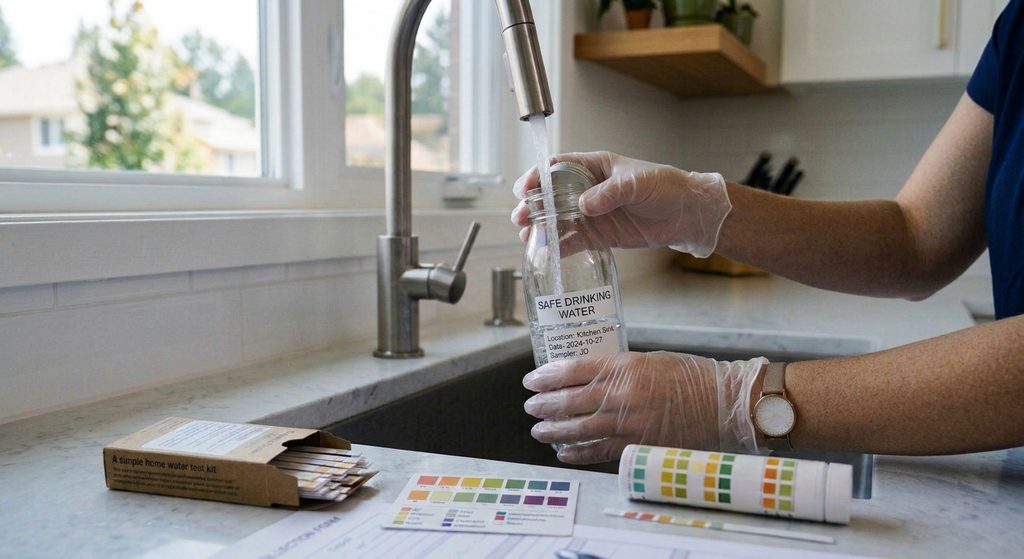
Follow accurate sample collection and transport procedures. Even accurate laboratory analysis can be compromised by incorrect sample collection. Always follow the laboratory’s collection protocols and use the containers they specify. Some samples require sterile bottles, specific collection methods, temperature-controlled transport, or time-sensitive delivery. If in doubt, contact the laboratory before collecting the sample.
How Much Does Water Quality Testing Cost in Australia?
The cost of water quality testing in Australia depends on the type and number of contaminants being tested, the laboratory, and sample collection requirements. Basic testing packages are generally cheaper than comprehensive chemical analyses, while specialised tests for contaminants such as PFAS can cost considerably more.
Before booking a test, request a quote and confirm exactly which parameters are included. This lets you compare services and avoid paying for tests that aren’t relevant to your water source or concerns.
How to Understand Your Water Quality Test Results
Receiving a laboratory report is only the first step. Understanding what the figures mean and whether any result warrants further action is equally important.
Comparing Results Against Australian Drinking Water Guidelines
The Australian Drinking Water Guidelines, developed by the National Health and Medical Research Council (NHMRC), provide a research-based framework for assessing drinking water quality. They cover microbiological, chemical, and physical parameters.
Compare your results against the relevant guideline values, and confirm that you are using the same units of measurement. For example, mg/L and µg/L represent different concentrations, and confusing the two can lead to significant misunderstanding of results.
The guidelines are not legally binding standards in every state and territory. If a result exceeds a health-related guideline value, consult the laboratory or a relevant health authority for appropriate guidance rather than interpreting the result independently.
Knowing When a Result Needs Immediate Attention
An unexpected result does not automatically mean your water is unsafe, but it should not be ignored. A result’s significance depends on the contaminant type, the measured concentration, the conditions under which the sample was collected, and the intended use of the water.
If results indicate potential contamination, follow the laboratory’s or health authority’s advice. Boiling can address some microbiological risks but will not remove heavy metals or most chemical contaminants.
What Should You Do If Your Water Test Reveals Contamination?
The appropriate response depends on what the test identifies. Choosing a treatment system without fully understanding the contaminant can waste money while leaving the problem unresolved.
Microbial contamination: Identify the source and seek an appropriate disinfection solution. Depending on the water supply type, you may need tank maintenance or water treatment.
Heavy metals or chemical contamination: Seek advice on appropriate treatment options or an alternative drinking water source. Boiling is not an effective way to remove these contaminants.
Hardness or sediment: Water softeners, sediment filters, or other methods may help depending on the cause and severity.
Inconclusive results: Consult the laboratory about the report, and consider retesting if you have concerns about sample-collection accuracy or if the results seem inconsistent.
Free Water Testing Service from Demand Filtration
Demand Filtration offers a free water testing service to help households better understand their water quality. This can be a useful starting point for identifying potential concerns and deciding whether further investigation is needed.
Before relying on the results, confirm which water quality parameters the free service includes and whether specialised laboratory analysis is needed for contaminants such as PFAS, lead, chloramine, or fluoride. Understanding the scope of the service helps you make more informed decisions about any additional testing or water treatment your household may require.
Conclusion: Make Water Testing Part of Your Household Safety Routine
Knowing how to test your household water quality is an important step in identifying potential risks before they become a health concern. By understanding your water source, identifying possible contamination points, and choosing the right tests, you can make informed decisions about the water your household uses every day.
In Australia, a combination of regular home monitoring and periodic laboratory testing, particularly for private water supplies, is the most practical way to stay informed about your water quality over time.