_edited_9.png)
Table of Contents
Introduction

Your skin encounters water every single day, which makes water quality a more important factor in skin health than most people realize. For those living with eczema, exposure to chlorine, hard water minerals, and other impurities during bathing and washing can contribute to dryness and irritation. While a water filter is not a medical treatment for eczema, improving the quality of the water your skin comes into contact with daily can support a more comfortable bathing experience. This guide covers how water quality affects sensitive skin and how to choose the right filtration system for your household.
Understanding Eczema and Why Sensitive Skin Needs Extra Care
Eczema, also known as atopic dermatitis, is a common skin condition that affects people of all ages across Australia. It damages the skin’s protective barrier, increasing vulnerability to irritation, dryness, allergens, and a range of external triggers. When the barrier is compromised, the skin loses moisture more easily, leading to persistent dryness, itching, and inflammation.
For many Australians, eczema flare-ups are triggered by a combination of factors working together. These can include weather changes, pollen, cleaning products, dust mites, soaps, stress, and the composition of household water. For this reason, dermatologists often recommend reducing exposure to known irritants wherever possible.
Adding a water filter is a practical step many consider to reduce environmental irritants. Choosing the right system depends on your household’s specific water issues, making it a manageable way to support sensitive skin and eczema management.
How Household Water Can Affect Sensitive Skin
Australian tap water is treated to meet safety standards, but compounds like chlorine and minerals in hard water can cause dryness and irritation for sensitive skin.
Chlorine, for example, is routinely added to municipal water supplies to kill bacteria and keep the water safe as it travels through the distribution network. While this is essential for public health, chlorine can strip the skin’s natural oils during repeated washing and bathing.
Some Australian water authorities also use chloramine, a compound formed by combining chlorine and ammonia, as a secondary disinfectant. Like chlorine, it is considered safe under the Australian Drinking Water Guidelines, but some people with highly sensitive skin report that prolonged exposure to chloraminated water may contribute to dryness or irritation.
Other aspects of household water that can affect sensitive skin include:
- Chlorine residue: Can contribute to dry skin with repeated bathing exposure
- Hard water minerals: Calcium and magnesium can make it difficult to rinse soap completely from the skin
- Sediment and particles: Aging plumbing in older homes can introduce fine particles that affect water clarity and quality
- Seasonal water changes: Treatment methods and source water conditions can vary across seasons, causing minor changes in water composition
Different households experience different water issues, which is why many Australian homeowners consider a water filter as part of their approach to managing sensitive skin conditions.
The Link Between Chlorine, Hard Water, and Eczema
Chlorine and hard water are the two water quality factors most frequently discussed in relation to eczema and sensitive skin. Neither necessarily causes eczema, but both can affect the comfort of people who already have the condition.
Chlorine and Skin Comfort
Chlorine plays an essential role in keeping Australia’s drinking water safe from harmful bacteria. However, it can remove some of the skin’s natural protective oils during bathing, which may worsen dryness for people with eczema. A shower filter or whole-house carbon filtration system designed to reduce chlorine can contribute to a more comfortable bathing experience for those who notice a difference.
Chloramine and Sensitive Skin
Standard activated carbon filters may not effectively reduce chloramine, but catalytic carbon filtration is designed to address it, helping those in areas where chloramine is used.
Hard Water and Skin Irritation
Hard water contains elevated concentrations of calcium and magnesium minerals. While these are harmless to consume, research has explored whether regular exposure to hard water may contribute to skin barrier disruption in individuals with eczema. The EAT (Enquiring About Tolerance) Study conducted in the United Kingdom found that children in hard water areas were more likely to develop eczema than those in softer water regions, suggesting that mineral content may play a role in skin barrier function for some individuals.
Hard water also reduces the effectiveness of soaps and cleansers, making it more difficult to rinse products away completely during bathing. In households where hard water is identified as the primary concern, a water softener is often the most targeted solution, as it is specifically designed to reduce hardness minerals before water reaches taps and showers.
Can a Water Filter Really Help with Eczema?
This is one of the most common questions homeowners ask before investing in a filtration system.
A water filter should not be considered a cure for eczema. Eczema is a medical condition influenced by a combination of genetic, immune, allergic, and environmental factors that no filtration system can address. Managing eczema effectively requires guidance from a dermatologist or GP.
That said, improving the quality of water your skin is exposed to daily can help reduce one category of environmental irritant. Many homeowners report that bathing with filtered water feels more comfortable, particularly with reduced dryness and a less noticeable chlorine smell after showering.
Potential benefits that some users experience include:
- Softer-feeling skin after showers
- Reduced chlorine smell during and after bathing
- Less noticeable dryness following bathing
- More comfortable daily washing routines
- Better support for moisturizing skincare products applied after bathing
Individual results will vary depending on local water quality, skin sensitivity, and the type of filtration system installed. Water filtration works best as one component of a broader eczema management approach that includes medical advice, appropriate skincare products, and lifestyle adjustments.
Scientific Research on Water Quality and Eczema
Research interest in the relationship between water quality and eczema has grown considerably over the past decade.
The EAT (Enquiring About Tolerance) Study in the United Kingdom found that children living in hard water areas had a higher likelihood of developing eczema compared to those in softer water regions. Researchers proposed that higher mineral concentrations may affect the integrity of the skin barrier, increasing susceptibility to irritation.
Separate dermatology research has indicated that chlorine can remove natural skin oils that support the skin’s barrier function, contributing to dryness after bathing. While individual responses vary, these findings help explain why many people with sensitive skin report improvement after switching to filtered water for bathing.
It is important to note that research in this area is ongoing and that current evidence supports water quality as a contributing environmental factor, not as a primary cause or a treatable driver of eczema. Any filtration system should be considered a supportive measure alongside medical Treatment, not an alternative to it.
How Australian Water Quality Can Influence Sensitive Skin
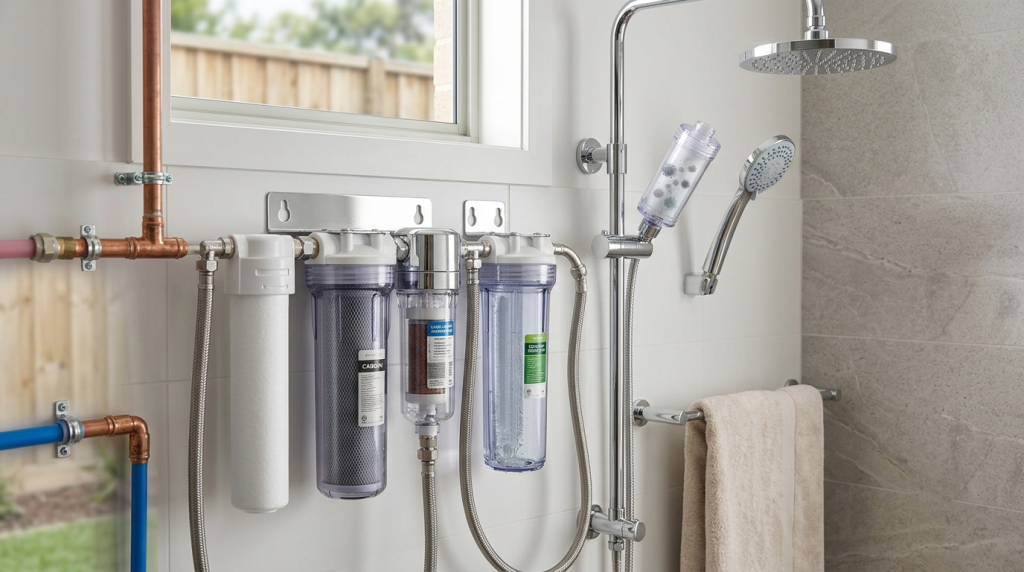
Australia has some of the highest-quality drinking water in the world, but what comes out of the tap varies considerably depending on location.
Melbourne’s water is sourced from protected mountain catchments. It is generally considered soft and low in minerals, making chlorine the primary water quality concern for most Melbourne households with sensitive skin. Sydney’s water supply is similarly soft.
Perth and Adelaide present a different picture. Perth’s water has some of the highest mineral content in Australia, with hardness levels frequently exceeding 200 mg/L in suburban areas. For Perth households with eczema, hard water is likely to be a more significant factor than chlorine alone. Adelaide’s Murray River sourcing can produce a stronger chlorine taste, particularly in summer months when treatment levels are adjusted.
Regional Victoria, Queensland, and the Northern Territory can present additional challenges, including higher sediment levels, seasonal quality variation, and in some cases bore water with elevated mineral content. For households in these areas, a water quality test before selecting a filtration system is strongly recommended.
Different Types of Water Filters for Eczema
Different filtration systems address different water quality issues. Choosing the right one depends on where the water concern occurs in the home and what specifically affects your skin.
Shower Filters
Shower filters are installed directly on the shower arm and treat water at the point where it contacts the skin during bathing. They are generally the most accessible and affordable starting point for households where skin irritation is primarily associated with showering. Most shower filters use activated carbon or KDF media to reduce chlorine and some other compounds. While they treat only one outlet, they can make a noticeable difference for individuals whose skin reacts specifically after bathing.
Whole House Water Filtration Systems
Whole-house systems treat water at the point of entry into the property, meaning every tap, shower, bath, and appliance receives filtered water. This is the most comprehensive option for families who want consistent water quality throughout the home. For households where eczema is affected by both bathing and washing, including hand washing, laundry, and dishwashing, whole-house filtration addresses all of these simultaneously. It is often considered the most effective long-term solution for sensitive skin management from a water quality perspective.
Under-Sink Water Filters
Under-sink systems filter water at the kitchen tap, improving the quality of drinking and cooking water. These systems do not treat shower or bath water and are therefore a secondary rather than primary solution for eczema related to bathing. They are a useful addition to a whole-house system for households that also want enhanced drinking water quality.
Reverse Osmosis Systems
Reverse osmosis systems use membrane filtration to remove a very broad range of dissolved contaminants from drinking water, producing high-purity water at the kitchen tap. While they deliver excellent drinking water quality, they do not improve shower or bath water quality unless integrated with a whole-house system. The choice between reverse osmosis and other filtration types depends on whether the primary goal is improving drinking water, bathing water, or both.
Water Softeners
For households where hard water is confirmed as the primary concern, particularly in Perth, Adelaide, and many regional areas, a water softener is the most targeted solution. Softeners specifically address calcium and magnesium minerals, reducing scale buildup and making soaps and cleansers easier to rinse away. Softeners are often installed alongside carbon filtration for a more complete treatment approach.
Key Features to Look for When Choosing a Water Filter for Eczema
Not all filtration products deliver the same performance. When selecting a system, focus on features that genuinely improve water quality and ensure reliable long-term operation.
Important factors to consider include:
- Effective chlorine and chloramine reduction technology
- High-quality filtration media suited to your local water conditions
- NSF/ANSI certified components where applicable, particularly NSF/ANSI 42 for chlorine reduction and NSF/ANSI 53 for health-related contaminants
- Suitable flow rate for household usage without pressure loss
- Straightforward filter replacement and maintenance process
- Reliable warranty and manufacturer support
- Professional installation options for larger systems
A quality water filter should provide consistent, long-term performance. Investing in a reliable, certified system generally delivers significantly better value than choosing the cheapest option available, which may require more frequent cartridge replacement and deliver inconsistent results.
Daily Habits That Can Help Alongside a Water Filter
A water filter is one component of a broader skin care approach, not a standalone solution. Combining filtration with healthy daily habits consistently produces better outcomes for sensitive skin than either approach alone.
Practical habits to consider alongside water filtration:
- Shower with lukewarm rather than hot water; heat strips the skin of natural oils more aggressively
- Moisturize immediately after bathing while the skin is still slightly damp
- Use fragrance-free, sensitive-skin-formulated cleansers and soaps
- Choose clothing made from natural fibers such as cotton
- Use fragrance-free laundry detergents and rinse clothing thoroughly
- Stay well hydrated to support skin moisture from the inside
- Follow the skincare routine prescribed by your dermatologist or GP consistently
Common Mistakes People Make When Choosing a Water Filter for Eczema
Many homeowners purchase a filtration system without a clear understanding of how it works or what it addresses, leading to disappointment or the wrong system for their needs.
- Buying based on price alone
A low-cost filter may allow more impurities through or require very frequent cartridge replacement, delivering inconsistent results. Long-term performance and running costs are more important than the upfront purchase price.
- Assuming all filters work the same way
Activated carbon, catalytic carbon, reverse osmosis, sediment filters, shower filters, and whole-house systems all target different contaminants and treat water at different points. Selecting the right technology for your specific concern matters more than simply buying any filter.
- Neglecting maintenance
Even a high-quality water filter will gradually lose its effectiveness if cartridges are not replaced according to the manufacturer’s schedule. Delayed maintenance is one of the most common reasons homeowners are disappointed with filtration results over time.
- Choosing the wrong system for the water use that matters
If eczema flare-ups occur primarily after showering, installing only an under-sink drinking water filter will not address the issue. Understanding which water contacts your skin most frequently is essential for selecting the right solution.
How to Choose the Right Water Filter for Your Home
Every household has different water quality conditions and skincare priorities. Before selecting a system, consider the following:
- Which areas of the home require filtered water: shower, kitchen tap, or whole house?
- Is chlorine, chloramine, hard water, or sediment the primary concern?
- What is the household size and daily water usage?
- Where will the system be installed, and is professional installation required?
- What are the ongoing cartridge replacement costs?
- Has the system been independently certified to NSF/ANSI standards?
- Is local supplier support and warranty service available?
If you are unsure about your local water quality, requesting your water authority’s annual water quality report or arranging an independent water test through a NATA-accredited laboratory provides a reliable starting point before making a purchase decision.
Why Professional Installation Can Be Worth Considering
While some smaller filtration systems are designed for straightforward DIY installation, larger systems, including whole-house filters, water softeners, and reverse osmosis units, benefit significantly from professional installation.
Professional installers ensure that:
- The system is correctly connected to household plumbing supply lines
- Water pressure is balanced throughout the property after installation
- The risk of leaks or incorrect fittings is minimized
- The maintenance schedule and cartridge replacement process is clearly explained
- Warranty conditions are met, which often require licensed plumber installation under Australian plumbing regulations
For whole-house filtration systems in particular, professional installation reduces the likelihood of performance issues and gives homeowners confidence that the system will operate reliably for years.
Frequently Asked Questions
Will a water filter cure my eczema?
No. Eczema is a complex medical condition influenced by genetic, immune, and environmental factors that a water filter cannot address. A filtration system may help reduce one category of environmental irritant: the composition of the water your skin is exposed to during bathing. Still, it should always be used alongside, not instead of, medical advice and a prescribed skincare routine.
Which type of water filter is best for eczema?
This depends on your local water quality and where skin irritation occurs. If the primary concern is shower water, a shower filter or whole-house carbon filtration system targeting chlorine is the most direct solution. If hard water is the main issue, particularly in Perth or Adelaide, a water softener addresses the root cause more effectively than a carbon filter alone.
Does hard water cause eczema?
Research, including the EAT Study in the United Kingdom, suggests that children in hard water areas have a higher likelihood of developing eczema. However, hard water is considered a contributing environmental factor rather than a definitive cause. For people who already have eczema, hard water may worsen symptoms by disrupting the skin barrier and making soaps harder to rinse away.
My water authority uses chloramine. Will a standard carbon filter help?
Standard activated carbon filters are effective at reducing free chlorine but are less effective against chloramine. If your water authority uses chloramine, look specifically for a filtration system using catalytic carbon media, which is designed to address chloramine more effectively. Your local water authority’s annual water quality report will confirm which disinfectant is used in your area.
Conclusion
Choosing a water filter for eczema is not about treating the condition, it is about reducing one category of environmental irritant that your skin encounters every day. Understanding your local water quality, identifying which aspects of household water most affect your skin, and selecting the right filtration system for those specific conditions can significantly improve your daily bathing experience.
Combined with a consistent medical skincare routine, appropriate moisturizing, and other sensible lifestyle habits, cleaner household water can serve as a practical and supportive element of long-term sensitive skin management.