_edited_9.png)
Table of Contents
Introduction
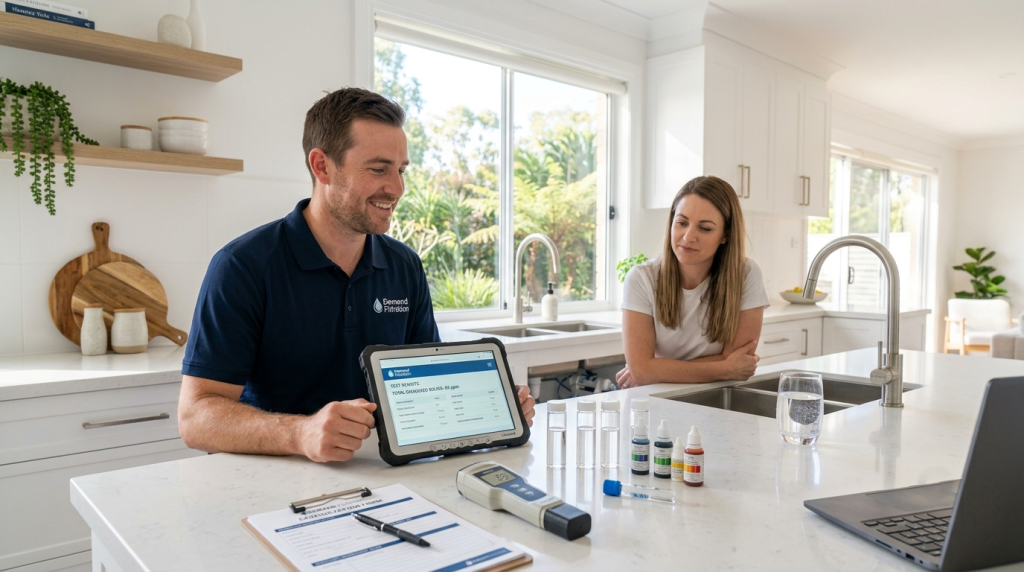
To choose the right water filtration system for your home, you first need to understand what is actually in your water. A professional water filtration consultation is the most important first step before any system is installed. Testing your water allows you to identify specific water quality issues, understand your household’s needs, and determine which filtration solution is best suited to your property. Demand Filtration conducts these consultations to give clients recommendations based on actual water data rather than assumptions or general advice.
Why a Water Filtration Consultation Should Always Come First
Before purchasing a water filter, many homeowners decide without knowing what contaminants are present in their water. While this is understandable, it can lead to selecting a system that is either too basic to address real concerns or more complex and expensive than the situation requires.
A professional water filtration consultation addresses this by assessing the water source, discussing the household’s specific water quality concerns, and identifying the most appropriate treatment options before any purchase is made.
Every household has different requirements. One home may primarily want chlorine taste and odor removed from drinking water, while another may need protection from sediment, hard water minerals, or emerging contaminants like PFAS. Without testing, there is no reliable way to know which solution will actually solve the problem.
Consultations also help avoid unnecessary costs. Filtration recommendations made after a proper water test are based on what your water actually contains, not on generalized advice that may or may not apply to your property.
What Homeowners Can Expect Before the Water Test Begins
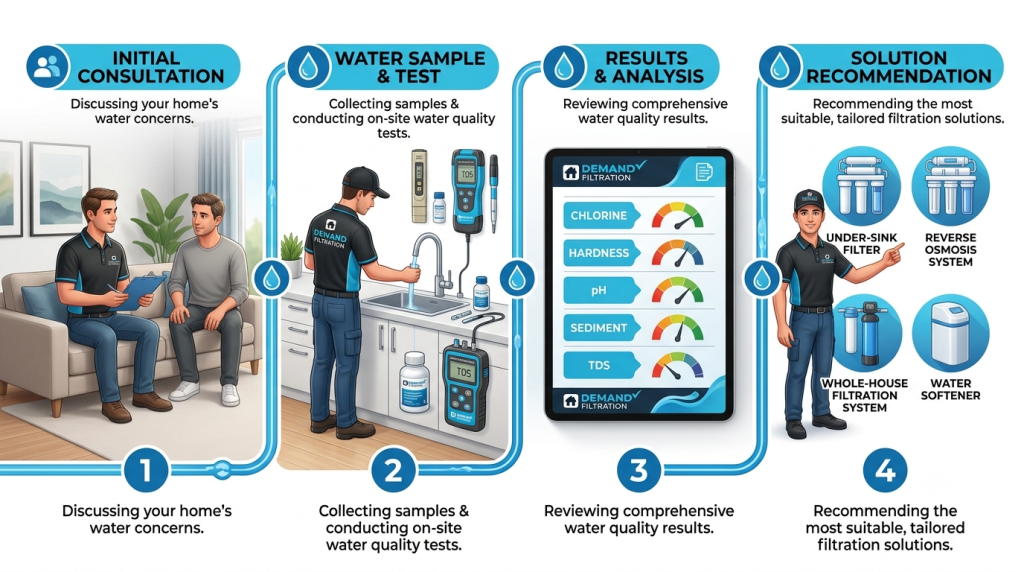
Every consultation begins with a conversation about the property and the homeowner’s concerns before any testing equipment is introduced.
To gain a clear picture of the situation, the specialist will typically ask the following:
- Do you notice any chlorine smell or taste in your water?
- Has your water pressure changed recently?
- Are there stains on your fixtures or surfaces?
- Do appliances have visible mineral deposits?
- Are there specific concerns about drinking water safety?
These questions provide important context about how water is being used in the home and what issues may already be affecting daily life.
Demand Filtration uses this initial conversation to understand not only the water’s characteristics but also the homeowner’s expectations for a filtration solution. This step matters because two households with similar water test results can still have very different filtration needs depending on their usage, household size, and priorities.
Understanding the Property’s Water Source
Knowing where a property’s water comes from is a fundamental part of any water filtration consultation. In Australia, residential water sources include the following:
- City municipal water systems
- Rainwater tank systems
- Rural bore water or groundwater
- Dam or river water (in some regional properties)
- Mixed or blended water sources
Each source presents its own treatment challenges. Melbourne homeowners connected to the municipal supply are most commonly concerned with chlorine taste and odor, while a family on a rural property using tank water may need to address sediment, bacteria, or organic matter. The water source directly influences which filtration technologies are most appropriate and which contaminants need to be prioritized.
What Is Actually Tested During a Home Water Test?
Homeowners are often surprised to learn that a professional water assessment involves far more than a visual inspection of the water. Depending on the property and the homeowner’s concerns, a range of water quality parameters may be assessed.
Chlorine and Chloramine Levels
Chlorine is widely used to disinfect municipal water supplies. While it is effective for public health purposes, it produces an unpleasant taste and odor that many households notice. Some Australian water authorities also use chloramine as a secondary disinfectant, a more stable compound that requires specific filtration media, such as catalytic carbon, for effective reduction.
Sediment and Particles
Fine particles can enter household water through aging infrastructure, old internal pipes, or changes in distribution pressure. Testing for sediment helps determine whether a pre-filter is needed to protect downstream filtration components.
Water Hardness
Water hardness refers to the concentration of dissolved calcium and magnesium minerals. High hardness levels cause scale buildup on taps, shower screens, appliances, and hot water systems, a common concern in Perth, Adelaide, and many regional areas across Australia.
pH Balance
Excessively acidic water or alkaline water can affect plumbing, accelerate pipe corrosion, and alter the taste of drinking water. pH testing provides useful context alongside other water quality parameters.
General Water Quality Indicators
Depending on the property’s location and water source, additional parameters may be assessed, including turbidity, total dissolved solids (TDS), and in some cases bacterial indicators or PFAS screening for properties in known contamination areas.
How Water Test Results Are Explained to Homeowners
Collecting water quality data is only part of the process. A quality consultation also ensures the homeowner understands what the results mean in practical terms.
Water quality reports are often written in technical language that can be difficult to interpret without specialist knowledge. A good consultant translates these findings into plain language and connects them to real-life issues the homeowner has already noticed or may encounter.
For example, elevated chlorine levels explain an unpleasant taste or smell in drinking water. High hardness readings explain scale deposits on showerheads, kettles, and glass surfaces. Sediment readings explain cloudy water or blocked aerators on taps. By focusing on the practical implications of each result rather than overwhelming homeowners with technical data, Demand Filtration helps clients make confident, informed decisions about their filtration options.
Common Water Quality Issues Found During Home Water Tests
While every property is different, several water quality issues recur in home water filtration consultations across Australia.
Chlorine Taste and Smell
Chlorine is the most commonly reported water quality concern in metropolitan areas. Its disinfection role is essential, but the residual taste and odor it leaves in drinking water is the primary reason most Australian households first consider installing a water filter.
Hard Water Minerals
Calcium and magnesium buildup affects appliance efficiency, shortens the lifespan of washing machines and dishwashers, and creates ongoing cleaning demands on bathroom and kitchen surfaces. This is particularly prevalent in Perth, Adelaide, and regional Queensland and Victoria.
Sediment and Small Particles
Households in older properties, particularly those with pre-1970 plumbing in inner-Melbourne suburbs, frequently find sediment in the tap water. Even when the water is technically safe, visible particles affect its appearance and perceived quality.
Seasonal Water Quality Variation
Some properties experience changes in the taste, odor, or appearance of the water at different times of the year. Algal blooms in warm months, increased chlorination in summer, and sediment disturbance after heavy rain can all temporarily affect household water quality. A consultation that captures these seasonal patterns helps in selecting a system designed to handle variable conditions.
How Water Filtration Recommendations Are Made
Once testing is complete, the next step is matching the results to the most suitable treatment solution. A professional water filtration consultation will not simply recommend the most expensive or most comprehensive system available. Recommendations should be based on:
- The specific results of the water test
- Household size and daily water consumption
- The property’s layout and plumbing configuration
- Budget for upfront and ongoing costs
- Maintenance preferences and expected system lifespan
Demand Filtration considers all of these factors when helping clients identify the right solution. This tailored approach consistently produces better long-term outcomes because the installed filtration system is matched to the specific needs of that household, rather than to a generic recommendation that may over- or under-deliver.
Matching the Right Filtration System to the Right Home
One of the most important outcomes of a water filtration consultation is understanding that different water quality issues require different treatment approaches.
Under-Sink Water Filters
Recommended for households primarily concerned with the quality of drinking and cooking water. Under-sink systems provide targeted filtration at the kitchen tap and are a cost-effective solution for most metropolitan households dealing with chlorine taste, sediment, or basic contaminant concerns.
Reverse Osmosis Systems
Reverse osmosis provides the highest level of purification available for household drinking water. These systems remove a broad range of dissolved contaminants, including heavy metals, PFAS, fluoride, and dissolved solids. They are chosen when maximum purity is required or when specific health concerns make comprehensive filtration a priority.
Whole-House Water Filtration Systems
Whole-house systems treat water at the property’s point of entry, so every tap, shower, washing machine, and appliance receives filtered water. This approach is recommended for households wanting consistent water quality throughout the home, particularly those dealing with chlorine, sediment from aging pipes, or hard water scale affecting multiple appliances.
Water Softeners
When hard water is confirmed by testing, a water softener addresses scale formation by replacing calcium and magnesium ions with sodium or potassium ions. Softeners are often installed alongside carbon filtration for a comprehensive treatment solution in high-hardness areas.
Demand Filtration uses water test results to determine which filtration approach, or combination of approaches, will deliver the best outcome for each property.
Why Homeowners Should Avoid Guessing When Choosing Water Filters
Many homeowners purchase filtration systems based on online reviews, advertising, or recommendations from friends without first assessing their own water. While these sources can be informative, they cannot substitute for a consultation based on actual water quality data from your specific property.
Two homes on the same street can have different plumbing ages, different pipe materials, different daily water usage patterns, and different sensitivities to contaminants, all of which affect which filtration system will perform best. What works for a neighbor’s household may not deliver the same results in yours.
A professional water filtration consultation removes this guesswork by providing information tailored to your specific property. This consistently saves money, avoids unsuitable purchases, and gives homeowners confidence that the system they install will actually address the issues affecting their water.
The Long-Term Benefits of a Professional Water Filtration Consultation
While an in-home water test may seem like an optional step, the benefits it delivers extend well beyond the consultation itself.
Key advantages of consulting before purchasing include:
- A clear understanding of your water’s current quality and specific issues
- Accurate, property-specific advice on which filtration technology to use
- Improved long-term performance from a system matched to your actual needs
- Reduced risk of purchasing an unsuitable or oversized system
- Greater confidence in the safety and quality of your household water
- Better long-term value from your filtration investment
For many homeowners, the consultation process alone provides valuable insight into their property’s water that they were previously unaware of. That knowledge informs not just filtration decisions but also broader maintenance and plumbing planning.
Why Demand Filtration Includes Consultation as Part of the Process
At Demand Filtration, the goal is not simply to install filtration equipment. The focus is on helping homeowners genuinely understand their water and choose solutions that make a real difference to their daily lives.
A professional water filtration consultation allows Demand Filtration to assess water quality issues properly, discuss the homeowner’s specific needs and priorities, and recommend systems based on evidence rather than assumptions.
To make this process as accessible as possible, Demand Filtration offers free consultations and home water tests so that clients have a clear picture of their water quality before committing to any investment. Every recommendation that follows is grounded in the information gathered during that consultation, ensuring that the solution selected is the right one for that household, not simply a standard package applied to every customer.
Frequently Asked Questions
How long does a home water filtration consultation take?
Most home water consultations take between 30 and 60 minutes, covering an initial discussion of your concerns, the water testing process, and an explanation of the results and recommended options. More complex properties or those with multiple water sources may take slightly longer.
Is a water test necessary if Melbourne’s water is already considered high quality?
Melbourne’s municipal water is among the best in Australia, but the quality at your tap is also affected by the age and condition of your internal plumbing. Homes in older suburbs with pre-1970 pipes may have sediment, metallic taste, or lead concerns that a municipal water quality report will not reveal. A home water test provides household-specific data rather than suburb-level averages.
What happens after the consultation? Am I obligated to purchase a system?
A consultation is an information-gathering and advisory process. Demand Filtration’s consultations are designed to provide homeowners with clear, accurate information about their water quality so they can make an informed decision at their own pace. There is no obligation to purchase following a consultation.
How often should I have my water tested?
For most households, a water test at the point of installing a new filtration system is the most important step. After that, periodic testing every two to three years or following any significant change to your plumbing, local infrastructure, or water quality helps ensure your filtration system continues to address your household’s actual needs.
Final Thoughts
A professional water filtration consultation is the most reliable way for Australian homeowners to understand their water quality before making any filtration decisions. Rather than relying on general advice or assumptions about what a property might need, a consultation provides specific, evidence-based information that leads to better purchasing decisions and better long-term outcomes.
Whether your concern is chlorine taste, sediment from older pipes, hard water scale, or broader contaminant protection, having your water tested before choosing a system ensures that the solution you invest in will genuinely address the issues present in your home.
Demand Filtration offers free consultations and home water testing services to help Australian homeowners make confident, informed decisions about their water filtration without pressure and without guesswork.