_edited_9.png)
Table of Contents
Introduction
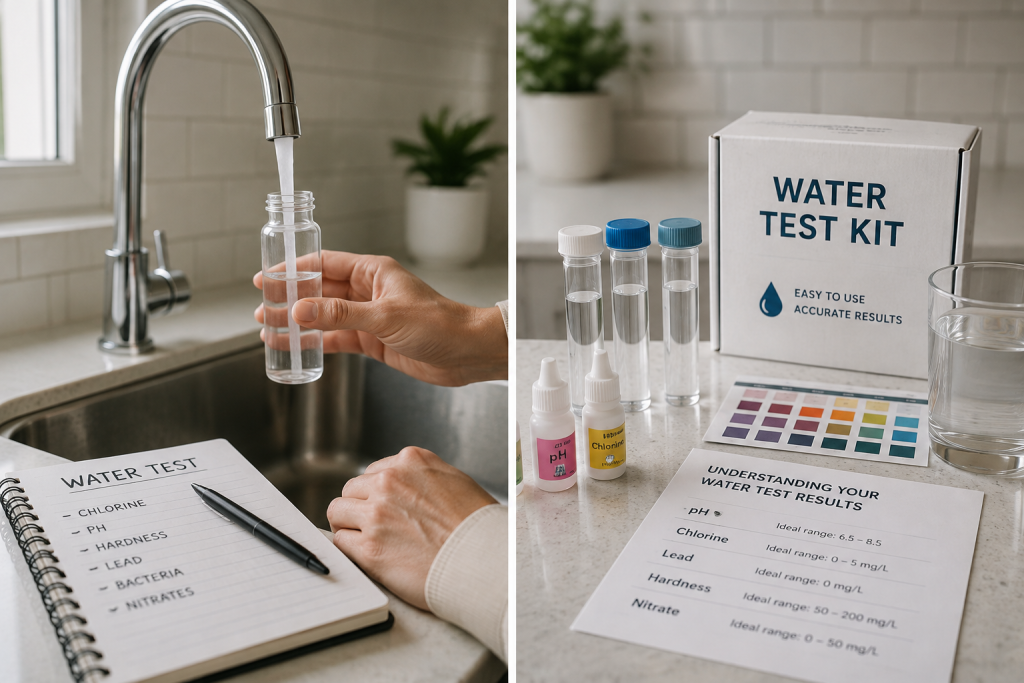
Most Australians are confident that their tap water is safe to drink, and in most cases, they are right. Public water supplies are treated and monitored to meet national health and safety standards. However, factors such as aging household plumbing, local infrastructure conditions, and specific environmental situations can affect water quality between the treatment plant and your tap. Knowing how to test your tap water empowers you to ensure your household’s safety and well-being.
Knowing how to test your tap water gives you real information rather than assumptions. Whether you want to check for chlorine, heavy metals, PFAS, bacteria, or other hidden contaminants, the right testing approach provides answers specific to your property. This guide explains how to test your tap water, interpret results, and determine whether additional filtration is needed for your home.
Why More Australian Homeowners Are Choosing to Test Their Tap Water
Many people judge water quality by appearance and smell alone. If water looks clear and has no noticeable odor, it is easy to assume it is safe. However, some of the most significant water quality concerns are completely invisible and have no detectable taste or smell. Heavy metals, PFAS, certain bacteria, and some chemical compounds can only be identified through proper testing. Recognizing these hidden risks encourages homeowners to take action and test regularly.
Australian drinking water quality is carefully regulated, but water travels through an extensive network of pipes from the treatment facility to your tap. Along the way, the condition of those pipes, particularly in older homes, can influence what actually comes out at the other end. Testing your tap water is the only way to know for certain what is present in your household supply and whether any treatment is warranted.
What Hidden Contaminants Could Be Present in Tap Water?
The contaminants present in tap water vary depending on the water source, local environment, plumbing materials, and treatment method used. Some substances affect taste and smell without posing a health risk, while others may be hazardous above recommended levels.
Chlorine and Chloramine
Chlorine is widely used across Australia to disinfect municipal water and eliminate harmful microorganisms, a critical step in protecting public health. However, many households notice a strong chlorine taste or smell, particularly in summer months or after maintenance work on local infrastructure.
Chloramine, formed by combining chlorine with ammonia, is used as a secondary disinfectant by some Australian water authorities. It is more stable in the distribution system than free chlorine but requires specific filtration media, such as catalytic carbon, for effective reduction. If you want to test for chlorine or chloramine, ensure the test kit specifically states which parameter it measures, as a basic free chlorine test will not accurately represent chloramine levels.
Heavy Metals
Aging plumbing systems can introduce trace amounts of metals, most notably lead and copper, into household water. These metals typically originate from old pipes, solder joints, or internal plumbing fixtures rather than the treatment plant itself. Homes built before 1970 in older Melbourne suburbs such as Carlton, Fitzroy, Richmond, and Brunswick carry a higher risk of lead leaching from internal plumbing. Testing is the only reliable way to determine whether heavy metals are present at your tap.
PFAS and Emerging Contaminants
PFAS, or per- and polyfluoroalkyl substances, are known as forever chemicals because they do not break down in the natural environment. In Australia, PFAS contamination has been documented near military bases, airports, and industrial sites. Standard home test kits do not test for PFAS; laboratory testing is required. Residents near known contamination sites, including RAAF Base Williamtown in New South Wales, Katherine in the Northern Territory, and Oakey in Queensland, should treat PFAS testing as a priority rather than a precaution.
Fluoride
Fluoride is added to many Australian public water supplies at controlled levels as a public health measure to support dental health. Standard home test kits do not always include fluoride measurement. If accurate fluoride levels are important to you, for example, if you are considering a reverse osmosis system for fluoride reduction, a laboratory test provides more reliable results than a home kit.
Sediment and Rust Particles
In older homes or following pipe repairs, fine sediment or rust particles can enter the water supply. While often visible, these particles can also affect appliance performance and water clarity even at concentrations too low to see clearly.
Bacteria and Microorganisms
Municipal tap water in Australia is routinely tested to ensure it is free from harmful bacteria. However, private water supplies, rainwater tanks, and properties with damaged or aging internal plumbing carry a higher microbiological risk. If your property uses any non-municipal water source, bacterial testing should be included as a standard part of any water quality assessment.
Signs Your Household Water May Need Testing
Water quality problems can develop gradually, and many homeowners do not notice changes until they have become significant. Consider testing your tap water if you notice any of the following:
- A noticeable chlorine smell when filling a glass of water
- A metallic, bitter, or mildly salty taste when drinking
- Yellow, brown, or cloudy water from the tap
- Rapid white scale buildup in kettles, on taps, or around showerheads
- Rust or mineral stains around sinks, washing machines, or bathroom fixtures
- Water that appears cloudier than it used to
- Family members commenting that the water tastes different than it used to
These signs suggest a change in water quality but do not necessarily indicate a serious health concern. Testing is the appropriate next step to determine what, if anything, has changed.
Understanding the Different Ways to Test Your Tap Water
Several testing methods are available, each offering different levels of detail to help you make informed decisions about your water safety. The right approach depends on what you want to test for and how precise the results need to be so you can better understand your water quality.
Home Water Test Kits
Home test kits are widely available from hardware stores and water filtration suppliers. They provide a quick, accessible way to screen for basic water quality indicators, including pH, chlorine, hardness, iron, and nitrates. Results are available within minutes and require no specialist knowledge to interpret.
Home test kits are best treated as a screening tool rather than a definitive assessment. They are useful for identifying obvious concerns such as chlorine or iron and monitoring whether water quality changes over time. Still, they cannot accurately test for PFAS, low concentrations of lead, bacteria, or fluoride. Reputable brands such as LaMotte and Hach produce multi-parameter kits that are widely used for basic household screening. Always check that the specific parameters tested match your concerns before purchasing.
Laboratory Testing
Laboratory testing provides a comprehensive and accurate picture of water quality. NATA-accredited laboratories in Australia can analyze water samples for heavy metals, PFAS, microorganisms, pesticides, fluoride, mineral content, and a wide range of other contaminants that home kits cannot reliably detect. Using professional testing methods helps you make informed decisions and feel confident about your water quality.
Laboratory testing costs more than a home kit, typically $100–$400 depending on the range of parameters tested, but delivers significantly greater accuracy. It is the recommended approach when homeowners need to investigate a specific concern, such as lead in older plumbing, PFAS near a known contamination site, or bacterial risk from a rainwater tank or private bore.
Annual Water Quality Reports
Most Australian water suppliers publish annual drinking water quality reports summarising test results from across their supply network. These reports are publicly available and provide useful context about local water quality and treatment processes.
These reports reflect the quality of water in the distribution system, not necessarily the quality at your specific tap after it has passed through your household plumbing. A property with older internal pipes may have different water quality at the tap than what the annual report describes at the network level.
How to Collect a Water Sample Correctly
Correct sample collection is essential for reliable results. Even a well-equipped laboratory cannot produce accurate findings from a poorly collected sample.
To collect a representative sample:
- Wash your hands thoroughly before handling any containers.
- Use the collection container provided by the test kit or laboratory; do not substitute a different container.
- Avoid touching the inside of the container or the cap.
- Follow the specific instructions for whether to flush the tap before sampling or collect the first-draw water; this varies depending on what you are testing for
- Seal, label, and store or transport the sample exactly as instructed
For lead testing specifically, first-draw water collected after water has been sitting in the pipes overnight without use typically gives the most representative result, as lead leaches into standing water from pipe joints and fittings.
How to Understand Your Tap Water Test Results
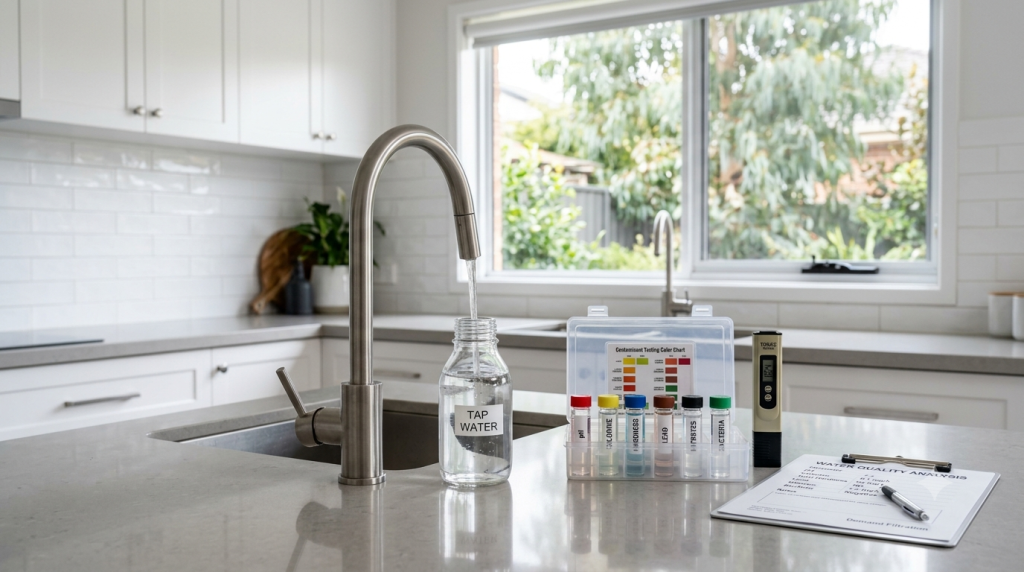
Testing your water is only the first step. Understanding what the results mean and whether any action is required is equally important.
Most laboratory test reports include the measured level of each parameter alongside the relevant guideline value from the Australian Drinking Water Guidelines (ADWG). Parameters that exceed guideline values or that are flagged as areas of concern warrant further investigation or consultation with a water filtration specialist before any system is purchased.
Pay particular attention to parameters related to your specific property situation, for example, lead if you have older plumbing or PFAS if you are near a known contamination site. Where results come back within normal ranges, this provides useful reassurance and a baseline for future comparison.
Repeating tests periodically is more valuable than a single test, as water quality can change with seasons, plumbing work, or local infrastructure changes. If any results concern you, speaking with your water supplier or an independent water treatment specialist before purchasing filtration equipment helps ensure you select the right solution for the actual issue identified.
Australian Drinking Water Standards: What Homeowners Should Know
The Australian Drinking Water Guidelines (ADWG), developed by the National Health and Medical Research Council (NHMRC), set the framework for safe drinking water across Australia. The guidelines establish accepted limits for microbiological, chemical, and physical water quality parameters across more than 250 individual measures.
These guidelines apply to water supplied through public distribution systems. They do not govern the condition of private household plumbing, internal water tanks, or the effects of ageing fixtures on water quality at the tap. This is why some households experience water quality concerns even when their water supplier is meeting all regulatory requirements; the issue originates within the household plumbing system rather than in the supply network.
When Should You Consider Installing a Water Filtration System?
In some cases, water testing confirms that no additional treatment is necessary, which itself provides valuable peace of mind. In other cases, testing reveals specific concerns that a targeted filtration solution can address.
A water filtration system is worth considering when testing identifies:
- Elevated chlorine or chloramine levels affecting taste and odor
- Visible sediment or particles coming through the tap
- High mineral content causing scale buildup on appliances and fixtures
- Heavy metals present above ADWG guideline values
- PFAS compounds detected, particularly near known contamination sites
- Bacterial indicators in private water supplies or rainwater tanks
- Persistent concerns about overall water quality despite satisfactory test results
The most important principle is that the filtration system selected should match the specific contaminants identified during testing. Installing a system that does not address the actual issue present in your water wastes money and creates a false sense of security.
Choosing the Right Filtration Solution Based on Test Results
Once you know what your water contains, selecting the right treatment approach becomes straightforward.
- Activated Carbon Filters
The most effective and cost-efficient solution for chlorine and chloramine taste and odour, VOCs, and some organic compounds. Catalytic carbon is required specifically for chloramine reduction. Best suited to households where taste improvement is the primary goal and no serious health-related contaminants have been detected.
- Reverse Osmosis Systems
Provide the highest level of drinking water purification available for household use, removing dissolved heavy metals, PFAS, nitrates, fluoride, dissolved solids, and a broad range of other contaminants. Recommended when testing identifies PFAS, lead, or other health-related contaminants at the kitchen tap. Certified to NSF/ANSI 58; check this certification when comparing systems.
- Whole House Water Filtration Systems
Treat all water entering the property before it reaches any tap, shower, or appliance. Most effective when water quality issues affect the entire household rather than just the kitchen tap, including chlorine in showers, sediment affecting appliances, or hard water causing scale throughout the home.
- Water Softeners
Address hard water specifically by reducing calcium and magnesium mineral content. Most relevant for Perth, Adelaide, and many regional Australian areas where hardness is the primary water quality concern. Often installed alongside carbon filtration for a more complete treatment solution.
Your test results, not the price of the system or general advertising claims, should determine which solution is right for your home.
Common Mistakes Homeowners Make When Testing Tap Water
Relying on taste and appearance alone
Many significant water quality issues have no detectable taste, smell, or color. Only testing reveals their presence.
Purchasing a filtration system before testing
Buying a filter without knowing what your water contains may result in a system that does not address the actual issue or a more expensive system than the situation requires.
Using an expired home test kit
Test kit reagents have expiry dates that affect accuracy. Always check the expiry date before use and purchase a new kit if in doubt.
Collecting samples incorrectly
Not following the correct sampling procedure, using the wrong container, or having wrong timing or contamination during collection can invalidate results even from an accredited laboratory.
Assuming all homes in an area have identical water quality
Two properties on the same street can have significantly different water quality at the tap if their internal plumbing ages and materials differ. Annual water quality reports reflect network averages, not individual household conditions.
Choosing a filtration system based on price alone
The cheapest system may not target the contaminants identified in your water test. Matching the filtration technology to the specific issue is always more important than minimizing upfront cost.
How Often Should You Test Your Tap Water?
Water quality is not static. Seasonal changes, local infrastructure work, plumbing repairs, and environmental events can all affect what comes out of your tap.
As a general guide, consider testing:
- Every one to two years as a routine check
- Whenever plumbing work is carried out in or near your property
- When purchasing an older home, particularly one built before 1970
- If you notice any change in taste, smell, color, or pressure
- After floods, storms, bushfires, or other events that could affect local water sources
- If you use a private water supply, bore water, or rainwater tank
- If you live near a military base, airport, or industrial site with known PFAS history
Regular testing gives you an accurate, current picture of your household water quality and provides a baseline for identifying any future changes.
Final Thoughts
Testing your tap water is the most reliable way to understand what is actually present in your household water supply. While Australian tap water is generally safe, testing reveals hidden contaminants that cannot be detected by taste, smell, or appearance alone and gives you the specific information needed to make an informed decision about whether any treatment is warranted.
Whether you use a home kit for a basic screen or arrange comprehensive laboratory testing for a more detailed picture, the knowledge gained from testing consistently leads to better decisions than assumptions alone. For households in older properties, near known contamination sites, or using private water supplies, regular testing is a straightforward and worthwhile investment in confidence and long-term water quality.