
Table of Contents
Introduction
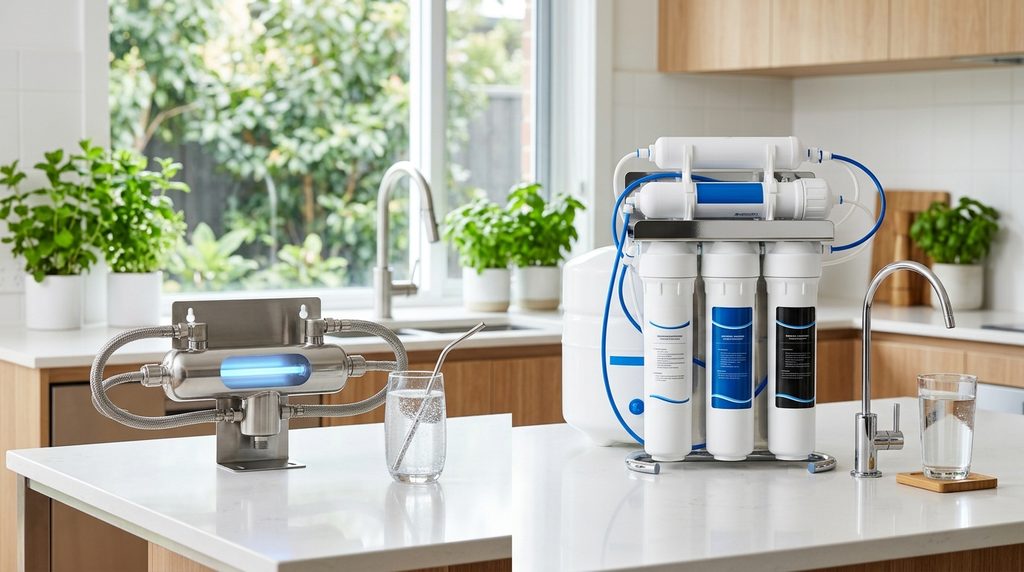
This guide explains the key differences between UV water filtration systems and reverse osmosis (RO) systems, helping Australian homeowners choose the technology that best suits their water treatment needs. UV filtration uses ultraviolet light to inactivate harmful microorganisms, while reverse osmosis uses pressure and a semi-permeable membrane to reduce dissolved contaminants, including salts, certain metals, and other substances.
Understanding how these two systems differ and what each can and cannot do helps you choose the right technology for your specific water quality concern, water source, and maintenance preferences.
Why UV Water Filters and RO Systems Are Different
UV water purifiers and reverse osmosis systems are often compared because both are effective water treatment technologies used in Australian homes. However, they are not interchangeable; each addresses a different water-quality issue.
UV treatment targets microbiological threats, while reverse osmosis reduces dissolved impurities. A household relying on rainwater that is concerned about bacteria introduced through roof catchments and bird droppings may find UV treatment well suited to their needs. A household dealing with elevated dissolved minerals or specific chemical contaminants in their borewater may be better served by reverse osmosis.
The first step in choosing between them is understanding what is actually in your water supply.
How Does a UV Water Filter Work?
A UV water filtration system passes water through a chamber that uses ultraviolet light. As microorganisms pass through the chamber, the UV light damages their DNA, preventing them from reproducing and rendering them unable to cause infection. When designed, installed, and maintained correctly, a UV system can significantly reduce microbiological risk in a water supply.
Compared with chemical disinfection methods, UV treatment adds nothing to the water and does not significantly affect its chemical composition, flavour, or smell. This makes it a practical choice for microbiological treatment where the goal is to reduce biological risk without altering water chemistry.
One important clarification: some Australian water utilities use chloramine rather than free chlorine as a secondary disinfectant. UV treatment targets microorganisms; it does not remove chloramine. If chloramine taste or odour is a concern, a suitable activated carbon filter with verified chloramine-reduction performance may be a better solution.
What Can a UV Water Filter Treat?
UV systems are specifically designed to inactivate susceptible microorganisms, including many bacteria, viruses, and protozoa. They are most commonly used by households relying on rainwater tanks, bore water, or other private water sources where microbiological contamination is a genuine risk.
UV treatment does not remove dissolved substances from water. It will not reduce dissolved salts, heavy metals, hardness minerals, chlorine, or other chemical contaminants. If any of these are present at levels of concern, additional treatment will be required alongside or instead of UV.
Testing the water source before selecting a UV system is the most reliable way to confirm whether microbiological treatment alone is sufficient.
Why Water Clarity Matters for UV Filtration
UV filtration effectiveness depends on water clarity. Sediment, turbidity, or suspended particles can shield microorganisms from UV exposure, reducing the system’s ability to inactivate them. For this reason, a sediment pre-filter is often required upstream of the UV chamber to ensure incoming water is sufficiently clear.
Homeowners should also follow the manufacturer’s maintenance schedule by cleaning the quartz sleeve that surrounds the UV lamp, replacing the lamp at the recommended interval even if it still appears to be functioning, and monitoring water flow through the system. A UV system that is not properly maintained cannot be relied upon to deliver consistent microbiological treatment.
How Does a Reverse Osmosis System Work?
A reverse osmosis system uses water pressure to force water through a semi-permeable membrane. The membrane lets water molecules pass while blocking most dissolved contaminants. The specific substances removed depend on the membrane type, system design, incoming water chemistry, and the system’s tested and certified performance.
Most household RO systems include several filtration stages. A sediment pre-filter captures suspended particles and protects the membrane. One or more carbon filters reduce chlorine and other taste- and odor-affecting substances before the water reaches the membrane. The RO membrane primarily reduces dissolved contaminants. Some systems include a final polishing stage to improve further treated water quality.
What Can an RO System Reduce?
A properly selected and maintained RO system can reduce many dissolved salts and certain contaminants, including some metals, depending on its tested and certified performance. This makes reverse osmosis a practical option for drinking and cooking water treatment when the goal is to reduce specific dissolved substances.
Not all RO systems perform the same. Buyers should review the manufacturer’s independent test data and certifications for their specific model rather than assuming that all RO systems reduce the same contaminants to the same level.
Regarding PFAS, a group of persistent synthetic chemicals associated with firefighting foams and certain industrial products, some reverse osmosis systems and specially designed activated carbon filters can reduce certain PFAS compounds in drinking water. However, performance varies significantly by product and PFAS type. Independently certified PFAS-reduction claims should be verified against the specific model before purchasing.
What Are the Limitations of Reverse Osmosis?
Reverse osmosis systems are not designed to function as complete disinfection systems. They can reduce many dissolved contaminants but shouldn’t be relied on as a standalone solution for microbiological contamination without specific verification.
RO systems produce wastewater during filtration: a concentrated reject stream that is directed to the drain. The ratio of filtered water to wastewater varies between models and operating conditions. Compare water efficiency between systems before purchasing, especially for households in water-conscious regions.
Reverse osmosis also removes naturally occurring beneficial minerals, including calcium and magnesium, along with unwanted dissolved substances, lowering the treated water’s total dissolved solids (TDS). Some systems include a remineralization stage to add selected minerals back after treatment. Whether this is needed depends on individual preferences and water quality requirements.
Learn More: The Ugly Truth About Reverse Osmosis Systems
UV Water Filter vs Reverse Osmosis: Key Differences
| Feature | UV Water Filter | Reverse Osmosis System |
| Main purpose | Inactivates microorganisms | Reduces many dissolved contaminants |
| Bacteria and viruses | Can inactivate susceptible microorganisms when correctly designed and maintained | Not automatically a validated disinfection solution |
| Dissolved salts | Does not remove them | Reduces many dissolved salts |
| Certain heavy metals | Does not generally remove them | Can reduce certain metals, depending on performance |
| Taste and odor | Usually has limited direct effect | May improve taste by reducing certain substances |
| Wastewater | Does not normally produce RO-style wastewater | Produces a wastewater stream |
| Electricity | Requires power for the UV lamp | Requirements vary; some systems use pumps. |
| Maintenance | Lamp, sleeve, and pre-filtration checks | Filter and membrane replacement |
| Common applications | Microbial treatment for suitable water supplies | Drinking and cooking water treatment |
Regular maintenance, including on-schedule pre-filter and membrane replacement, is essential for an RO system to continue performing to its rated specification.
The fundamental difference between UV and RO is the type of water quality problem each system addresses. UV targets microorganisms. RO reduces dissolved substances. They serve different purposes and should be selected based on what testing shows is actually present in your water.
Installation Requirements for UV and RO Systems
UV Water Filter Installation
Depending on the application, UV systems can be installed where water enters the home or at a specific point of use. Installation requires a suitable power supply and should be carried out in accordance with the manufacturer’s specifications. A sediment pre-filter upstream of the UV chamber is often recommended to protect clarity and effectiveness. Before installation, confirm the available space, plumbing connections, and access requirements for future maintenance.
Reverse Osmosis System Installation
Most residential RO systems are installed under the kitchen sink and supply filtered water through a dedicated tap. Depending on the model, the system requires a drain connection for the reject water stream. Available cabinet space and plumbing configuration should be confirmed before selecting a specific unit. Some systems also require a minimum incoming water pressure to function correctly.
Point-of-Use vs Whole-House Filtration
Many residential RO systems are designed only for point-of-use drinking water treatment. UV systems can be adapted for whole-house applications depending on the water source and treatment requirement. Whole-house filtration requires a system sized for the household’s total water flow and demand; a small under-sink unit will not provide filtered water to showers, laundry, or other outlets throughout the property.
Maintenance and Replacement Costs in Australia
The purchase price is only the starting point when budgeting for a water filtration system. Ongoing costs, replacement parts, electricity, wastewater, and servicing all contribute to the total cost of ownership. Actual costs vary by brand, model, water quality, and local availability of replacement components.
UV Water Filter Maintenance
- UV lamp replacement: Lamps should be replaced at the manufacturer’s recommended interval even if they appear to be working, as output degrades over time before visible failure
- Quartz sleeve cleaning: Mineral deposits and biofilm on the sleeve reduce UV transmission into the water and should be cleaned periodically according to water conditions and manufacturer guidance
- Pre-filter replacement: Any sediment pre-filter upstream of the UV chamber should be replaced on schedule. A blocked pre-filter reduces water flow and can affect UV dose
- System checks: Warning indicators, power supply, and lamp output should be checked as directed by the manufacturer
Reverse Osmosis System Maintenance
- Pre-filter replacement: Sediment and carbon pre-filters protect the RO membrane and should be replaced according to the recommended schedule to maintain performance and extend membrane life
- Membrane replacement: RO membranes require periodic replacement; the interval depends on incoming water quality, pressure, daily usage, and how well pre-filters are maintained. A change in water taste, flow rate, or TDS may indicate the membrane needs attention
- Leak and pressure checks: Connections, tubing, and valves should be checked for leaks and correct pressure during servicing
- Water efficiency monitoring: The wastewater ratio produced during filtration varies by model and operating conditions; efficiency specifications should be compared before purchasing
Water Quality Testing: Why It Matters Before Buying
Water testing is the most important step before deciding between UV and RO technology. Without knowing what is actually in your water, it is not possible to reliably determine which treatment method is appropriate or whether multiple treatment stages are needed.
For rainwater and bore water, testing helps identify microbiological issues, dissolved salts and metals, pH, and other parameters relevant to the water source. Clear water is not necessarily safe; it can contain microorganisms or dissolved contaminants at harmful concentrations without any visible indication. Conversely, water with an unusual taste does not automatically contain dangerous substances.
Testing provides an evidence-based foundation for the treatment decision. If microbiological contamination is identified, a disinfection system is the appropriate response. If dissolved solids are the primary concern, UV treatment alone will not address it. If both types of issues are present, a combination of technologies may be required.
Certifications and Performance Claims to Check
UV Water Filter Certification
NSF/ANSI 55 is a recognised standard for UV water treatment systems. When evaluating a UV system, check the specific product classification, tested performance results, and conditions of use. Do not assume all NSF/ANSI 55-certified systems provide equivalent treatment performance; it depends on water clarity, flow rate, lamp output, and maintenance. Always follow the manufacturer’s installation and maintenance guidelines for the specific water source the system will treat.
Reverse Osmosis System Certification
NSF/ANSI 58 is the relevant standard for household reverse osmosis drinking water systems. It covers material safety, structural integrity, TDS reduction, system efficiency, and specific contaminant-reduction performance for listed claims. Certification under this standard confirms tested performance against specific criteria; it does not guarantee the system removes every possible contaminant. Check the specific contaminant-reduction claims listed for the model you’re considering to confirm they address your actual water-quality concerns.
Can UV and Reverse Osmosis Be Used Together?
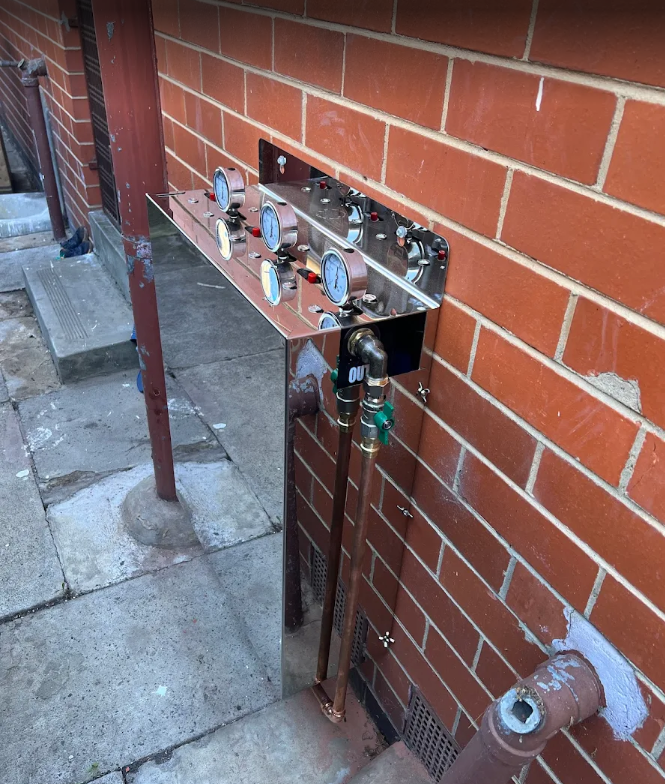
Yes. UV and RO systems can be used together effectively when a water source presents both microbiological and dissolved-contaminant concerns. However, combining technologies isn’t necessary for every household, and adding more equipment doesn’t automatically guarantee greater safety.
For properties relying on bore water, for example, treatment may need to address both dissolved minerals and microbiological risk depending on test results. In these cases, an appropriate treatment sequence might include sediment filtration, reverse osmosis to reduce dissolved contaminants, and UV disinfection as a final stage. The specific combination and sequence should be based on water test results and the advice of an experienced water treatment specialist.
How to Choose the Best Water Filter System for Your Home
Choosing the right system involves more than comparing prices or counting filtration stages. The right system should address your specific water quality concerns, fit your property’s practical requirements, and remain straightforward to maintain over time.
- Identify your water source: Mains water, rainwater, and bore water require different treatment. Start by understanding your source and available quality information
- Test your water: Understand which specific contaminants or microbiological risks are present before selecting technology
- Check verified certifications: Confirm that the specific model has been independently tested for the contaminants you want to reduce, not just that it carries a certification label
- Calculate total cost of ownership: Include replacement filters, membranes, lamps, servicing, and electricity in your comparison, not just the purchase price
- Consider water efficiency: If wastewater production is a concern, compare the recovery rates of different RO models before purchasing
- Confirm installation practicality: Check that the system suits your available space, plumbing configuration, incoming water pressure, and drainage requirements
- Confirm aftermarket support: Ensure that replacement parts for the specific model are available in Australia and that local installation and servicing support exists
Conclusion
The right choice between a UV water filter and a reverse osmosis system depends on your water source and the specific treatment required. UV systems address microbiological threats. RO systems reduce dissolved salts, certain metals, and other dissolved contaminants. They serve fundamentally different purposes and are often most effective when the selection is based on water test results rather than general assumptions.
Before choosing between UV and RO in Australia, test your water, confirm the identified issues, compare the certification and performance claims of specific models, and factor in ongoing maintenance and replacement costs. The best system is the one that genuinely meets your household’s water quality needs and can be maintained practically over the long term.