_edited_9.png)
Table of Contents
Introduction
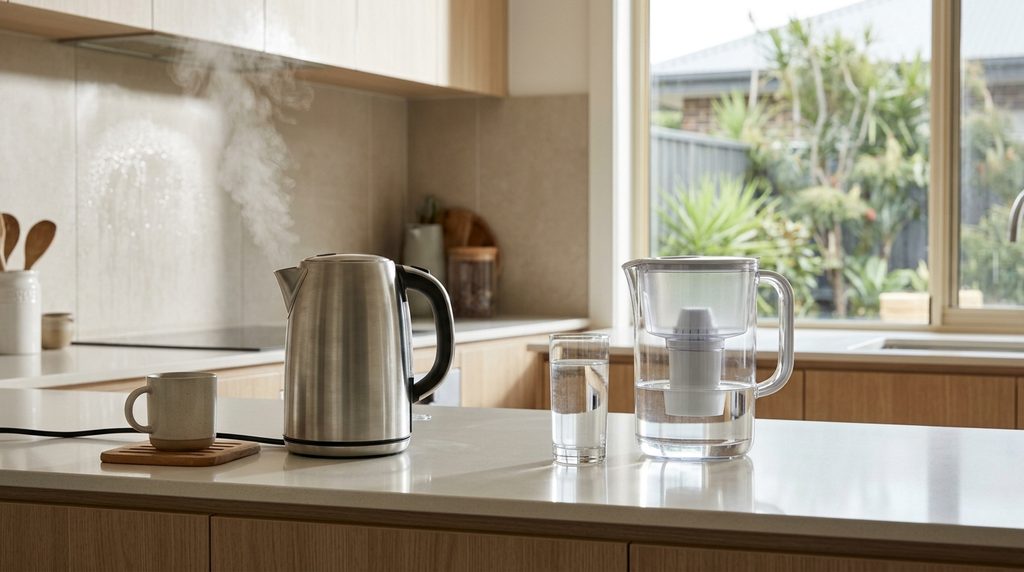
This guide explores whether boiling water is enough to purify drinking water, what Australian drinking water standards mean for everyday households, and when a filtration system is the better option. Boiling is one of the oldest and most reliable water treatment methods, but only when harmful microorganisms are the primary concern. It does not remove every type of contaminant.
For Australian households, understanding this distinction helps you choose the right treatment method and avoid the common assumption that one approach will solve every water quality issue.
What Does Boiling Water Actually Do?
Boiling water is a disinfection method, not a comprehensive filtration process. When water reaches boiling point, the high temperature kills a wide range of harmful bacteria, viruses, and protozoa that can cause waterborne illness.
This makes boiling a highly effective treatment when microbial contamination is the specific concern, which is why authorities issue boil-water advisories when the microbiological safety of the water supply may be at risk. This reassurance helps homeowners trust boiling as a proven method for microbial safety.
However, boiling does not physically remove contaminants from water. It affects microorganisms through heat, a completely different mechanism from filtration. Drinking water can contain many different types of contaminants chemical, physical, and biological and each may require a different treatment approach.
Boiling Water vs. Water Filtration
Boiling and filtration serve different purposes and should not be treated as interchangeable.
Boiling uses heat to inactivate microorganisms. Filtration uses physical media or membrane technology to remove specific materials from water, including chlorine, sediment, dissolved substances, heavy metals, and other contaminants depending on the system type.
Activated carbon filtration is commonly used to reduce chlorine and improve taste and odor. Reverse osmosis acts more broadly, removing dissolved solids, heavy metals, PFAS, fluoride, and a wide range of other contaminants. Neither technology substitutes for boiling when microbial disinfection is specifically required, and boiling does not substitute for filtration when chemical or physical contaminants are the concern.
Instead of asking whether to boil or filter, focus on identifying the specific water quality problem you face because it guides you to the most effective treatment or combination of treatments.
What Australian Drinking Water Standards Actually Mean
The Australian Drinking Water Guidelines (ADWG), developed by the National Health and Medical Research Council (NHMRC), provide a national framework for ensuring drinking water quality across Australia. The guidelines cover a comprehensive range of parameters, including microbiological safety, chemical composition, and physical properties.
Most Australian households’ tap water is considered safe to drink without additional treatment because Australia’s public water supply is treated and monitored to meet national standards before reaching homes.
Some households choose to filter their water for taste, odor, or personal preference, which is a reasonable quality-of-life decision rather than a health necessity in most cases. It is important to distinguish between water that is considered safe under national guidelines and water that has been further improved to meet individual household preferences.
When Boiling Water Is the Right Choice
There are specific situations in which boiling is the appropriate and sometimes the required treatment method.
Boil-Water Advisories
When local authorities issue a boil-water advisory because of a risk of microbial contamination in the supply, follow those instructions. Boiling kills bacteria, viruses, and protozoa that could cause illness. Follow the advisory for its full recommended duration. Once the advisory is lifted, you can return to normal tap water use; you do not need to continue boiling indefinitely after the advisory ends.
Emergency Situations
When regular water treatment or supply infrastructure is temporarily disrupted during a natural disaster, flooding, or infrastructure failure, boiling provides an effective immediate treatment for microbiological risk. The World Health Organization confirms that boiling is effective against most waterborne pathogens under these conditions.
When Microbial Contamination Is the Specific Concern
If bacteria, viruses, or protozoa are the identified concern, for example, in water from a rainwater tank, private bore, or rural supply, boiling remains an effective household treatment. However, boiling treats only microbes and is not a substitute for filtration when other contaminants are present.
When Boiling Water Is Not Enough
Boiling kills microbes but does not remove chemical contaminants, dissolved materials, or physical particles, which require different treatment methods because they behave differently from microorganisms.
Boiling does not remove heavy metals, PFAS, chlorine, fluoride, nitrates, pesticides, sediment, or mineral scale. These contaminants behave differently from microorganisms, and heat does not affect them in any meaningful way.
The principle is straightforward: killing microorganisms and removing dissolved or physical contaminants are different processes that require different treatment methods. Homeowners should identify what the water contains to feel more confident choosing the right treatment and make informed decisions.
Which Water Filter May Be Suitable?
Different filtration systems address different water quality concerns. The right choice depends on what the water contains.
Activated Carbon Filters
Activated carbon is widely used to reduce chlorine, improve taste and odor, and remove some volatile organic compounds. The specific performance of any carbon filter depends on the type of carbon media used and what it has been independently tested to reduce. Catalytic carbon is required for effective chloramine reduction; standard carbon filters may not address chloramine as effectively.
Reverse Osmosis Systems
Reverse osmosis uses a semi-permeable membrane to reduce a broad range of dissolved contaminants, including heavy metals, PFAS, fluoride, dissolved solids, and nitrates. It provides the highest level of drinking water purification available for household use. Choose it when testing identifies dissolved contaminants that carbon filtration alone cannot address.
Whole House Filtration
Whole-house systems treat water at the property’s point of entry, providing filtered water at every tap, shower, bathroom, laundry, and appliance. This is most appropriate when the water quality concern affects the household across multiple points of use, not just the kitchen tap.
The right system depends on the water source, the contaminants present, the household’s daily water usage, and the performance specifications of the technology being considered.
Common Myths About Boiling Water
Boiling water is such a familiar process that it has given rise to several persistent misconceptions. Understanding these myths helps homeowners make more informed treatment decisions.
Myth 1: Boiling Removes All Contaminants
This is the most common misunderstanding about boiling water.
Boiling effectively inactivates microorganisms, but it does not remove chemical or dissolved contaminants. The United States Centers for Disease Control and Prevention (CDC) states clearly that boiling does not eliminate chemicals from water.
PFAS, heavy metals, nitrates, chlorine, and other dissolved substances remain in boiled water at the same concentration as before or, in some cases, at a slightly higher concentration as water evaporates during boiling. If a chemical contaminant is the concern, the appropriate treatment depends on that specific contaminant, not heat.
Myth 2: Boiled Water Stays Safe Forever
Once boiled, water can still be recontaminated through dirty storage containers, unwashed hands, uncovered vessels, or contaminated utensils. The World Health Organization emphasizes storing treated water in clean, covered containers to prevent recontamination after treatment.
This applies directly to water that has been boiled and is being stored for later use. Proper storage is an essential part of the treatment process, not an optional afterthought.
Myth 3: Boiling Is Always Better Than Filtration
Boiling and filtration are not interchangeable; they address different water-quality concerns.
Boiling is effective for microbiological control. Filtration is engineered to reduce specific physical and chemical contaminants. A carbon filter reduces chlorine taste and odor. A reverse osmosis system removes a broad range of dissolved substances. Neither replaces the other for its intended purpose.
The more useful question isn’t which method is universally better, but which fits your household’s specific water-quality concern.
Does Boiling Remove Chlorine?
Boiling is sometimes suggested to reduce chlorine in tap water, and while some chlorine dissipates with prolonged boiling, it is not a reliable or practical way to remove chlorine.
This limitation is even more significant where chloramine is used as a secondary disinfectant. Chloramine forms when chlorine combines with ammonia, behaves differently from free chlorine, and is considerably harder to remove by boiling. An appropriately selected activated carbon filter, particularly one using catalytic carbon media for chloramine specifically, is a more practical and consistent solution for households where chlorine or chloramine taste and odor is the primary concern.
Can Boiling Remove PFAS or Heavy Metals?
No. Boiling water does not remove PFAS, heavy metals, or other dissolved chemical contaminants. These substances behave entirely differently from microorganisms and are not affected by heat.
The World Health Organization confirms that boiling is effective primarily against harmful microorganisms, while chemical contaminants require different treatment methods. For PFAS, reverse osmosis systems certified to NSF P473 or NSF/ANSI 58 provide the most reliable household-level reduction. For heavy metals, including lead, a filter certified to NSF/ANSI 53 is the appropriate choice.
Never rely on boiling to address these contaminants.
What Happens to Minerals When Water Is Boiled?
Boiling does not remove minerals from water. In areas with hard water, where calcium and magnesium concentrations are elevated, boiling can cause those minerals to precipitate out of solution and form the white scale deposits commonly seen in kettles and on heating elements.
This does not mean boiled water is unsafe to drink. Hardness, mineral content, and microbiological safety are separate water quality issues. For households dealing with excessive hardness or mineral scale affecting appliances and fixtures, a water softener is the appropriate treatment, not boiling, which has no meaningful effect on dissolved mineral content.
Why Safe Storage Matters After Boiling
Boiling is only the first step. After treatment, transfer water immediately into a clean container with a secure lid, handle it with clean hands and utensils, and keep it covered until use.
Recontamination after boiling is a real risk, especially when treated water is stored in open or unclean vessels or handled without proper hygiene. The World Health Organization specifically highlights safe storage as an essential component of home water treatment, not a secondary consideration.
Minimizing how often you open stored water containers after treatment significantly reduces the risk of recontamination.
How to Choose a Water Filter Based on Your Main Concern
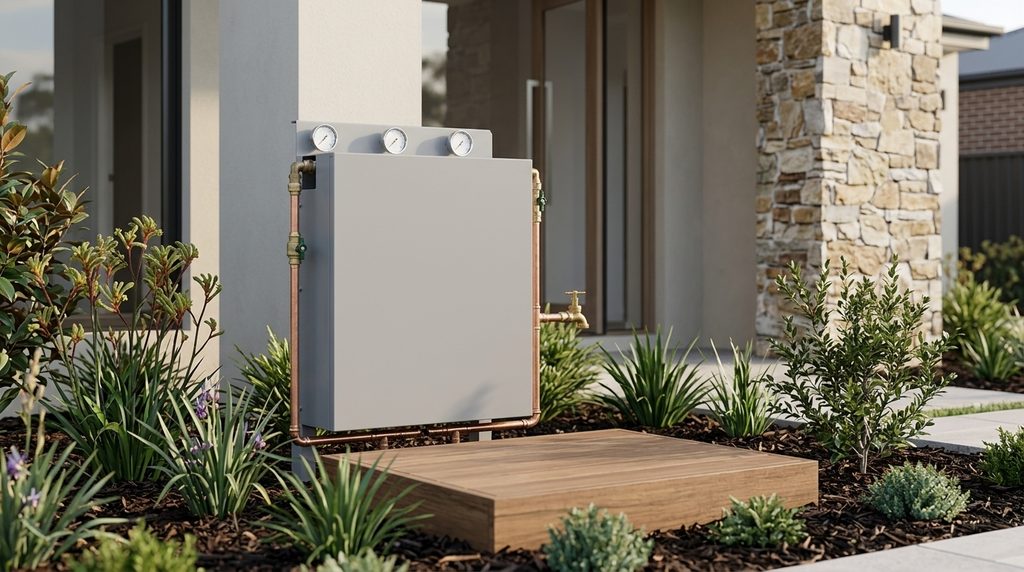
Start by identifying your specific water quality concern, not the number of filtration stages a system offers.
A six-stage system that doesn’t address the contaminant in your water delivers less value than a single-stage system that does. More stages do not automatically mean more effective filtration; each stage should serve a distinct, verified purpose matched to your actual water quality.
- For chlorine taste and odor: activated carbon filtration certified to NSF/ANSI 42
- For chloramine: catalytic carbon filtration with verified chloramine reduction performance
- For lead and health-related contaminants: filtration certified to NSF/ANSI 53
- For PFAS and broad dissolved contaminant removal: reverse osmosis certified to NSF/ANSI 58 or NSF P473
- For visible sediment or particles: sediment pre-filtration
- For whole-home treatment: whole-house filtration matched to the specific concern
Can Boiling and Filtration Be Used Together?
Yes, and in some situations, using both is appropriate.
A household might use a filtration system on an ongoing basis to address taste, chlorine, or sediment. At the same time, boiling is reserved for specific situations such as boil-water advisories or microbial risk events. You don’t need to use both methods simultaneously just because more treatment means safer water; each method serves a distinct purpose.
If a government authority issues a boil-water advisory, follow it regardless of whether you use a filtration system. Filtration systems are not certified to provide the same level of microbiological protection as boiling under advisory conditions unless specifically designed and validated for that purpose.
Final Thoughts
Boiling water is an effective and accessible method for eliminating harmful microorganisms, particularly during emergencies, boil-water advisories, or when using water from private supplies with microbiological risk. It does not remove chemical contaminants such as chlorine, PFAS, or heavy metals, so do not rely on it for these purposes.
For Australian homeowners, the key is matching the treatment to the problem boiling addresses biological threats. Filtration addresses chemical and physical contaminants. Knowing which concern applies to your household leads to a more effective, practical, and cost-efficient approach to safe drinking water.