_edited_9.png)
Table of Contents
Introduction
Tap water can look clear and still contain dissolved minerals, chlorine, bacteria, and other unwanted substances. A water distiller uses heat and condensation to produce water with significantly fewer dissolved impurities than standard tap water. This guide explains how home water distillers work, their genuine benefits and limitations, how they compare to water filtration systems, and what Australian households should consider before buying one.
What Are Water Distillers?
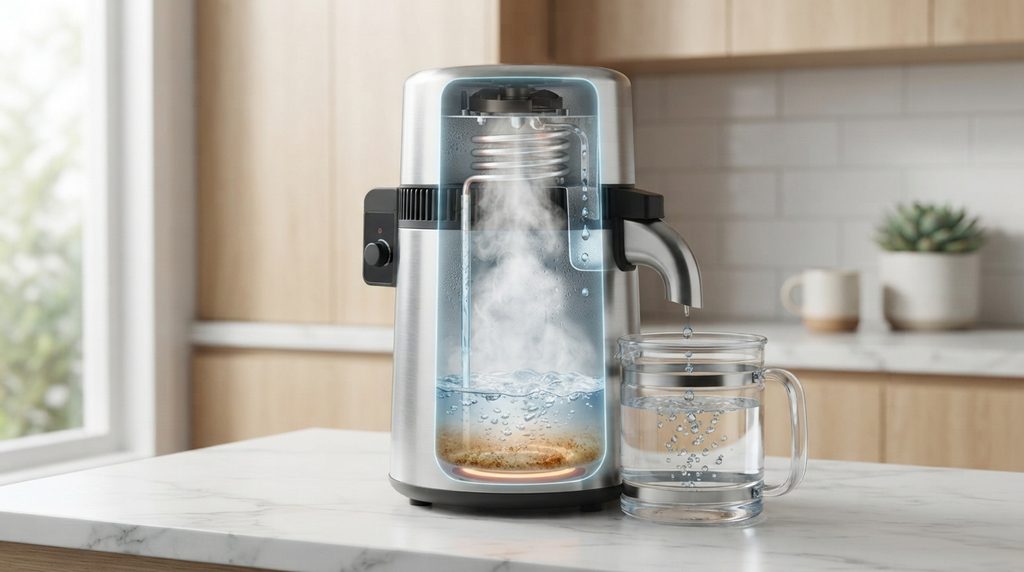
Water distillers are appliances that purify water through distillation. Water is heated until it becomes steam, then cooled and condensed back into liquid water in a separate collection container.
Most contaminants remain in the boiling chamber because they cannot evaporate along with the water. Depending on the machine and the type of contamination, distillation can reduce or remove:
- Dissolved minerals and salts
- Some heavy metals
- Certain non-volatile impurities
- Many bacteria and viruses
The water produced through this process is called distilled water. It contains little to no dissolved solids, which gives it a noticeably different taste from mineral-rich tap or filtered water.
How Does a Home Water Distiller Purify Tap Water?
The process a countertop water distiller uses is straightforward.
1. Water Is Poured In
The owner pours tap water into the boiling chamber, keeping the water level within the manufacturer’s recommended range.
2. Water Is Heated
An electric heating element heats the water to boiling point. The steam produced rises away from the heavier impurities, which remain in the chamber.
3. Steam Is Cooled
The steam passes through a cooling element and condenses back into liquid water. Some models include an activated carbon filter at this stage to manage certain volatile substances and improve the taste of the final water.
4. Distilled Water Is Collected
The purified water drains into a separate collection container while residues remain in the boiling chamber.
Most countertop distillers operate in batches. Cycle time varies depending on the machine’s power rating, capacity, and the quality of the incoming water.
What Can Water Distillation Remove?
Distillation works because it separates water from many non-volatile dissolved substances through evaporation. However, it doesn’t remove every contaminant, such as volatile organic compounds (VOCs) or PFAS, and buyers should not assume all distillers perform the same.
Distillation significantly reduces dissolved solids, salts, minerals, and some metals. Many microorganisms are destroyed during boiling. However, some volatile substances can travel with the steam and may not be fully removed without additional treatment. This is why some distiller models include an activated carbon post-filter as a secondary treatment stage.
The actual performance of any distillation system depends on its design and quality. Always check manufacturer specifications and look for independently verified performance data rather than relying solely on general claims.
Volatile Organic Compounds (VOCs)
Volatile organic compounds are chemicals that evaporate easily and may be present in some water sources. Because VOCs can travel with steam during distillation, distillation alone may not remove them completely. A distiller with an activated carbon post-filter provides additional VOC treatment, though effectiveness still depends on the specific model and filter quality.
PFAS and Water Distillation
PFAS are long-lasting synthetic chemicals that can enter water through industrial and environmental sources. Distillation should not automatically be considered a guaranteed PFAS removal method. If PFAS is a specific concern, particularly for households near military bases, airports, or known industrial contamination sites, choose a system with verified, independently tested performance data for the specific PFAS compounds you want to reduce.
What Are the Benefits of Drinking Distilled Water?
Minimal Dissolved Minerals
Distilled water has much less mineral content than tap or filtered water. This appeals to people who prefer low-mineral water or dislike the taste associated with higher mineral content.
Reduced Microbial Presence
The boiling stage destroys many microorganisms, but regular cleaning of equipment and storage containers is essential to maintain water safety and prevent recontamination.
Distinct Flavor Profile
Some people enjoy the clean, neutral taste of distilled water, while others find it flat because it removes the minerals that give water its familiar taste. Trying distilled water before committing to a distiller is a practical step, as the taste difference is noticeable and not always preferred.
Suitable for Certain Household Appliances
Low-mineral distilled water is recommended for use in steam irons, humidifiers, CPAP machines, and other appliances sensitive to mineral scale. Using distilled water in these devices reduces calcium and magnesium buildup that can shorten appliance lifespan.
Are Water Distillers Healthier Than Filtered Water?
There is no definitive answer as to whether distilled water is healthier than filtered water. Each serves a different purpose.
Distillation works by evaporating water and condensing the steam, leaving most dissolved substances behind. Filtration uses materials like activated carbon, membranes, or other media to reduce specific contaminants while retaining more of the water’s natural mineral composition.
For most Australian households connected to a municipal supply, tap water is already treated to meet national safety standards. Some people choose distilled water to achieve very low dissolved solids levels. Others prefer filtered water because it is faster to produce, retains some natural minerals, and is more practical for high daily usage.
The right choice depends on your local water quality, the specific contaminants you want to address, your daily water volume needs, budget, and personal taste preference.
Limitations of Water Distillers
Water distillers are effective tools but come with practical limitations that Australian households should consider before purchasing.
- Slow production: A single distillation cycle typically takes several hours
- Energy intensive: Boiling water requires sustained electricity consumption
- Limited capacity: Most countertop models produce only a few liters per cycle
- Regular cleaning required: Mineral residue accumulates in the boiling chamber after each use
- Not effective against all contaminants: Volatile substances may require additional carbon filtration
- Storage requirements: Distilled water must be stored in a clean, covered container to prevent recontamination
These considerations are particularly relevant for larger Australian households or those needing consistent daily volumes of purified water.
Water Distillers vs Water Filtration Systems
| Feature | Water Distillers | Water Filters |
| Main method | Boiling and condensation | Filtration or membrane treatment |
| Electricity | Usually required | Often low or none |
| Water production | Batch-based | Often faster or continuous |
| Taste | Usually low-mineral | May retain some minerals |
| Maintenance | Cleaning and possible filter replacement | Filter replacement and servicing |
| Installation | Usually simple for countertop models | Depends on the system |
Water filtration systems are generally more practical for everyday household drinking water consumption. Activated carbon filters effectively improve taste and reduce chlorine. Reverse osmosis systems remove a broad range of dissolved substances. Whole-house systems treat all water entering the property, while countertop distillers and filters are designed primarily for drinking and cooking use at a single point.
Types of Home Water Distillers Available in Australia
The right distiller depends on how much distilled water your household needs, how frequently you plan to use it, and which features matter most to you.
Compact Countertop Distillers
Best suited to individuals, couples, or small households that don’t need large volumes of distilled water daily. These models are compact, easy to store, and generally the most affordable entry point.
Larger Capacity Distillers
Better suited to families or households with higher daily distilled water needs. Larger models reduce the number of cycles required but take up more bench space and typically consume more electricity per day.
Distillers with Carbon Post-Filtration
Some models include an activated carbon filter after the condensation stage to address certain volatile compounds and further improve taste and odor. This is a useful feature for households that are particularly sensitive to taste or smell in their water.
Distillers with Automatic Shut-Off
An automatic shut-off is an important safety feature that stops the appliance when the distillation cycle is complete or the water level drops too low. Prioritize this when comparing models for daily home use.
When comparing units, evaluate capacity, cleaning requirements, warranty terms, availability of replacement parts in Australia, and whether the unit is designed specifically for household drinking water rather than laboratory or industrial use.
How to Choose a Water Distiller for Home Use
Determine Your Daily Capacity Needs
Consider how many liters of distilled water your household uses each day. A compact model may suit occasional use, while a larger-capacity unit is more practical if you need distilled water daily for drinking, cooking, and appliance use.
Understand the Distillation Cycle Time
Most home distillers take several hours to complete one cycle. Before purchasing, confirm the expected cycle time and whether the output volume matches your household’s needs, particularly if you plan to use it every day.
Assess the Purification Design
Consider whether the unit includes a stainless steel boiling chamber, a sealed collection container, and an activated carbon post-filter. These features affect both output water quality and the machine’s long-term durability.
Check Cleaning Requirements
A distiller that’s hard to clean becomes inconvenient over time. Look for models with straightforward access to the boiling chamber and clear cleaning instructions from the manufacturer.
Review Warranty and Replacement Part Availability
A meaningful warranty period and readily available replacement filters, seals, and lids in Australia are important for long-term ownership. Confirm these before purchasing, not after.
Where to Buy a Water Distiller in Australia
Water distillers are available through water treatment equipment suppliers, appliance retailers, laboratory suppliers, and online marketplaces. When purchasing, confirm that the supplier provides:
- Complete product specifications, including power rating and daily output capacity
- Delivery within Australia
- Clear warranty terms and conditions
- Availability of compatible replacement filters and parts
- Customer service contact details
- Cleaning and maintenance instructions
- Confirmation that the unit is certified for home drinking water use rather than laboratory or industrial applications
Don’t choose a distiller based on price or customer reviews alone without first verifying that the specifications match your household’s actual water quality needs.
Water Testing Before Choosing a Purification System
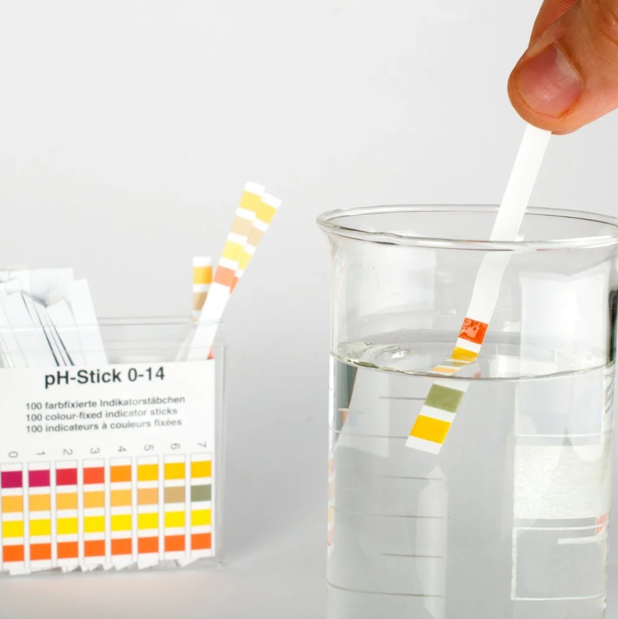
Water testing helps determine whether a distiller is the right solution for your situation. Australian households receive water from a range of sources, including municipal supplies, rainwater tanks, bore water, and dams, each with different characteristics that may require different treatment approaches.
Before buying a distiller, consider testing your water for:
- Total dissolved solids (TDS)
- Water hardness
- pH level
- Chlorine or chloramine presence
- Heavy metals, particularly lead in older properties
- Microbiological indicators for private water sources
Demand Filtration can help homeowners identify their specific water quality concerns and choose the most appropriate treatment options. Choosing a purification method based on actual water test results consistently produces better outcomes than selecting based on advertising claims alone.
Is Distilled Water Suitable for Everyday Drinking?
Distilled water is safe to drink, but it is not essential for most Australian households. For most people connected to a treated municipal supply, properly maintained tap water or filtered water is adequate for everyday use.
If you choose to use distilled water regularly, follow these practical guidelines:
- Clean your storage containers regularly
- Keep the distiller clean and follow the manufacturer’s maintenance schedule
- Replace the carbon post-filter when due
- Store distilled water in a sealed, clean container away from heat and contaminants
- Maintain a balanced diet, as distilled water does not contribute dietary minerals
If you have a specific medical condition or dietary requirement that may affect your choice of drinking water, consult your doctor before making significant changes to your water intake. Do not confuse distilled water with sterile or medical-grade water, which is produced and certified to different standards.
Maintenance and Running Costs
Cleaning the Boiling Chamber
Mineral scale accumulates in the boiling chamber after repeated use. Clean the chamber regularly following the manufacturer’s instructions, using the recommended descaling solution or food-grade citric acid.
Replacing the Carbon Post-Filter
If the unit includes a carbon filter, replace it according to the manufacturer’s schedule. An overdue filter loses its effectiveness and may no longer adequately manage volatile compounds or improve taste.
Cleaning the Collection Container
Wash the collection container regularly and store it covered to prevent contamination between uses.
Electricity Costs
Distilling costs include electricity, cleaning products, replacement filters, and occasional repairs. For households needing several liters of distilled water daily, factor these ongoing costs into the total cost of ownership.
A 580-watt distiller running for approximately 5.5 hours consumes around 3.2 kWh per cycle. At an assumed electricity rate of $0.30 per kWh, this amounts to about $0.96 for four liters of distilled water, or around 24 cents per liter. Actual costs will vary by model, your electricity provider’s rate, and operating conditions.
Which Home Water Purification Method Should You Choose?
| Household Need | Possible Option |
| Improve taste and reduce chlorine | Activated carbon filter |
| Reduce many dissolved substances | Reverse osmosis |
| Produce low-mineral water in batches | Water distiller |
| Treat water at the main entry point | Whole-house filtration |
| Remove sediment or visible particles | Sediment filtration |
| Treat private or uncertain water sources | Water testing followed by suitable treatment |
No single purification system is the ideal solution for every Australian household. A countertop distiller may suit specific low-volume drinking water needs very well. At the same time, a filtration system is generally more practical and cost-effective for everyday household water consumption at higher volumes.
Frequently Asked Questions
How long does a home water distiller take to produce water?
Most countertop distillers take four to six hours to complete a single cycle, typically producing three to four liters of distilled water. Larger capacity models may take longer but produce more water per cycle.
Do water distillers remove fluoride?
Yes. Fluoride is a dissolved mineral and does not evaporate with steam during distillation, so it remains in the boiling chamber. Distillation is one of the most effective household methods for reducing fluoride, alongside reverse osmosis.
Can I use distilled water in my CPAP machine or steam iron?
Yes. Distilled water is recommended for CPAP machines, steam irons, humidifiers, and other appliances sensitive to mineral scale, as its low mineral content significantly reduces the risk of buildup that can damage these devices over time.
Is distilled water the same as purified water?
Not exactly. Purified water is a broad category that includes water treated by distillation, reverse osmosis, deionization, or other processes to reduce dissolved solids to very low levels. Distilled water is one type of purified water, but purified water is not always distilled.
How often does the boiling chamber need cleaning?
This depends on your local water hardness and how frequently you use the distiller. In hard water areas like Perth or Adelaide, mineral scale may accumulate after every few cycles. In softer water areas like Melbourne or Sydney, you may need to clean less often. Always follow the manufacturer’s recommended cleaning schedule.
Final Thoughts
Water distillers are a practical solution for producing low-mineral water at home for specific drinking or appliance use. They are not, however, a one-size-fits-all answer to every water quality concern, and they are not always the most practical or cost-effective option for high daily water consumption.
The right purification method for your household depends on your local water quality, daily volume needs, budget, willingness to maintain the system, and the specific contaminants you want to address. Testing your water before choosing a system consistently produces better results than selecting based on general assumptions or marketing claims alone.