_edited_9.png)
Table of Contents
Introduction
In this post, we discuss why PFAS contamination in Australia’s drinking water is a rising concern, as well as the importance played by PFAS water filtration in safeguarding our health. Per- and polyfluoroalkyl substances (PFAS) have been commonly used in a variety of industrial and consumer products, which has inevitably resulted in the creation of a toxic legacy in our waterways. In this article, we will detail what PFAS is, its implications for human health, and how adequate water filters like reverse osmosis can serve you in safeguarding against it. If you are in Australia and worried about your drinking water, here are some reasons why you should use a PFAS water filter.
What is PFAS, and Why is It a Concern for Australia?
Per- and polyfluoroalkyl substances (PFAS) are a group of more than 4,700 man-made chemicals that have been used in industrial and consumer products since the 1950s. They are found in non-stick cookware, water-resistant clothing, food packaging, stain-resistant fabrics, and most critically for water contamination the firefighting foam known as aqueous film-forming foam (AFFF), which was used extensively at military bases, airports, and industrial sites across Australia for decades.
Because PFAS compounds do not break down naturally, they build up in the environment and in human tissues. In Australia, high usage and occurrence of PFAS in the environment have led to it pollute water sources. Many water supplies, particularly in rural areas, have been found to be contaminated with PFAS, which constitutes a profound threat to public health.
How Does PFAS Contaminate Water?
There are several different ways in which PFAS can enter water sources. Industrial discharge, agricultural runoff, and firefighting foam are some of the most common sources of contamination. These chemicals can then make their way into groundwater, rivers, and lakes in areas where they have been used or stored.
Ranges of PFAS contamination have been found in Australia, including around military bases, airports, and industrial sites where firefighting foam containing PFAS was used. As a result, more attention is paid to the quality of water and safety in drinking water in these regions.
In Australia, PFAS contamination has been documented at over 30 significant sites. Heavily affected areas include RAAF Base Williamtown in New South Wales, RAAF Base Tindal in the Northern Territory, and Katherine in the NT where elevated PFAS levels in local drinking water led to a major public health response and government-funded blood testing programs for affected residents. Other impacted regions include areas near Oakey in Queensland and the Fiskville training facility in Victoria. Residents in or near these areas should treat PFAS filtration as a priority rather than a precaution.
PFAS are particularly concerning and harmful to people because they do not break down over time, and they can be passed along and stored in the human body.
Health Risks Associated with PFAS Contamination
PFAS exposure has been associated with a range of adverse health outcomes. As the constant exposure occurs, the chemicals build up over time in what is a process called “bioaccumulation”. Even low levels of exposure to PFAS over time are harmful, as these chemicals can then accumulate in the body to dangerous concentrations, thereby putting health at risk.
Examples of health outcomes associated with exposure to individual PFAS:
Cancer: PFAS have been linked to an increased risk of certain types of cancer, particularly kidney and testicular cancer.
Hormone Disruption: PFAS exposure is capable of disrupting your endocrine system, which in turn means you may have issues producing hormones. This inhibits thyroid function and reproductive health.
Immune System Suppression: Research has shown that PFAS can suppress the immune system, which means those exposed may be at higher risk for infections and disease.
Developmental Delays: Maternal PFAS exposure is linked to developmental delays, low birth weight, and learning disabilities.
Liver Toxicity: One of the conditions caused by PFAS is liver toxicity or even liver disease.
Given the health hazards of PFAS contamination, it becomes even more important to filter drinking water appropriately so that it filters out such harmful chemicals.
How PFAS Water Filters Help in Removing Toxic Chemicals from Drinking Water
To treat PFAS that are already present in drinking water, specialized water filtration systems are necessary because of the persistence and bioaccumulation characteristics of these chemicals. Because PFAS cannot be tasted, smelled, or seen in water, many Australians are unknowingly exposed through their daily drinking water without any awareness of the risk.
There are three main types of water filtration systems capable of reducing PFAS in drinking water: activated carbon filters, ion exchange filters, and reverse osmosis systems. Of these, reverse osmosis filters are the best at removing PFAS from water since they can remove several types of contaminants, such as heavy metals and bacteria, among many other harmful substances.
Reverse Osmosis (RO) Filters: How They Work and Why They Are Effective Against PFAS
Reverse osmosis is a water filtration process that uses a semi-permeable membrane to remove contaminants from drinking water. During this process, water is passed through the membrane under pressure, which will only allow water molecules to pass and retain larger molecules such as PFAS, bacteria, and other undesirable entities.
How Reverse Osmosis Works
Pre-Filtration:
The water travels through a pre-filter that reduces larger particles, including sediment and chlorine, before reaching the rest of your system.
Semi-Permeable Membrane:
The water goes through a semi-permeable membrane, which removes contaminants including PFAS, heavy metals, bacteria, and other dissolved pollutants. This membrane has small pores, which can keep harmful molecules out but allow water with no impurity to go through it.
Post-Filtration:
After the water passes through the membrane, it undergoes a post-filtration process to remove any remaining impurities and ensure that the water is pure and safe to drink.
Reverse osmosis is largely effective at removing PFAS due to the filter being able to capture the smallest of contaminants, meaning you can drink water free from harmful chemicals after using this system.
Other Types of PFAS Water Filters
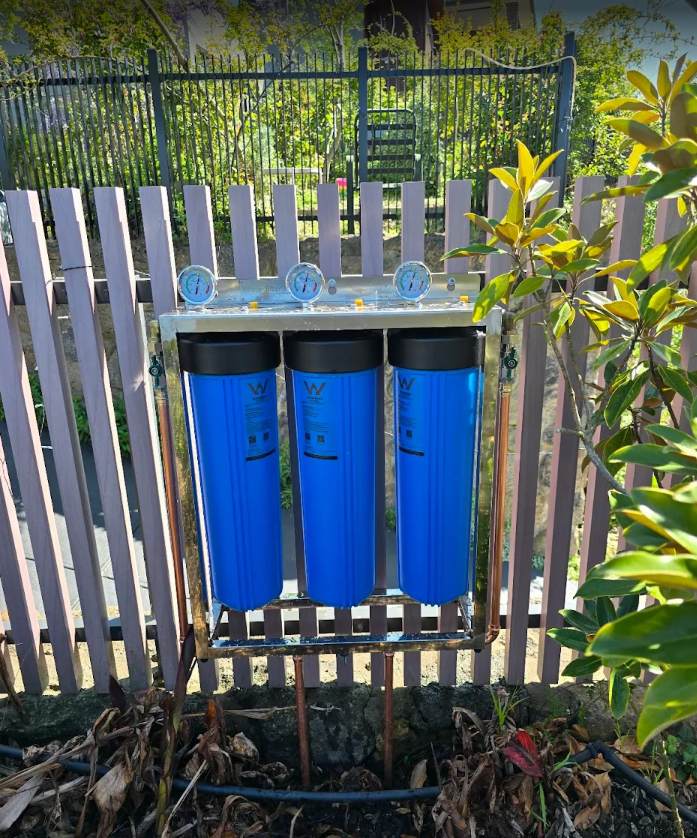
Although reverse osmosis is considered to be the most effective technology for removing PFAS, other water filtration technologies can be applied to decrease PFAS concentrations in drinking water as well. These include:
Activated Carbon Filters:
Activated carbon filters function by adsorbing contaminants on the carbon surface. These are not as effective at removing all PFAS as reverse osmosis, but they can reduce some.
Ion Exchange Filters:
These filters work by exchanging harmful ions in the water with non-harmful ones. While certain models appear to reduce PFAS, their effectiveness depends on the type and amount of PFAS in the water.
Each of these filters has its pros and cons, and the best choice for you will depend on exactly what is in your water and how comprehensive you need the filtration to be.
Why Choose a PFAS Water Filter in Australia?
Several areas in Australia have been affected by PFAS contamination, which has contaminated drinking water in many regions. Whether you live next to industrial bases in rural areas or near sources of PFAS contamination such as an urban water supply, using a PFAS water filter is one of the most important steps you can take to protect your health and ensure that drinking water is free from harmful chemicals.
Some reasons that using a PFAS water filter in Australia would be advisable:
Protect your Health: A PFAS water filter helps lower the chance of long-term health risks from harmful chemicals.
Fresher Taste and Smell: Drinking water can taste better if you remove PFAS from it, and the water filters can also help reduce the musty smell of your drinking water.
Peace of Mind: Families with young children, pregnant women, and individuals who have been immunocompromised can feel peace knowing their drinking water isn’t laced with dangerous PFAS and other contaminants.
Environmental Impact: By removing PFAS from your drinking water, you contribute to reducing the environmental impact of these harmful chemicals.
How to Choose the Right PFAS Water Filter in Australia
Selecting the right PFAS water filter for your residence can be an overwhelming experience, as there are so many options on the market. When selecting the right PFAS water filter for your home, the following factors are worth considering carefully:
Filtration Technology: As mentioned earlier, reverse osmosis is the most effective method for removing PFAS from water. Look for a filter that uses this technology for the best results.
Capacity and Flow Rate: Consider how many people are in your household and your average daily water consumption. Under sink reverse osmosis systems typically produce between 50 and 100 litres per day, which suits most households. Larger families or those with higher usage may benefit from a whole-house system or a higher-capacity RO unit.
Certification: Check for certifications that the filter meets Australian water quality standards. Look for systems certified to NSF/ANSI 58 or NSF/ANSI 53 standards, which include PFAS reduction claims. Seek out certifications from reliable bodies to be sure a filter functions for PFAS and other pollutants.
Maintenance Requirements: Consider the long-term maintenance of the filter, including the frequency and cost of filter replacements. Choose a filter that is easy to maintain and replace.
Benefits of Using a PFAS Water Filter in Australia
Effective PFAS Removal: Reverse osmosis filters are among the best options for removing PFAS from water. Other filters, like activated carbon, can also capture PFAS, but RO systems offer the highest level of purification.
Cost-Effective: Buying and installing a water filter may appear costly upfront; however, the long-term cost of purchasing bottled water or the potential health costs associated with prolonged PFAS exposure are likely to far exceed the initial investment in a quality filtration system.
Less Maintenance: PFAS water filters, like reverse osmosis, require relatively low maintenance. As long as the filters are changed regularly, the system functionality is usually sufficient.
Convenience: Enjoy clean, filtered water right from the tap. Minimize trips to buy bottled water. Eliminate the need for periodic water delivery services.
The Role of Government Regulations in Tackling PFAS Contamination
The Australian government has a critical role in the management and remediation of PFAS contamination, particularly at Commonwealth land defence sites and in relation to public drinking water supplies. Over the years, several programs and legislations have been developed to investigate and control the release of PFAS into the environment with a special focus on water supplies.
The Australian Drinking Water Guidelines (ADWG), published by the National Health and Medical Research Council (NHMRC), set health-based guidance values for PFAS in drinking water. Current guidance values include 0.07 micrograms per litre for PFOA and 0.07 micrograms per litre for PFOS. However, some health researchers and international agencies argue these limits should be tightened further in line with emerging evidence on low-level chronic exposure. The United States Environmental Protection Agency (US EPA) has already moved to set significantly stricter limits, prompting debate about whether Australian standards need updating.
National Environment Management Plan (NEMP) for PFAS: The Australian Government has prepared a NEMP that provides guidance on how to assess and manage PFAS-contaminated sites. The strategies address controlling contamination of PFAS in water, soil, and food resources to safeguard public health.
Environmental Protection Authorities (EPAs): Although EPAs oversee and regulate levels of PFAS in drinking water, local authorities need to manage these contamination risks.
Despite these interventions, PFAS contamination continues to affect several parts of Australia. Therefore, PFAS water filters are imperative for concerned individuals and families across the country.
Frequently Asked Questions
Does boiling water remove PFAS?
No. Boiling water does not remove PFAS and may actually increase concentration as water evaporates. Dedicated filtration particularly reverse osmosis is required.
How do I know if my water contains PFAS?
Contact your local water authority for PFAS testing data, or arrange independent water testing through a NATA-accredited laboratory. Residents near known contamination sites can also check the Australian Government’s PFAS contamination site register.
Are all reverse osmosis systems effective against PFAS?
Most certified RO systems remove the majority of PFAS compounds. Look for systems certified to NSF/ANSI 58 or NSF/ANSI 53 standards, which include PFAS reduction claims.
How often do PFAS filters need replacing?
This depends on your system and local water quality. Most RO membrane cartridges last 2–3 years, while pre-filters typically require replacement every 6–12 months.

Conclusion
PFAS contamination is one of the most serious and widespread drinking water issues facing Australian households today. Unlike many contaminants, PFAS cannot be removed by boiling water or standard municipal treatment processes dedicated filtration is the only reliable household-level solution.
Reverse osmosis systems remain the gold standard for PFAS removal, capable of eliminating over 90% of detected PFAS compounds from drinking water. Activated carbon and ion exchange filters offer supplementary protection, particularly when combined with an RO membrane in a multi-stage system.
For Australians living near military bases, airports, or industrial sites or simply those who want greater certainty about what is in their drinking water installing a certified PFAS water filter is one of the most important steps you can take for your household’s long-term health and safety.