_edited_9.png)
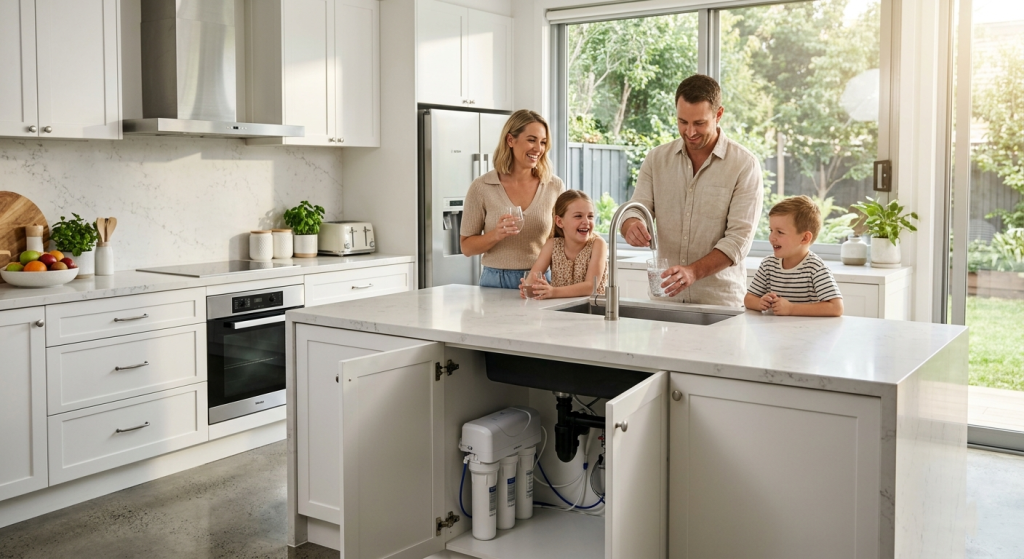
Table of Contents
INTRODUCTION
Choosing a house water purifier system in Australia is not as simple as picking the cheapest option at the hardware store. The right system depends on what is actually in your water, how much water your household uses, whether you want filtered drinking water only or whole-home treatment, and what your realistic budget is for both upfront and ongoing costs.
This guide cuts through the noise and gives Australian homeowners a straightforward framework for evaluating water purification systems, from understanding your local water quality issues to matching the right technology to your household’s specific needs to avoiding the most common and costly buying mistakes.
Why Water Quality Matters More Than Most Homeowners Realize
Many Australian households assume that council-supplied tap water requires no further treatment at home. While Australian tap water is among the safest in the world, local water quality varies significantly depending on your location, the age of your home’s plumbing, seasonal environmental conditions, and individual sensitivity to taste and odor. Drinking water in Australia is generally considered safe. Still, it can vary depending on your location, your home’s pipes, the treatment method, and how you expect your water to be treated.
The problem is that the chlorine smell and taste may be an issue for some families. Particulate matter may bother others. Some people will notice sediment, hard water buildup, and odor, and sometimes water quality changes significantly after heavy rain or construction work on infrastructure. Just because a water-related problem affects someone’s daily activities does not mean it is unsafe.
Every day, we rely on water for things like drinking, cooking, showering, washing clothes, and cleaning our homes! Therefore, water quality affects your comfort and convenience. Even small changes in water quality can increase your comfort and convenience every day. This is why many homeowners are researching which water purifiers are available today.
Understanding What a House Water Purifier System Actually Does
It is important first to comprehensively understand a water purifier’s function before comparing different product brands for purchasing decisions.
A household water purification system works by removing impurities from the water before it reaches the tap. The way this is accomplished depends on the specific technologies employed to purify the water, which may include chlorine, sediment, bad taste and odor, and heavy metals or other impurities found in the water itself.
There are many filtration processes used by water filtration systems on the market today. Many systems utilize activated carbon for water filtration, whilst others use reverse osmosis membranes or multiple stages of filtration.
The most important question to answer before comparing products is: where does the water problem actually occur in your home at the kitchen tap only, in the shower, or throughout the entire property? The answer determines whether you need a point-of-use system or a whole-home solution.
Common Water Quality Issues Found in Australian Homes
In Australia, various regions have water quality issues. But even if you live in the same city, you can have different water qualities.
Water quality challenges vary considerably across Australian cities. Perth and Adelaide households frequently deal with hard water and a stronger chlorine taste Adelaide’s Murray River sourcing, in particular, is known for noticeable chlorine and mineral levels during summer. Melbourne and Sydney benefit from softer, cleaner catchment water but can face sediment and lead concerns in older inner-suburb homes with aging infrastructure. Brisbane and Southeast Queensland fall in the moderate hardness range, with agricultural runoff a consideration in outer areas. Darwin and regional Northern Territory communities may experience higher turbidity during wet-season events. Understanding your city’s specific water profile is the most useful starting point before comparing systems.
These are some common water quality issues you may be experiencing:
Chlorine Taste and Odor:
Chlorine is used to purify drinking water, but homeowners don’t like the way it smells or tastes. One of the most common reasons people consider getting a purifier is the smell/taste of chlorine in their water.
Sediment and Rust Particles:
Homes built before 1970, particularly in older inner-city suburbs, can have aging pipes that release sediment, rust particles, or, in some cases, lead into the water supply. This can affect water clarity, taste, and, in the case of lead, long-term health.
Hard Water Minerals:
Some areas of the country have a lot of minerals in their drinking water. Some of the minerals are harmless but contribute to the buildup of what is called scale inside appliances and plumbing.
Seasonal Changes to Water:
Conditions such as changing weather (rain, drought) and adjustments made to Treatment can sometimes affect how the drinking water looks, smells, and tastes.
Knowing all these different scenarios will help homeowners determine which type of purifier to use.
Different Types of House Water Purifier Systems
Not every purifier works in the same way. Understanding the main categories can make the buying process much easier.
Activated Carbon Water Purifiers
One of the most commonly used filtration systems in Australia is an activated carbon system. This type of water filtration system effectively removes chlorine from your drinking water, which can greatly enhance its taste and odor.
An activated carbon filter is also a great choice for homeowners who want to improve the quality of their drinking water without purchasing a more complex filtration system.
Reverse Osmosis Water Purifiers
A reverse osmosis system is a type of water purifier that uses membranes designed to capture very small contaminants, resulting in a much higher level of filtration than standard filters. Homeowners can choose to install a reverse osmosis system to access a wider range of water purification options and gain greater control over their drinking water quality.
Under-sink water purifiers
Under-sink water filtration systems are installed under the kitchen sink and provide filtered water through a separate faucet. This type of water filtration system is popular among homeowners because it takes up less space and focuses on providing filtered water for food and drink.
Whole house water purifiers
Whole-house water purification systems are designed to treat all water entering a home before it is used in any area. Every faucet, shower, and appliance in that house will be supplied with filtered water. Larger families frequently choose whole-house systems so they can have access to the same level of clean water in every room.
How to Choose the Best House Water Purifier System for Your Home
Assess Your Water Quality First: Before comparing products, test your water. Your local water authority publishes annual water quality reports that detail chlorine levels, hardness, and any detected contaminants. For more specific household data, particularly in older homes, an independent test through a NATA-accredited laboratory will tell you exactly what your tap water contains. Buying a system based on what your water actually needs filtered is far more cost-effective than buying based on general assumptions.
Match System Capacity to Household Size: Under-sink systems typically process 8–15 liters per hour, which is suitable for one to two people. A family of four will benefit from a higher-capacity under-sink water filtration system or a whole-house water filtration system. Households of five or more should consider whole-house systems specifically rated for higher daily flow demands. An undersized system will lose effectiveness quickly and may need replacement sooner than expected.
Calculate Total Cost of Ownership: The purchase price is only the beginning. Factor in installation costs ($150–$500 AUD for professional plumbing), annual cartridge replacement ($50–$300 AUD depending on system type), and any servicing requirements. A mid-range system with affordable, widely available replacement cartridges often delivers better long-term value than a cheap system with expensive or hard-to-source filters.
Decide Your Filtration Scope: Point-of-use systems (under-sink or benchtop) are ideal for households that primarily want better drinking and cooking water. Whole-house systems are the right choice when the concerns are a chlorine smell in showers, scale on appliances, or sediment throughout the home. Some households install both a whole-house carbon system for general improvement and an under-sink reverse osmosis unit for drinking water.
Why Water Testing Can Help You Make a Smarter Decision
Many homeowners purchase filtration systems based on preconceived notions rather than concrete facts.
Testing water provides the homeowner with the following important data:
- Chlorine levels
- Hardness or softness of the water
- Amount of sediment present
- What minerals are contained in the water
- Any potential contaminants
There are three practical ways to test your household water in Australia. The first is to request your local water authority’s most recent annual water quality report, which is publicly available and covers the main parameters tested at the treatment and distribution level. The second is to purchase a home water test kit, available from hardware stores and water filtration suppliers, which provides a basic snapshot of pH, hardness, chlorine, and a limited range of contaminants.
The third and most comprehensive option is to send a water sample to a NATA-accredited laboratory, which can test for a much wider range of contaminants, including heavy metals, PFAS, and microbiological parameters. For households in older homes or near industrial areas, professional laboratory testing is strongly recommended before committing to an investment in a filtration system.
Knowing the above data, homeowners can choose a purifier for any real concerns associated with poor-quality or unsafe water, rather than for perceived issues.
Choosing the Right Purifier for Different Household Sizes
Household size ultimately determines the best system for your home.
Single or Two-Person Households:
An under-sink activated carbon filter or a compact reverse osmosis system provides more than enough filtered water for one or two people. Benchtop units are ideal for renters. Estimated daily filtered water needs: 4–8 liters for drinking and cooking.
Medium Households (3–4 People):
A mid-capacity under-sink system rated for 10–15 liters per hour suits most medium households. If the chlorine smell in showers is also a concern, adding a whole-house carbon pre-filter is a cost-effective upgrade. Estimated daily needs: 8–15 liters for drinking and cooking.
Large Households (5+ People):
A whole-house filtration system is the most practical solution for large households, ensuring consistent water quality from every tap and shower. A dedicated under-sink reverse osmosis unit for drinking water can be added for maximum purity at the kitchen tap. Estimated daily needs: 15–30+ liters for drinking, cooking, and concentrated use points.
How Professional Guidance Can Simplify the Process
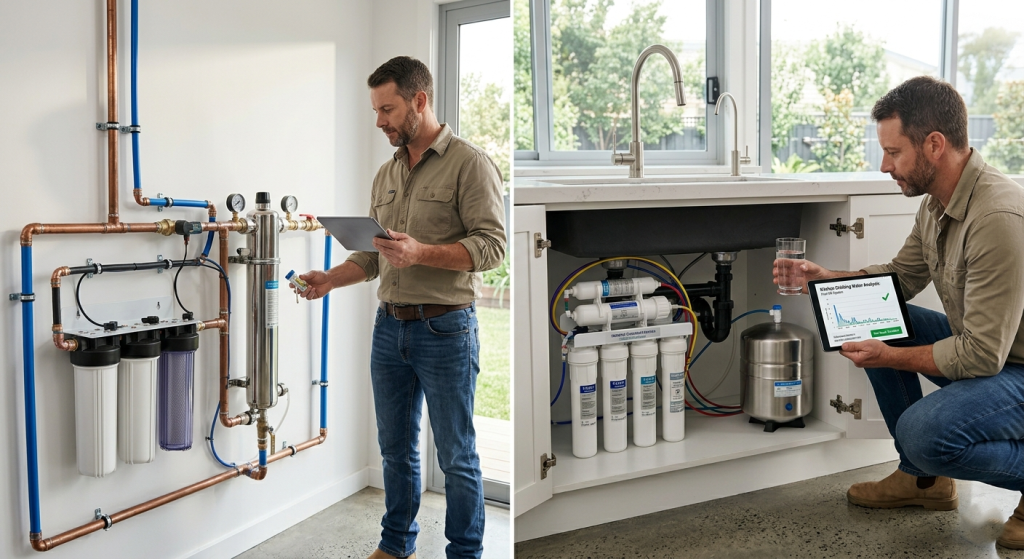
The majority of homeowners struggle to compare filtration technologies and their associated technical specifications. In these instances, using professional advice can be beneficial.
Companies like Demand Filtration collaborate with homeowners to identify solutions tailored to household size and long-term goals. Instead of just looking at specific product specifications, using an approach personalized to the individual family often helps them find a system that provides greater value and satisfaction in the long run.
For purchasers who are unsure where to begin, professional guidance will help minimize confusion and narrow down the available choices.
Common Mistakes to Avoid When Buying a Water Purifier
The purchasing process for many buyers consists of making very similar mistakes. Some of the mistakes often seen in the purchasing process are:
- Selecting the least expensive option available
- Neglecting to consider the maintenance schedule
- Failing to check replacement filter pricing
- Selecting an improperly sized unit
- Failing to consider certification.
This can cause poor performance and higher long-term costs.
Research before you buy can help reduce or eliminate many of the mistakes purchasers make today.
Long-Term Benefits of Investing in the Right Water Purifier
An appropriate purifier can provide benefits that last for many years.
Homeowners report having:
- Much better-tasting drinking water.
- Much better quality of cooking.
- More confidence in the quality of the water used in the home.
- Less reliance on bottled water.
- Consistent quality of water throughout the year.
Water is used daily, so regularly purchasing a proper purification system can provide benefits that accumulate over time.
Selecting a system that meets your actual needs rather than simply going along with fad or advertising claims is the key to long-term savings.
Final Thoughts
Selecting the right house water purifier comes down to four things: knowing what is actually in your water, matching the system type to where the problem occurs in your home, choosing a capacity appropriate for your household size, and evaluating total cost of ownership rather than purchase price alone.
Australian tap water is safe, but safe and optimal are not the same thing. For households dealing with chlorine taste, sediment from older pipes, hard water scaling, or simply wanting greater confidence in what they drink and cook with daily, the right water purifier delivers a noticeable, lasting improvement in everyday life.
Test your water first, check independent certifications, and choose a supplier who offers ongoing support beyond the point of sale. That approach will consistently outperform impulse buying based on price or marketing claims and deliver better water quality for years to come.