_edited_9.png)
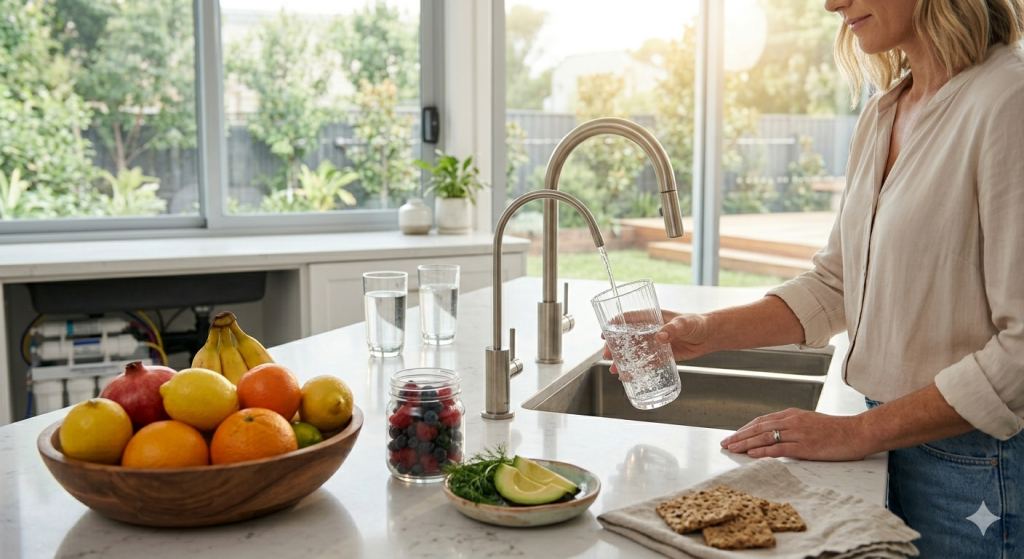
Table of Contents
INTRODUCTION
Chlorine is added to Australian tap water as a disinfectant, a necessary step in keeping municipal water safe from bacteria and viruses. But while regulated chlorine levels are not harmful to health, many Australians find the chemical taste, smell, and drying effect on skin and hair reason enough to filter it out at home.
Choosing the right chlorine removal water filter depends on where you live in Australia, how much water your household uses, whether you want filtered drinking water only or whole-home protection, and your budget for upfront and ongoing costs. This guide breaks down the best technologies available, how to choose the right system, and what to avoid when making your decision.
Why Chlorine Is Still Present in Australian Tap Water
Chlorine is a common chemical used in municipal water systems to disinfect water and eliminate bacteria and viruses. This is a necessary process for the safety of water supplied to all Australians. However, people continue to purchase various water filters to remove chlorine because of its effects on their daily routines.
Chlorine levels have been regulated. However, the smell and taste remain in your water, and many Australians have found the need to use a filtration unit to make the water and food taste better. The best water filter for chlorine removal is extremely important for long-term household use.
How Chlorine Impacts Everyday Living
The reason many people are looking for a water filter to remove chlorine is that they understand how it can negatively affect them.
Some of the negative effects caused by exposure to chlorine at levels that meet water quality standards include, among other things:
- Chlorine in tap water can give off a chemical smell or taste.
- Dry skin after showering.
- Hair that has become increasingly brittle over time.
- Cooking with chlorinated water may slightly alter food flavor.
- Especially sensitive people could also experience irritation.
Chlorine levels in Australian tap water vary by city and season. Residents frequently cite Adelaide and Perth as having the strongest chlorine taste, particularly during summer months when water authorities increase disinfection levels in response to warmer temperatures and higher bacterial activity in supply reservoirs. Melbourne and Sydney generally have lower detectable chlorine taste due to softer, cleaner source water from protected catchments. Brisbane falls in the middle range. Regardless of the city, households that notice a stronger chlorine smell or taste during summer are experiencing a normal seasonal variation that a quality carbon filter addresses effectively year-round.
Many Australian households experience the problems identified above. Therefore, the best chlorine-removal water filter is generally viewed by households as an essential home upgrade rather than a luxury item.
Types of Chlorine Removal Technologies Explained
Understanding filtration technology before investing in a chlorine-removal water filter is crucial; several types of systems are available that remove chlorine through various means, each with distinct advantages.
Activated Carbon Filtration
One of the most frequently used methods for removing chlorine from water is activated carbon. This method removes chlorine by attracting and capturing chlorine particles within its porous structure, while also improving taste and odor.
Jug filters, under-sink units, and whole-house filter systems use activated carbon to remove chlorine, as do many Demand Filtration products, which use advanced carbon block designs to achieve greater efficiency and longer filter life.
Reverse Osmosis Unit
Because they remove chlorine, heavy metals, and dissolved solids, reverse osmosis units are often considered the best chlorine-removal water filter systems.
Reverse osmosis systems offer the highest level of chlorine and contaminant removal available for household use. Still, they do require professional under-sink installation and more regular maintenance than basic carbon filters. For households wanting comprehensive water purification rather than chlorine removal alone, RO systems are the premium choice.
Whole House Filtration Systems
Families that want to protect their entire home with one product usually choose a whole house filtration system/best water filter to remove chlorine. Because a whole house filtration system treats the water supply when it enters the home, you will have filtered water coming from every tap in your house.
Shower Filters (Targeted Protection)
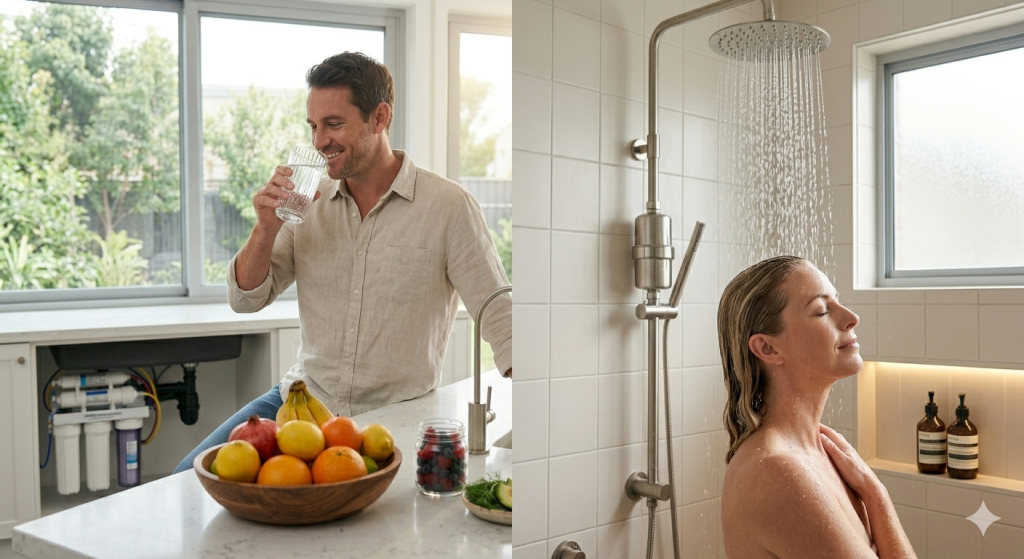
Shower Filters are an easy and effective way to reduce your exposure to chlorine while showering. Although shower filters do not remove chlorine from drinking water or your entire home, they are part of a comprehensive Best Water Filters to Remove Chlorine strategy that improves the health of your skin and hair.
How to Choose the Right System for Your Home
Choosing an appropriate chlorine for your water supply may take time, as it requires gathering as much information as possible about your home’s configuration and specifications.
Evaluate Where You Live
Because different regions within Australia contain varying amounts of chlorine, testing your water supply is the best way to know how effective the filtration system will be. The data will tell you which chlorine-removal system is most suitable.
Evaluate Your Household’s Usage
A single-person household or renter may only need a compact under-sink carbon filter or a benchtop unit. A family of four or more, or a household where the chlorine smell affects both showering and drinking, will benefit more from a whole-house system that treats every tap and shower outlet simultaneously. The right chlorine-removal water filter will match your daily household water consumption.
Renting an Apartment or House?
Renters face specific constraints when installing chlorine removal systems. Any modification to household plumbing in Australia requires landlord approval and, in most cases, a licensed plumber. However, several effective options require no plumbing modification at all. Benchtop carbon filters connect directly to the existing tap without any permanent changes and can be taken when you move. Shower filters attach to the existing shower arm in minutes. For renters who want under-sink filtration, a written request to the landlord explaining the benefits including appliance protection is often approved, particularly if installation is performed by a licensed plumber and the system can be removed when vacating.
Determine How Deep to Filter
Some homes want filtered water just because it tastes better, while others want better taste and total purification. This affects whether you have a carbon filter system or a reverse osmosis (RO) system.
Balance Between Maintenance and Cost
A really good water filtration system should be affordable from purchase to upkeep. Look for systems that offer a clear maintenance schedule and readily available replacement cartridges, as ongoing serviceability is as important as initial performance.
Check for Certifications and Compliance
When searching for the best water filter for chlorine removal, always look for systems that meet recognized industry standards and certifications. In Australia, products that align with the Australian Drinking Water Guidelines (ADWG) provide greater confidence in water quality and Treatment performance.
It is also beneficial to choose systems that use components tested to NSF International standards, as NSF certifications are widely recognized for evaluating filtration performance and contaminant-reduction claims. Additionally, manufacturers associated with the Water Quality Association of Australia (WQAA) often demonstrate a stronger commitment to quality assurance and industry best practices.
Installation Process: What to Expect
The installation of a chlorine-removing water filter depends on the kind of filtration system to be installed. However, it can generally be done easily if carried out correctly.
If you wish to install an under-sink model, you must connect the filter to the cold-water supply and install a separate tap for it. Likewise, if you wish to install a whole-house unit, it will require a plumbing professional to connect it to the municipal water supply at the point of entry into your house. This will ensure the proper amount of pressure is maintained and that it is safe for use.
Shower filters are the simplest type of filter to install, requiring almost no tools. Many people also use these systems before installing larger systems.
Maintenance Tips for Long-Term Performance
Consistent maintenance is essential to ensure your chlorine removal system continues to perform effectively over its full service life. Dirty old filters will trap contaminants & cause poor performance. For most systems, cartridge replacements should occur every 6 to 12 months depending on usage.
To prevent sediment buildup in the filter housing or cartridge of systems, periodic cleaning or inspection is required, especially for whole-house designs. Periodic inspection of system pressure will also help maintain consistent water flow.
A final key to maintaining filtration systems is monitoring appliance operation by the taste or smell of the filtered water; if the filtered water begins to taste like chlorine again, it typically indicates the filter is nearing the end of its cycle.
Reputable suppliers should provide a clear maintenance schedule specific to your system model, taking the guesswork out of filter replacement timing.
Common Mistakes to Avoid When Buying a Water Filter
Some buyers often make mistakes when choosing the most effective water filter to remove chlorine. These errors may lead to inefficiencies with the filter or unnecessary outlays of money. One common error is not testing the water quality in the local area and surrounding region before purchasing a chlorine-removal water filter. Since chlorine levels vary from area to area across Australia, it is essential to understand your water supply conditions to select the correct filtration capacity.
Another common mistake made by new filter purchasers is choosing a filter primarily based on price. While budget is an important consideration, the lowest-priced unit may not always be the best water filter for chlorine removal, service, or longevity. Lower-quality water filters may initially remove some chlorine, but they will become inefficient shortly after being installed. This will lead to substantially lower performance results.
Some users also do not consider how much maintenance their filtration systems require. Every filter will need to be replaced regularly to maintain optimal performance.
Additionally, a portion of buyers purchase a filter sized incorrectly for the intended application. An example would be someone purchasing a small under-sink filter for their large family’s high water usage. Having the proper-sized filter will ensure it works properly to remove chlorine from the water, with no loss in water pressure or flow rate.
Why Demand Filtration Is Trusted in Australia
For Australian house owners looking for quality water filters to remove chlorine from their water supply, Demand Filtration has established itself as a reliable brand.
Their systems are designed to work with specific Australian water quality, meaning that chlorine removal works effectively no matter where you live.
Another aspect of reliability is the long-lasting ability to function properly with little or no maintenance. Systems that require little or no maintenance tend to be a good fit for families who desire dependable performance without constantly servicing the system.
One of the most appealing qualities of Demand Filtration is its emphasis on both improving water quality and ensuring ease of use for customers. Therefore, Demand Filtration is a solid option in the category of the best chlorine-removal water filters.
Benefits of Using the Best Water Filter for Chlorine Removal
Choosing a water filtration system that removes chlorine from your drinking water is beneficial for many reasons. Not just because it improves the flavor of your drinking water.
Drinking filtered water improves your day-to-day experience by providing clean water, enhancing the taste of food cooked with it, and delivering better hydration. In addition, many users report that switching to filtered water systems resulted in less dry skin and better hair quality.
An additional significant advantage of home filtration systems is saving money by avoiding the purchase of bottled water, providing households with a long-term solution.
From an environmental standpoint, using a home filtration system significantly decreases plastic waste, making it a sustainable option for backcountry families across Australia as well.
Is Chlorine Removal Really Necessary for Every Home?
Chlorine removal is not strictly necessary for every Australian household; tap water that meets ADWG standards is safe to drink as supplied. However, necessity and preference are different things. Many Australians install chlorine removal systems not because their water is unsafe, but because filtered water tastes noticeably better, feels better on skin and hair during showering, and improves the flavor of coffee, tea, and cooked food.
Households with sensitive skin, young children, or anyone who dislikes the chemical taste of chlorinated tap water will find the quality-of-life improvement from a good carbon filter immediately noticeable. For most Australian households, the low cost of a basic activated carbon filter makes it a straightforward upgrade rather than a significant financial decision.
Conclusion
Chlorine removal does not require an expensive or complicated system for most Australian households. A quality activated carbon filter, whether under-sink, benchtop, or whole-house, will address the most common chlorine-related complaints: taste, odor, and skin and hair dryness. For households wanting broader contaminant protection alongside chlorine removal, a reverse osmosis system or multi-stage whole-house setup offers the most comprehensive solution.
Before purchasing, test your local water supply, match the system capacity to your household usage, check for NSF certification and ADWG compliance, and factor in ongoing cartridge replacement costs rather than purchase price alone. A well-chosen, properly maintained chlorine removal system will deliver noticeably better water quality every day from the kitchen tap to the shower for years to come.
Reducing your reliance on bottled water also significantly cuts household plastic waste, making a home filtration system both a practical and environmentally responsible investment for Australian families.