_edited_9.png)
Table of Contents
Introduction
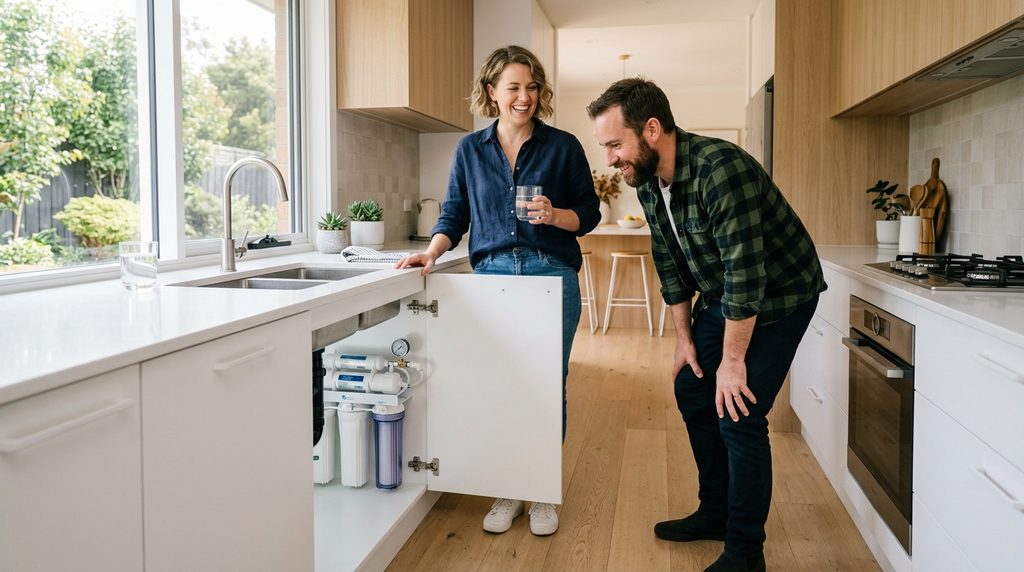
This guide explains how a water filtration specialist in Melbourne can help homeowners understand their filtration options and choose the right system for their household. While Melbourne has one of the best drinking water supplies in Australia, many homeowners install filtration systems to improve taste, reduce chlorine levels, manage sediment, or gain greater confidence in the water their families use every day.
Demand Filtration helps Melbourne homeowners compare filtration systems based on their property, water usage, budget, and individual priorities. This personalized assessment aims to make homeowners feel supported and reassured that their specific needs are being understood and addressed.
Why Melbourne Homeowners Are Paying More Attention to Water Quality
Water filtration was once considered an optional home improvement. Today, growing awareness of water quality issues, including chlorine treatment, emerging contaminants, sediment from aging infrastructure, and the condition of household plumbing, has led more Melbourne homeowners to consider filtration as a practical upgrade rather than a luxury.
Melbourne’s drinking water system is comprehensive and meets Australian drinking water standards. However, water that meets regulatory requirements at the treatment plant is not the same as water that meets your expectations at the tap. Water travels through an extensive distribution network and then through your household’s internal plumbing before it reaches the kitchen. The age and condition of that internal plumbing can influence the final quality of what comes out.
This is why property owners increasingly seek advice from a water filter specialist in Melbourne rather than simply purchasing the cheapest available filter. A specialist can determine whether filtration is the right solution or if other issues, like aging pipes or plumbing faults, need attention first. This expert guidance helps homeowners feel confident and supported in their decisions.
What Does a Water Filter Specialist Actually Do?
A water filtration specialist does considerably more than install a system. Their role includes understanding available filtration technologies, assessing a household’s specific needs, and advising on which solution will most effectively address the water quality concern.
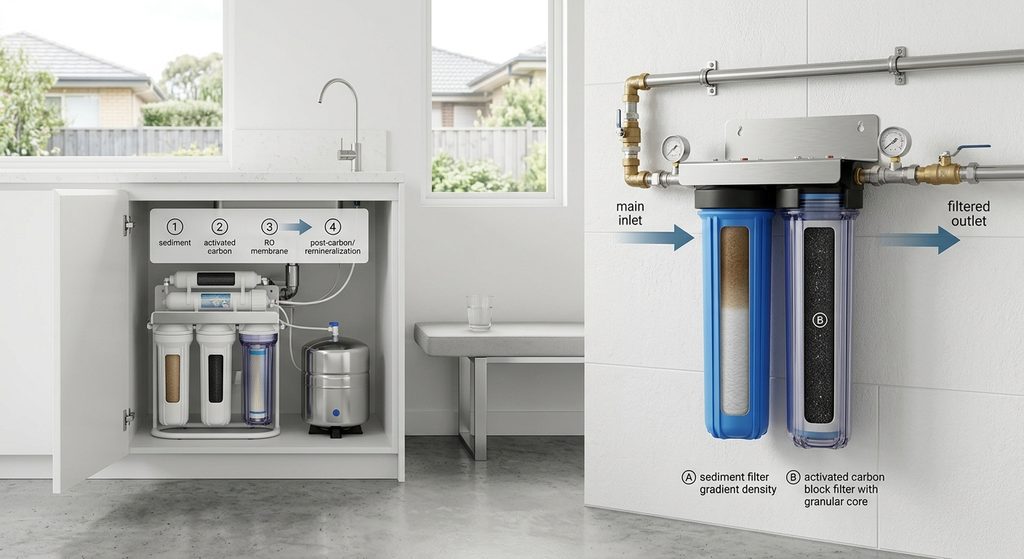
For example, activated carbon filtration is designed to remove chlorine and improve taste and odor. Reverse osmosis provides more comprehensive purification by removing a broader range of dissolved contaminants. Sediment filters address physical particles. Water softeners target hard water minerals. Knowing which technology matches which problem is the foundation of a useful recommendation, and that distinction requires specialist knowledge rather than a generalized product recommendation.
Understanding Melbourne Water Before Choosing a Filter
Before selecting a filtration system, homeowners should understand their current water quality and the condition of their property’s internal plumbing. Gaining this knowledge can help them feel more in control and confident about making the right choice for their household.
Melbourne’s water is sourced from protected mountain catchments, including the Thomson, Upper Yarra, and Yering Gorge reservoirs. It is generally soft and low in minerals, making chlorine taste and odor the primary water quality concern for most households in metropolitan Melbourne. However, properties in older inner-city suburbs such as Carlton, Fitzroy, Collingwood, Richmond, and Brunswick may also have pre-1970 plumbing with lead solder joints that can affect water quality at the tap, a concern that goes beyond what chlorine filtration alone addresses.
If water has an unusual color, taste, smell, or visible particles, these signs should be properly investigated rather than immediately resolved by purchasing a filter. A professional water filtration specialist will help homeowners determine whether filtration is appropriate or whether a plumbing issue needs to be addressed first.
Common Water Quality Concerns That Lead Homeowners to Filtration
Households choose filtration for a range of reasons. Understanding which concern applies to your home is the first step toward selecting the right solution.
Chlorine Taste and Smell
Chlorine is added to municipal water to eliminate harmful microorganisms, an essential step for public health. However, many people find the residual taste and odor unpleasant, particularly in summer when treatment levels may be slightly higher. Activated carbon filtration is the most common and cost-effective technology for reducing chlorine taste and odor.
Chloramine
Some Australian water authorities use chloramine, formed by combining chlorine with ammonia, as a secondary disinfectant. Chloramine is more stable in the distribution network than free chlorine but requires catalytic carbon filtration for effective reduction. Standard activated carbon filters may not reduce chloramine as effectively as they reduce free chlorine. Homeowners should check whether their water authority uses chloramine and confirm that any carbon filter they consider has been tested specifically for chloramine reduction if this is a concern.
Sediment and Particles
Visible particles in water, or water that appears cloudy or discolored, can indicate sediment from aging pipes or infrastructure. Sediment pre-filters capture physical particles before they reach downstream filtration stages or household appliances. In multi-stage systems, a sediment filter is often the first stage of treatment.
Dissolved Substances
For households wanting to reduce dissolved contaminants, including heavy metals, PFAS, fluoride, and dissolved solids, reverse osmosis is the most effective household solution. RO systems use semi-permeable membrane technology and are certified to NSF/ANSI 58 as reliable products.
Hard Water and Mineral Deposits
Hard water contains elevated concentrations of calcium and magnesium minerals that cause scale buildup on taps, showerheads, kettles, and appliances. This is more common in Perth, Adelaide, and many regional areas than in metropolitan Melbourne, where water is generally soft. For households with confirmed hard water, a water softener is a more appropriate solution than a standard drinking water filter, as it is specifically designed to reduce hardness minerals throughout the property.
Point-of-Use vs. Whole-House Water Filtration
One of the first decisions homeowners face is whether to have filtration at a single point in the home or throughout the property.
Under-sink filtration systems filter water at the kitchen tap, providing high-quality filtered water for drinking and cooking without treating water used elsewhere. They are ideal for households primarily concerned with drinking water quality and do not want or need whole-home filtration.
Whole-house filtration systems treat all water entering the property at the point of entry, meaning every tap, shower, bathroom, appliance, and laundry outlet receives filtered water. This approach is most appropriate when the concern, such as a chlorine smell, sediment, or hard water, affects the household at multiple points of use.
Neither option is inherently superior. The right choice depends on household size, daily water consumption, property layout, plumbing configuration, and the homeowner’s specific water quality goals. Demand Filtration guides clients through this comparison so the decision is based on informed needs rather than assumptions.
What Should Families Consider Before Choosing a Filter?
Choosing the right filtration system involves considering not only purchase price but also ongoing maintenance costs, system durability, and ease of operation to ensure long-term satisfaction and confidence.
Key factors to consider include:
- Filtration capability: What specific contaminants or parameters does the system address, and has it been independently certified to do so?
- Flow rate: Can the system handle your household’s daily water usage without pressure loss?
- Filter lifespan: How often do cartridges need to be replaced, and what does this cost annually?
- Maintenance: Are replacement cartridges readily available locally, and is servicing straightforward?
- Installation requirements: Does the system fit the available space, and does installation require a licensed plumber?
- Certification: Does the system carry relevant NSF/ANSI certification for its stated performance claims?
Considering these factors protects homeowners from making decisions based on attractive pricing or marketing claims that may not reflect actual filtration performance.
Why Professional Advice Can Make a Difference
With thousands of water filtration products available across Australian retailers and online marketplaces, comparing options meaningfully is challenging. Two products may appear identical in their descriptions but differ significantly in filtration capacity, flow rate, filter lifespan, and the contaminants they are actually certified to reduce.
A water filter specialist in Melbourne can explain these differences clearly and help a homeowner identify which features genuinely matter for their specific situation and which are unnecessary additions that increase cost without improving performance.
Demand Filtration’s approach focuses on helping clients make confident, informed decisions rather than defaulting to the most expensive or most marketed option. The right solution should meet the household’s actual needs at a realistic long-term cost.
How Demand Filtration Approaches Household Water Filtration
Demand Filtration does not apply a one-size-fits-all approach to water filtration recommendations. Each recommendation is tailored to the property’s specific requirements, including water usage, filtration goals, available budget, installation space, and anticipated maintenance preferences.
A compact under-sink carbon filter may well serve a single-person apartment in Melbourne’s inner suburbs. A family of five in a suburban home with older plumbing may benefit from a multi-stage whole-house water treatment system, including an under-sink reverse osmosis unit for drinking water. A household near a known PFAS contamination site requires a specific approach that standard carbon filtration alone cannot address.
This personalized process simplifies the comparison for clients and yields a filtration solution genuinely suited to their home and lifestyle, rather than relying on a generic recommendation.
Reverse Osmosis vs Activated Carbon: Which One Fits Your Home?
Activated carbon and reverse osmosis are the two most commonly compared water treatment technologies for household use. Both improve water quality but serve different purposes and address different concerns.
Activated carbon filtration is effective at reducing chlorine, improving taste and odor, and removing some volatile organic compounds. Depending on the carbon type and system design, it may also reduce chloramine. However, this varies by product, and homeowners should verify tested performance rather than assuming all carbon filters handle chloramine equally. Activated carbon systems are generally lower-cost, easier to maintain, and suitable for most Melbourne households where taste and odor improvement is the primary goal.
Reverse osmosis provides significantly more comprehensive purification, removing dissolved heavy metals, PFAS, fluoride, nitrates, dissolved solids, and a broad range of other contaminants. RO systems carry a higher upfront cost and produce a small amount of wastewater during filtration. Still, they are the appropriate choice when testing has identified specific health-related contaminants or when maximum purification of drinking water is the priority.
A Melbourne filtration specialist can help compare these two technologies based on your water test results, household needs, available space, budget, and maintenance preferences.
Choosing the Right Filtration System for Different Household Needs
No single filtration system is the right choice for every Melbourne home. The needs of a compact inner-city apartment are fundamentally different from those of a larger family home in the outer suburbs with multiple bathrooms and significantly higher daily water usage.
Under-sink systems are well suited to households where drinking and cooking water quality is the primary concern. Whole-house systems are appropriate when filtered water is needed across multiple outlets throughout the property. Reverse osmosis is the right choice when comprehensive purification of drinking water is required, particularly when water testing has identified dissolved contaminants beyond chlorine and taste.
For households with microbiological concerns, such as those using rainwater tanks, bore water, or private water supplies, UV filtration can be added as a complementary technology. UV systems use ultraviolet light to inactivate bacteria and viruses effectively but do not remove dissolved chemicals, chlorine, or sediment. They are most effective when used alongside carbon filtration or a whole-house system that addresses those other parameters.
The most important principle is to select a system based on its suitability for your specific situation, not on price alone or on features that exceed your household’s actual needs.
How Filter Maintenance Affects Long-Term Performance
After selecting an effective filtration system, ongoing maintenance is what determines whether it continues to deliver consistent results over time. Filters gradually capture contaminants and particles, and their effectiveness diminishes as their capacity is reached.
Replacement schedules depend on the type of filter, household water consumption, source water conditions, and the manufacturer’s recommendations. Delaying cartridge replacement beyond the recommended schedule reduces both water quality and flow rate and, in some cases, can cause previously captured contaminants to be released back into the water.
Demand Filtration helps clients understand exactly what their chosen system requires for maintenance and makes it straightforward to incorporate filter replacement into their regular household routine.
Reverse Osmosis Maintenance Schedule & Common Problems.
Installation Quality Is Just as Important as the Filter
Even a high-quality filtration system will not perform as intended if it is incorrectly installed. Poor connections, incorrect plumbing integration, or pressure imbalances following installation can all compromise filtration performance and long-term reliability.
Professional installation ensures the system is correctly integrated into the existing household plumbing, that water pressure is appropriately balanced, and that all connections are secure. In Australia, any filtration system connected to household water supply lines must be installed by a licensed plumber to comply with plumbing regulations and maintain the manufacturer’s warranty conditions.
Demand filtration guides proper installation as part of the overall recommendation process, ensuring clients receive the full performance their chosen system is designed to deliver.
Understanding the Cost of a Water Filtration System
The cost of a water filtration system varies considerably depending on the technology, capacity, installation complexity, and required filtration performance. A basic under-sink carbon filter may cost $150–$600 installed, while a reverse osmosis system typically ranges from $400 to $1,500 installed, and a whole-house filtration system can range from $800 to $5,000 or more depending on the number of stages and household size.
Beyond the upfront cost, homeowners should factor in the ongoing cost of cartridge replacement, typically $50–$300 per year depending on the system type, local water quality, and any scheduled servicing requirements. A reliable water filter service in Melbourne will explain all of these costs clearly before any purchase decision is made, so there are no unexpected ongoing expenses.
What Melbourne Homeowners Should Look for in a Reliable Provider
Choosing the right filtration provider is as important as choosing the right equipment. A reliable provider should be able to explain filtration technology clearly, set realistic expectations about what a system will and will not achieve, and provide support well beyond the point of installation.
Key indicators of a trustworthy filtration provider include:
- Clear explanation of what the system does and does not filter
- Transparent communication of ongoing maintenance requirements and costs
- Products carrying relevant independent certification: NSF/ANSI 42 for chlorine and taste, NSF/ANSI 53 for health-related contaminants, NSF/ANSI 58 for reverse osmosis performance
- Professionally licensed installation
- Readily available replacement cartridges and local after-sales support
- Willingness to recommend a simpler system where appropriate rather than always upselling
Customers should be encouraged to ask questions and receive straightforward answers before committing to any purchase. A provider that prioritizes education over sales will consistently deliver better long-term outcomes for the homeowner.
Demand Filtration is committed to providing Melbourne homeowners with practical, honest guidance rather than a generalized filtration service.
Why Choose Demand Filtration for Your Melbourne Home?
Demand Filtration takes a practical, customer-focused approach to helping Melbourne homeowners choose the right water filtration solution. Rather than applying a standard recommendation to every household, the focus is on understanding the property’s specific requirements, daily water usage, available installation space, budget, and the water quality concerns the homeowner actually wants to address.
Different homes require different approaches. Some households need only a compact under-sink activated carbon system for drinking and cooking water. Others prefer reverse osmosis for more comprehensive filtration. Homes with microbiological concerns may benefit from UV technology. Larger properties with multiple bathrooms and higher usage may require a whole-house system. Households in areas with hard water may need a softener integrated into their filtration setup.
Demand Filtration helps homeowners understand these differences before making a purchase by considering filtration performance, maintenance requirements, replacement costs, installation needs, and relevant certifications. The aim is not simply to sell a water filter but to help clients make an informed, long-term decision that is genuinely right for their home.
For Melbourne homeowners looking for a water filter specialist who provides personalized guidance rather than a generic product recommendation, this approach consistently produces better results and greater long-term satisfaction.
Frequently Asked Questions
How do I know which water filter is right for my Melbourne home?
The most reliable starting point is understanding what is actually in your water. Your water authority’s annual water quality report provides network-level data, while a home water test or professional consultation provides household-specific information. Demand Filtration offers free consultations and home water assessments to help identify the most appropriate filtration solution for your property before you make a purchase.
Does Melbourne water need to be filtered?
Melbourne’s tap water is safe to drink and meets national standards. However, many homeowners choose filtration to improve taste and odor, reduce chlorine levels, address sediment in older properties, or gain additional peace of mind. Filtration is a quality-of-life and precautionary choice for most Melbourne households rather than a health necessity.
How long does a water filter last in Melbourne?
Filter lifespan depends on the system type and household water usage. Most under-sink carbon filters require cartridge replacement every 6–12 months. Reverse osmosis membranes typically last 2–3 years. Whole-house system cartridges generally need to be replaced every 6–12 months. Demand Filtration provides a clear maintenance schedule with every system recommendation.
Do I need a plumber to install a water filter in Melbourne?
A licensed plumber must install any filtration system connected to household plumbing supply lines under Victorian plumbing regulations. This applies to under-sink, whole-house, and reverse osmosis systems. Proper professional installation also protects the manufacturer’s warranty and ensures optimal system performance.
Conclusion
Understanding what is in your water and what you want a filtration system to achieve makes choosing the right solution significantly more straightforward. By considering filtration performance, maintenance requirements, installation needs, and relevant certification alongside purchase price, Melbourne homeowners can make confident decisions that deliver genuine long-term value.
Demand Filtration provides Melbourne residents with effective filtration systems and expert guidance on choosing the solution that best fits their home, daily habits, and long-term water quality goals without unnecessary complexity or one-size-fits-all recommendations.