_edited_9.png)
Table of Contents
Introduction
This guide covers how to choose a water filter for Melbourne’s western suburbs based on your home’s specific needs. While Melbourne’s drinking water is treated to meet national standards before leaving the treatment plant, many homeowners invest in additional filtration to improve taste and odor, reduce chlorine, or address more specific water quality concerns.
The right filtration system depends on your property, the number of people using water daily, your installation space, and what you actually want filtration to achieve. Understanding these factors first helps avoid overpaying for a system more advanced than your situation requires or underspending on one that does not address the actual issue.
Understanding Melbourne’s Water Supply
Before selecting a water filter in Melbourne’s western suburbs, it helps to understand how the city’s water supply network operates. Melbourne’s water travels through a series of protected catchments, reservoirs, and treatment systems before reaching homes across the metropolitan area.
The Greenvale system supplies a significant portion of Melbourne’s western and northwestern regions, serving areas including parts of Sunbury, Melton, and the broader west. Water from these systems is treated to meet the Australian Drinking Water Guidelines before distribution.
Understanding your local supply and how it reaches your property helps you choose a filtration system that truly meets your needs, fostering confidence in your decision.
Why Western Melbourne Homeowners Consider Water Filtration
In most cases, homeowners in Melbourne’s western suburbs are not filtering contaminated water. Melbourne’s public drinking water supply is treated and monitored to national standards. The reasons people choose to add filtration are generally more specific: improving taste, reducing chlorine smell, managing sediment from older pipes, or gaining greater confidence in the water they use for drinking and cooking.
The scale of the solution should match the scale of the concern. A single-person apartment where taste improvement is the only goal may need nothing more than a compact under-sink carbon filter. A larger family home with multiple bathrooms, older plumbing, and higher daily water usage may benefit from a multi-stage or whole-house approach.
When comparing water filters in Melbourne’s western suburbs, starting with the specific problem you want to solve rather than the product brand or price consistently leads to a better outcome.
Chlorine and Chloramine: What Homeowners Should Know
Chlorine is routinely added to Melbourne’s water supply as a disinfectant. In most cases, it is detectable only as a mild taste or smell rather than a health concern. The presence of chlorine in tap water does not mean it is unsafe to drink; it is an intentional part of the treatment process.
Chloramine, formed by combining chlorine with ammonia, is used by some Australian water authorities as a secondary disinfectant. It behaves differently from free chlorine and requires different filtration technology to reduce it effectively. Standard activated carbon filters that perform well against free chlorine may not reduce chloramine to the same extent. Catalytic carbon media is specifically designed to address chloramine and is the appropriate choice for households with chloramine.
If chlorine or chloramine is your primary concern, check the filter’s independently tested performance specifications rather than relying on general marketing language such as “removes chemicals” or “improves taste.” The relevant NSF/ANSI certification will confirm what the filter has actually been tested to reduce.
Activated Carbon, UV, and Reverse Osmosis
Filtration technologies serve different purposes, and the most advanced option is not always the most appropriate one.
Activated carbon filtration is the most widely used technology in household water filters. It is effective at reducing chlorine and chloramine (with catalytic carbon), improving taste and odor, and removing some volatile organic compounds. It is the appropriate starting point for most households in Melbourne’s western suburbs, where taste and odor improvement is the primary goal.
Ultraviolet filtration uses UV light to inactivate bacteria, viruses, and other microorganisms. It does not remove dissolved chemicals, chlorine, sediment, or minerals. UV filtration is most relevant for households using rainwater tanks, bore water, or private water supplies where microbiological risk is a concern. It is typically used alongside carbon filtration rather than as a standalone solution.
Reverse osmosis uses a semi-permeable membrane to remove a broad range of dissolved contaminants, including heavy metals, PFAS, fluoride, nitrates, and dissolved solids. RO systems provide the highest level of purification available for household drinking water but are more complex to install and maintain than carbon-only systems. They are the appropriate choice when testing has identified dissolved contaminants beyond chlorine and taste, not as a default solution for all households.
Choosing a system based on your water’s actual composition and your goals, not just the number of stages or cost, empowers homeowners to make confident decisions.
Why Water Filter Certification Matters
Certification provides independently verified evidence that a filtration system performs as its manufacturer claims. When comparing water filters in Melbourne’s western suburbs, certification is one of the most reliable ways to distinguish effective products from those that rely on unverified marketing claims.
The key NSF/ANSI standards relevant to household water filters are
- NSF/ANSI 42: Covers aesthetic improvements, including chlorine reduction, taste, and odour
- NSF/ANSI 53: Covers health-related contaminant reduction, including lead, cysts, and VOCs
- NSF/ANSI 58: Covers reverse osmosis system performance and membrane effectiveness
- NSF/ANSI 401: Covers emerging contaminants, including some pharmaceuticals and industrial chemicals
- NSF P473: Covers reduction of specific PFAS compounds
Knowing a filter’s certification confirms it has been independently tested for specific contaminants, giving homeowners peace of mind about its effectiveness.
In Australia, homeowners should also look for WaterMark certification when purchasing plumbing-connected products. WaterMark confirms that the product complies with Australian plumbing standards and is legally approved for installation under the Plumbing Code of Australia.
Choosing a System for Your Home
The type of property, household size, and water usage pattern all influence which filtration system is most appropriate.
Under-sink filtration is installed beneath the kitchen sink and filters water at the point of use for drinking and cooking. It is a practical, space-efficient option for households that want improved drinking water without having to filter every tap in the house.
Whole-house filtration treats all water entering the property at the point of entry, providing filtered water at every tap, shower, bathroom, laundry, and appliance throughout the home. This is the more appropriate choice when the water quality concern affects the household at multiple points of use, such as a chlorine smell in showers, sediment in appliances, or scale on bathroom fixtures.
Other practical factors to consider include the available installation space under the sink or near the water main, the system’s flow rate relative to your household’s peak usage, the frequency and cost of cartridge replacement, and whether professional plumber installation is required.
Demand filtration helps Victorian homeowners work through these considerations to identify the system that suits their property, not the most expensive option available.
Areas Across Melbourne’s West and Surrounding Regions
Demand Filtration provides water filtration installation and support across Melbourne’s western suburbs and surrounding areas.
Service areas include Altona, Footscray, Essendon, Airport West, Broadmeadows, Fawkner, Pascoe Vale, Brunswick, Coburg, Coburg North, Preston, Heidelberg Heights, Bundoora, and Roxburgh Park. Service also extends to Bacchus Marsh, Box Hill, Brighton, Plenty, and Geelong.
The wide variety of property types across these areas, from older heritage homes in inner-western suburbs to newer builds in outer growth corridors, means that filtration recommendations are based on the individual property’s condition and needs rather than on a suburb-level generalization.
What Should You Consider Before Installing a Water Filter?
Before comparing specific products, it is worth addressing a few practical questions to narrow down the appropriate options.
How much filtered water does your household need?
A couple in a small apartment has significantly different daily usage from a family of five in a four-bedroom home. The system’s capacity should match actual consumption without requiring constant filter changes.
Where will the system be installed?
Under-sink systems require sufficient space beneath the sink for the filter housing, connections, and cartridges. Whole-house systems are installed at the incoming water line and require adequate space, typically in a garage, utility room, or on an exterior wall.
What will ongoing maintenance involve?
A system that performs well initially but requires frequent or inconvenient cartridge replacement can become a practical burden. Understanding the replacement schedule and cartridge cost before purchasing helps avoid unexpected ongoing expenses.
What specific problem are you trying to solve?
Identifying the primary concern, chlorine taste, sediment, hard water scale, or a specific contaminant identified through water testing, determines which filtration technology is appropriate rather than which system is most heavily marketed.
Under-Sink or Whole-House Filtration?
The choice between point-of-use and whole-home filtration is one of the most important decisions when selecting a water filter in Melbourne’s western suburbs.
An under-sink system filters water only at the kitchen tap. It is practical, affordable, and relatively straightforward to install. It is the right choice for households where the primary goal is better drinking and cooking water and where shower water, laundry water, and appliance protection are not significant concerns.
A whole-house system filters all water entering the property, meaning every outlet in the home receives treated water. This is the more appropriate option when the concern extends beyond the kitchen tap, for example, chlorine odor in showers, sediment affecting the washing machine, or mineral scale building up on bathroom fixtures and hot water systems.
Neither system is universally better. The right choice depends entirely on where the water quality concern occurs in the home and what the homeowner wants filtration to achieve.
When Reverse Osmosis May Be the Better Choice
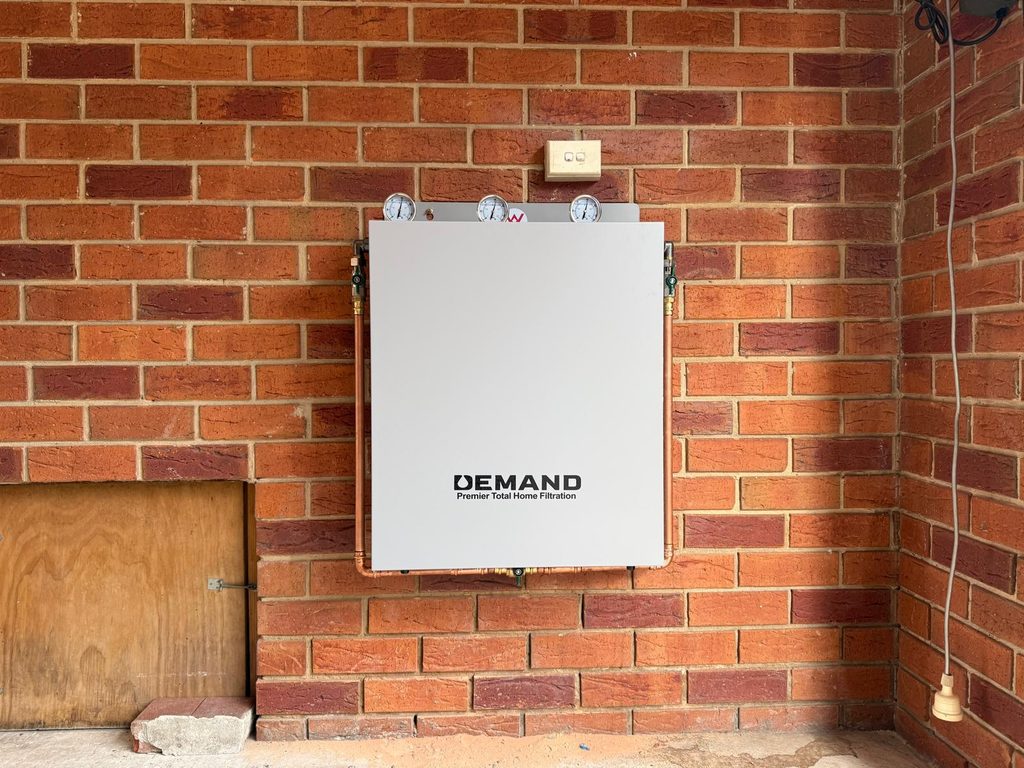
Reverse osmosis is worth considering when a more thorough level of drinking water purification is required than standard carbon filtration provides. Unlike carbon-only systems, reverse osmosis uses a membrane that removes dissolved contaminants, including heavy metals, PFAS, fluoride, and dissolved solids, that activated carbon alone does not reliably remove.
A typical RO system includes sediment and carbon pre-filter stages before the membrane, allowing each stage to serve a distinct purpose rather than placing the entire treatment burden on a single cartridge.
The practical considerations for reverse osmosis include higher installation complexity, more components to maintain, membrane replacement every 2–3 years in addition to regular cartridge changes, and a small amount of wastewater produced during filtration. These factors make professional installation and ongoing maintenance planning important for homeowners considering RO systems.
Reverse osmosis should be considered a targeted solution for specific water quality needs, particularly where water testing has identified dissolved contaminants, rather than a default recommendation for all households.
How Water Filter Maintenance Affects Performance
A filtration system’s long-term performance is determined as much by maintenance as by the system’s quality. Filter cartridges gradually accumulate the contaminants they capture, becoming less effective as they approach capacity.
One of the most common mistakes homeowners make is waiting until they notice a change in the water’s taste or quality before replacing the cartridge. By that point, the filter has typically been operating beyond its effective service life, and filtration performance has already declined.
Following the manufacturer’s recommended replacement schedule, adjusted for your household’s actual daily water consumption, is the most reliable approach. A household using significantly more water than the manufacturer’s average assumption may need to replace cartridges more frequently than the stated interval.
Regular maintenance is also a practical opportunity to inspect connections, tubing, fittings, and housing for any signs of wear or leaks that could affect system performance.
What Makes a Filter Suitable for Melbourne Homes?
For most homes in Melbourne’s western suburbs, the primary goal is to improve taste and reduce chlorine. In these cases, a well-chosen activated carbon filter with appropriate NSF/ANSI 42 certification is sufficient and cost-effective.
Households with more specific concerns such as dissolved contaminants, lead from older plumbing, PFAS near industrial areas, or microbiological risk from a private water supply require a more targeted solution matched to those specific issues.
More filtration stages do not automatically mean better results. Each stage of a multi-stage system should serve a distinct purpose matched to your actual water quality. A system with five stages treating a concern that requires only two is neither more effective nor better value; it simply costs more to purchase and maintain.
Demand Filtration’s Approach to Local Filtration
Demand Filtration’s approach to helping Western Melbourne homeowners is built around understanding each household’s specific filtration needs rather than recommending a standard system to every customer.
For customers comparing water filters in Melbourne’s western suburbs, the consultation process covers the property layout, daily water consumption, available installation points, ongoing maintenance preferences, and the specific water quality concerns the homeowner wants to address. This process ensures that the recommended system is genuinely suited to the home, whether that is a straightforward under-sink carbon filter for a compact apartment or a multi-stage whole-house system for a larger, older property.
This individualized approach is particularly relevant in Melbourne’s western suburbs, where property types vary significantly from heritage homes with aging plumbing in inner-west suburbs like Footscray and Brunswick to newer builds in outer growth corridors like Melton and Sunbury, each presenting different practical and water quality considerations.
Serving Western Melbourne and Nearby Areas
Demand Filtration provides water filtration installation and ongoing support across Melbourne’s western suburbs and surrounding regions.
Primary service areas include Altona, Footscray, Essendon, Airport West, Broadmeadows, Fawkner, Pascoe Vale, Brunswick, Coburg, Coburg North, Preston, Heidelberg Heights, Bundoora, and Roxburgh Park. Service extends to Bacchus Marsh, Box Hill, Brighton, Plenty, and Geelong.
The diverse range of property types, ages, and water quality conditions across these areas reinforces the importance of property-specific recommendations over suburb-level generalizations. Contact Demand Filtration directly to confirm availability for your specific location.
Frequently Asked Questions
Is Melbourne’s western suburbs water safe to drink without a filter?
Yes. Water supplied through Melbourne’s municipal network meets Australian Drinking Water Guidelines and is safe to drink. Filtration is a choice made for quality-of-life improvements, primarily taste, odor, and chlorine reduction, rather than a health necessity for most western Melbourne households.
Do I need a whole-house system or just an under-sink filter?
This depends on where the water quality concern occurs. If your primary goal is better drinking and cooking water, an under-sink system is usually sufficient and more cost-effective. If the concerns are a chlorine smell in showers, sediment in appliances, or scale throughout the house, a whole-house system addresses the problem more comprehensively.
How do I know if I need reverse osmosis?
Reverse osmosis is most appropriate when water testing has identified dissolved contaminants beyond chlorine, such as lead, PFAS, heavy metals, fluoride, or high dissolved solids. For households where taste and chlorine reduction are the only goals, a quality carbon filter is usually sufficient and significantly simpler to maintain.
How often do water filters need replacing in Melbourne?
Most under-sink carbon filters require cartridge replacement every 6–12 months. Whole-house system cartridges typically last 6–12 months depending on usage and local water quality. Reverse osmosis membranes generally last 2–3 years. Demand Filtration provides a clear, property-specific maintenance schedule with every system it installs.
Final Thoughts
Selecting the right water filtration system for Melbourne’s western suburbs requires matching the solution to the actual concern, not simply choosing the system with the most stages, the lowest price, or the most prominent marketing. Understanding your property’s water quality, your household’s daily usage, and what you genuinely want filtration to achieve leads to a more confident decision and better long-term satisfaction.
Whether the answer is a compact under-sink carbon filter, a whole-house system, or a reverse osmosis unit for comprehensive drinking water purification, the right system performs reliably, is practical to maintain, and fits your home’s specific conditions.
Demand Filtration helps Western Melbourne homeowners work through this process with clear, practical guidance, ensuring the chosen system is right for the property rather than based solely on price or assumptions.