_edited_9.png)
Table of Contents
INTRODUCTION:
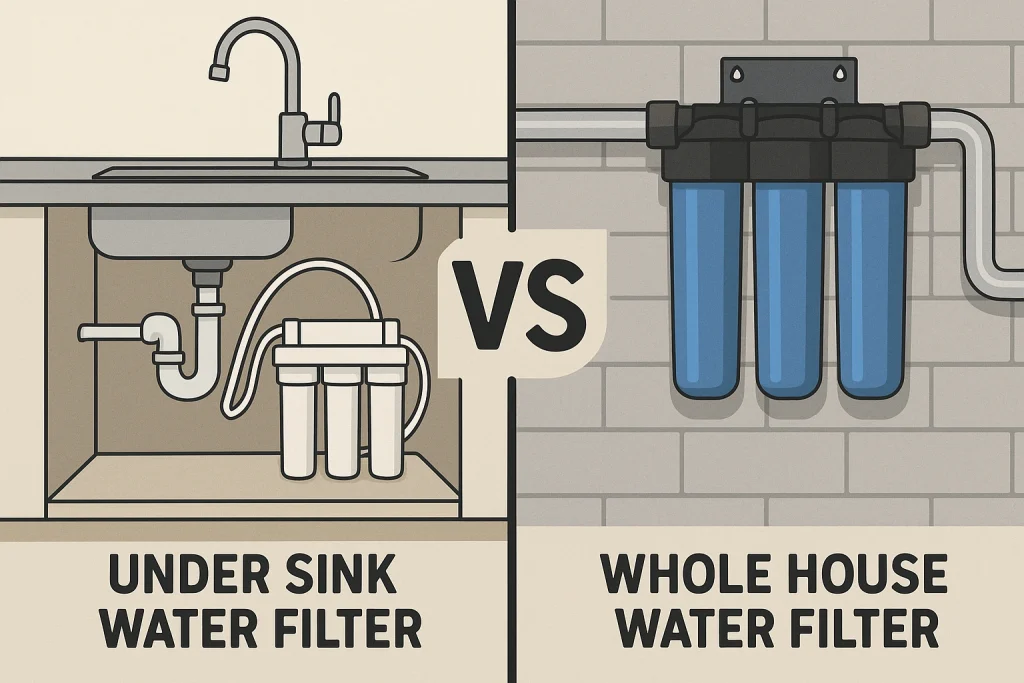
On this blog, we compare a whole-house filter and an under-sink filter and help you decide which is the best choice for you. As for filtering the water you drink and use every day, the decision between a whole-house filter and an under-sink system can make all the difference. Both have genuine advantages, and the right choice depends on your household size, budget, water quality concerns, and whether you want filtered water at one tap or throughout your entire home.
This guide covers everything you need to know about both systems, how they work, their advantages and limitations, and which one makes the most sense for your home, budget, and water quality needs. By the end, you will have all the information you need to make the best decision for you, your home, family, and lifestyle.
What Is a Whole House Filter?
A whole-house water filter is a filtration system that treats water at its point of entry into your home. It filters all water entering your home, so every tap, every clothes washer, and every shower gets filtered water. This is one of the filtration systems that ensures clean water throughout the house, eliminating contaminants such as chlorine, sediment, lead, and bacteria.
Whole-house filters are perfect for homes that need pure water, but they do more than give your drinking and cooking water the benefits of clean water. They also make sure the rest of your water system is protected and works to improve the overall water quality of your household.
Types of Whole House Filters
- Sediment Filters: Eliminate visible particles such as sand, dirt, and rust.
- Activated Carbon Filters: These filters work by eliminating chlorine and organic chemicals and improving the water taste and odor.
- Reverse Osmosis Systems: Generally employed in some larger whole-house systems to filter out heavy metals, salts, and other impurities.
- UV Filters: UV filters are ideal for removing harmful microorganisms, such as bacteria and viruses, from homes with well water.
Pros of a Whole House Filter
- Comprehensive Filtration: The whole-house water filter system filters water at every faucet in your home, from the kitchen to the bathroom to the toilet.
- Protects Appliances: These filters help preserve and extend the life of appliances such as washing machines, water heaters, and dishwashers.
- Convenience: A single system treats all water entering the home, eliminating the need for multiple individual filters at different points throughout the property.
- Cleaner Water: They filter out many pollutants for cleaner water on all fronts.
Cons of a Whole House Filter
- Costlier at the beginning: They are more expensive to buy and set up initially than under-sink filters.
- Need Space: They tend to take up a lot of space when installed, usually near your water main.
- Ongoing Maintenance: The filter will need regular replacement, and you might need professional help to maintain it, which can increase costs over time.
What Is an Under-Sink Filter?
An under-sink filter is a small filtration system installed under your kitchen sink, typically attached to the faucet you use for drinking and cooking. Compared with whole-house filters, these under-sink drinking water filters target one or more common problems in drinking water, including taste, odor, and chemicals. Sometimes, these filters cost less and are easy to install and space-saving, perfect for renters or smaller homes.
Types of Under-Sink Filters
- Carbon Filters: The most common under-sink filter is an activated carbon filter. They work well against chlorine, bad smells, and other volatile organic compounds (VOCs).
- Reverse Osmosis Systems: Used for advanced filtration needs such as removing heavy metal ions, salts, and certain dissolved solids from water.
- UV Filters: These filters can eliminate bacteria, viruses, and other microorganisms, primarily in areas where water quality may be questionable.
Pros of an Under-Sink Filter
- Targeted Purification: Under-sink systems deliver high-level filtration at the point of use, providing consistently clean water specifically for drinking and cooking, the two most important daily water uses from a health perspective.
- Space-Saving: The system sits entirely out of sight beneath the sink, keeping your kitchen bench clear and uncluttered.
- Cost-Effective: Under-sink filters are significantly less expensive to purchase, install, and maintain than whole-house systems, making them a practical choice for households with tighter budgets.
- Simple Installation: Most under-sink filters are designed for straightforward DIY installation, with push-fit connections that require no specialist plumbing skills. This eliminates professional installation costs for most models.
Cons of an Under-Sink Filter
- Small Coverage: This filter will only clean water from the faucet it is attached to. Other water sources, such as showers and washing machines, will not have filtered water.
- Maintenance: Needs continuous filter replacements, which can add up over time, especially for advanced filtration methods such as reverse osmosis.
- Space Requirements: A few under-sink filter units can be space-hungry, so make sure you have enough room to install the system.
Whole House Filter vs Under Sink Filter: Key Differences
Now that you understand the basics of both filtration systems, let’s compare them side by side to highlight their key differences and help you decide which is the best option for your home.
Feature Whole House Filter Under Sink Filter
Coverage Area Filters all water entering your home, including drinking, bathing, and cleaning water. Filters only the water at the sink, where it’s installed under
Cost: Higher upfront and maintenance costs; more affordable and cost-effective in the long run.
Installation: Requires installation near the water main, which may require a professional. It can be installed by most homeowners, but may require plumbing skills.
Space Requirements: Requires a larger space for installation. Compact and space-efficient, it fits easily under the sink.
Maintenance Compact and space-efficient, it fits easily under the sink. Easier to maintain, with fewer components to worry about
Water Quality Improvement provides comprehensive purification for the entire household. It focuses primarily on improving the quality of drinking and cooking water.
Ideal For Larger households, people who need clean water for all purposes, Smaller households, renters, or those with limited space
Which System Is Better for Your Home?
Factors to Consider for a Whole-House vs. Under-Sink Filter: There are several factors to consider when deciding between whole-house and under-sink filters. Here’s what you should consider:
Water Usage and Needs
- Whole House Filter: Ideal for families living in large homes with multiple bathrooms and those who want to use purified water for all household tasks.
- Under-Sink Filter: Perfect for someone who does not want to pay extra for water used in showering or running the dishwasher, for example. It’s a wonderful option for smaller homes or apartments.
Budget
- Whole House Filter: Although they have high upfront costs and high maintenance costs, these filters are an investment in both long-term water quality and the longevity of your appliances.
- Under-the-counter filter: It’s less expensive to install and maintain, making it ideal for households seeking a budget-friendly solution.
To put the cost difference in perspective, a quality under-sink carbon filter typically costs $150–$600 upfront, plus $80–$180 per year for cartridge replacements, totaling approximately $550–$1,500 over five years. A whole-house system requires a higher upfront investment of $600–$2,500 for installation, with annual maintenance of $150–$350, totaling $1,350–$4,250 over five years. For large households where whole-home protection significantly extends appliance lifespans, the additional investment often pays for itself in reduced repair and replacement costs over time.
Space Considerations
- Whole House Filter: Installation requires more space, typically in utility rooms or near the water main.
- Under-Sink Filter: Ideal for those with limited space or renters who cannot modify plumbing.
For renters specifically, an under-sink filter is almost always the better option. Most under-sink systems require only minor plumbing modifications; some models use push-fit connections with no permanent changes at all. Whole-house systems connect to the main water supply line, which in Australia requires landlord approval and a licensed plumber. If you are renting and want whole-home improvement, a shower filter combined with an under-sink drinking water filter covers the two most important points of use without requiring any permanent installation.
Additional Considerations for Australian Households
Australia has highly variable water quality, so selecting the right water filter has never been more important. Your water situation and the types of contaminants you are dealing with may vary by location, so knowing this in advance will make it easier to decide which system is best for you.
Water Quality Across Australia
- Hard Water: Hard water is most common in Perth, Adelaide, and many regional areas of Australia, where higher levels of calcium and magnesium cause scale buildup in pipes, appliances, and fixtures. If you live in one of these areas, a whole-house filtration system combined with a water softener is the most effective solution.
Melbourne and Sydney: Both cities benefit from soft, low-mineral water sourced from protected mountain catchments. The primary concern for households in these cities is chlorine taste and odor, which an activated carbon under-sink filter or whole-house system addresses effectively. Older inner-suburb homes in both cities may also face lead risk from pre-1970 plumbing.
Perth and Western Australia: Perth has some of the hardest water in Australia, with mineral content high enough to cause noticeable scale on appliances and fixtures. A whole-house system that combines carbon filtration with a water softener is strongly recommended for Perth households.
- Adelaide: Sourced partly from the River Murray, Adelaide’s water is known for a stronger chlorine taste, particularly in summer. Both under-sink carbon filters and whole-house systems deliver noticeable improvement for Adelaide residents.
- Chlorine and Chemicals: Most cities in Australia have chlorinated water. If this is a concern of yours, consider whole-house and under-sink water filters with activated carbon.
- Rural and Well Water: If you are in a rural area and have well water, a complete home filtration solution, including UV filtration, can ensure the water is free of harmful bacteria.
The Environmental Impact: Whole House vs. Under-Sink Filter
The environmental impact can be the deciding factor when selecting a water filtration system. Whole-house and under-sink filters can play an important role in reducing reliance on bottled water, which is detrimental to the environment largely due to plastic waste.
Whole House Filter
- A complete home water filter system eliminates the need for bottled water by providing clean water from every tap.
- It can decrease the quantity of water wasted by remaining in ineffective filtration systems.
Under Sink Filter
- Though it is only a drinking water filter, it is environmentally friendly by reducing reliance on bottled water.
- Some under-sink systems, particularly reverse osmosis units, do produce a small amount of wastewater during filtration, though modern systems have improved significantly in water efficiency compared to older models.
Summary: Whole House Filter vs Under Sink Filter
If you’re choosing between a whole-house filter and an under-sink filter, consider what your home needs. If you have a large family or want pure water from every faucet in your house, you should definitely opt for a whole-house filter. It provides complete filtration so your plumbing and appliances are protected and safe, and clean water flows throughout your home.
But if your main purpose is to improve the quality of the drinking water and you have space or budget constraints, an under-sink filter will be more than sufficient. It’s an affordable and convenient way to get better-tasting water where you need it most.
Ultimately, both systems have their advantages, and it comes down to your water consumption, available space, budget, and filtration quality needs.
With knowledge of your home’s specific water needs, you can make the best decision for your family and peace of mind, providing safe, clean water for years to come.