
Table of Contents
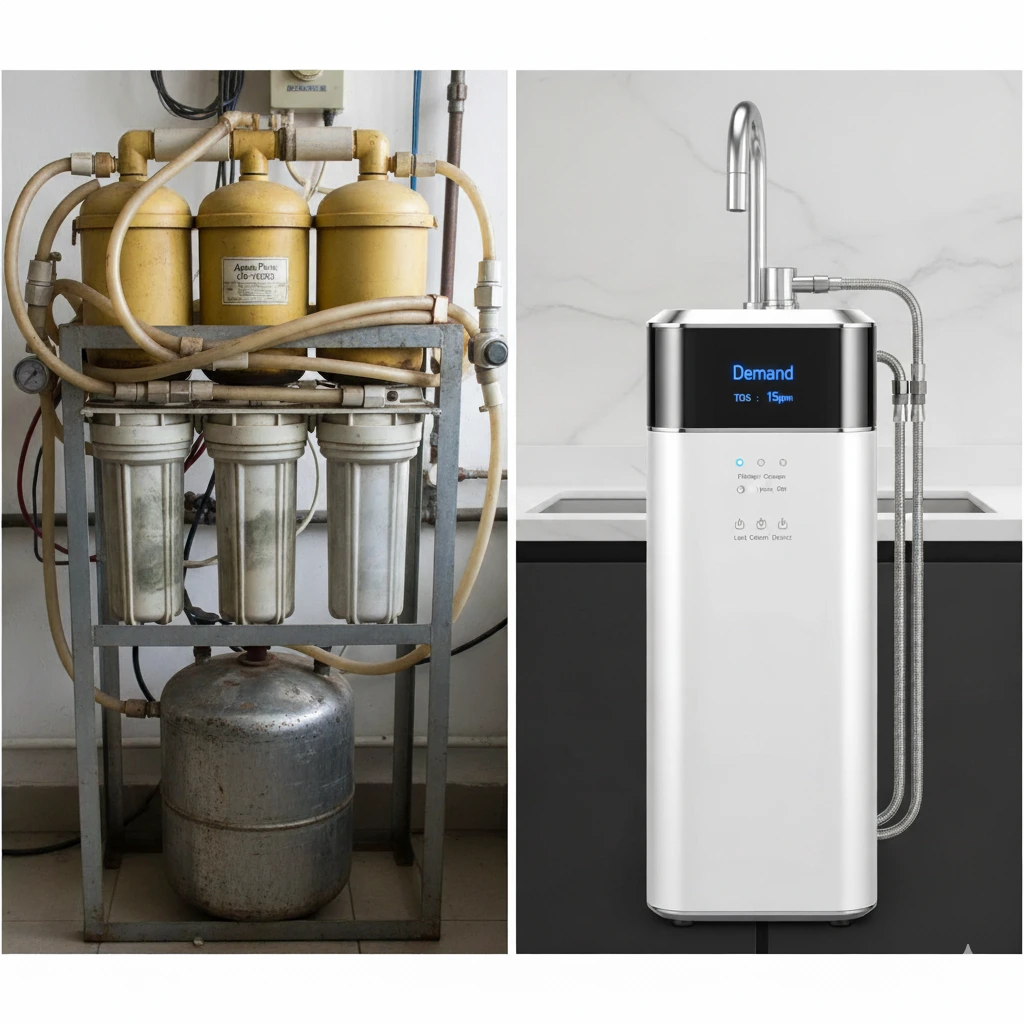
How Reverse Osmosis Technology Has Evolved: From Industrial Use to Home Kitchens
This blog post looks at the evolution of reverse osmosis technology, from its origins in large-scale industry to an established water purification option in modern Australian homes. Safe drinking water is more than a convenience; it is vital to our health and well-being. For decades, Australians have raised concerns about water quality, whether from aging urban pipelines, agricultural runoff, or industrial pollution. These ongoing concerns have driven acceptance of reverse osmosis as a trusted and reliable method for improving water quality.
By reviewing the history, scientific basis, industrial use, and eventual adaptation for domestic use, we can understand its importance, from desalination plants supporting water supplies in drought-affected areas to compact under-sink units in modern kitchens. Today, reverse osmosis continues to evolve, offering Australian families a practical way to access clean, safe, and good-tasting drinking water.
The Origins of Reverse Osmosis Technology
The origins of reverse osmosis date to the mid-twentieth century, when the world began to take water scarcity seriously. Scientists established that forcing water through a semi-permeable membrane could selectively separate dissolved salts and other impurities from the water. This discovery was recognized as a promising and efficient method for desalinating seawater.
In its early years, reverse osmosis technology was not designed for home use. Its development was driven largely by government-funded desalination research and by the need for reliable freshwater in remote or water-scarce settings, including military and naval operations. The ability to convert seawater or brackish water into fresh drinking water was valuable for survival, agriculture, and long-term settlement in areas without dependable freshwater sources.
As the driest inhabited continent, Australia recognized the potential of the technology early. With recurring droughts and inconsistent rainfall, governments increasingly invested in desalination, and reverse osmosis became a way to secure freshwater supplies for coastal cities. Major plants were built in Perth, Sydney, Adelaide, and Melbourne during the 2000s and 2010s, and they continue to supply drinking water to millions of Australians.
Industrial Applications and Early Advancements
The earliest industrial uses of reverse osmosis were in sectors that required extremely pure water for sensitive processes, including pharmaceuticals, electronics, and energy. A pharmaceutical manufacturer, for example, could compromise the effectiveness of medicines through even trace impurities, and an electronics manufacturer could damage microchips by cleaning them with water containing unwanted contaminants.
During the 1970s and 1980s, industries around the world, including in Australia, invested in reverse osmosis plants. Power stations used it for boiler and cooling water, breweries and beverage manufacturers used it for production water, and laboratories used it for research. This broad industrial uptake pushed scientists and engineers to keep improving RO systems.
Significant developments that improved efficiency during the later decades of the twentieth century included:
- Improved membrane materials that increased efficiency and durability.
- Energy recovery systems that reduced the total power consumption of RO plants.
- Modular plant designs that allowed systems to be scaled up or down according to industrial needs.
Australian industries benefited particularly because they needed reliable water purification systems in locations with low-quality groundwater, such as mining regions. As the technology was refined, it became more efficient and more affordable, and the experience gained from larger industrial systems helped pave the way for household units.
The Shift Towards Household Use
Reverse osmosis was initially seen as too expensive, bulky, and complex for general home use. Through the 1990s and early 2000s, however, consumers grew more concerned about drinking water safety and more interested in water filtration and reverse osmosis solutions. In Australia, growing public concern about fluoride, chlorine by-products, heavy metals, and agricultural chemicals led many families to look for alternatives to untreated tap water.
Households initially turned to bottled water and basic carbon filters. Both had limitations: bottled water is costly and creates environmental waste, while simple carbon filters do not generally remove dissolved salts, heavy metals, or fluoride. Reverse osmosis emerged as a natural solution for safer drinking water.
The first household RO units were large, required professional installation, and relied on large storage tanks. Filters needed regular replacement, and the systems worked best in homes with high water pressure. Even so, early adopters in Australia saw the health and safety potential, particularly families outside major cities with poor water quality and families in older suburbs concerned about water travelling through ageing pipes.
By the early 2000s, household systems had become smaller, more affordable, and easier to use. Under-sink systems grew in popularity, giving families a ready supply of purified water for drinking, cooking, and making tea or coffee. This shift brought industrial-level purification into family kitchens.
How Reverse Osmosis Technology Works in Modern Homes
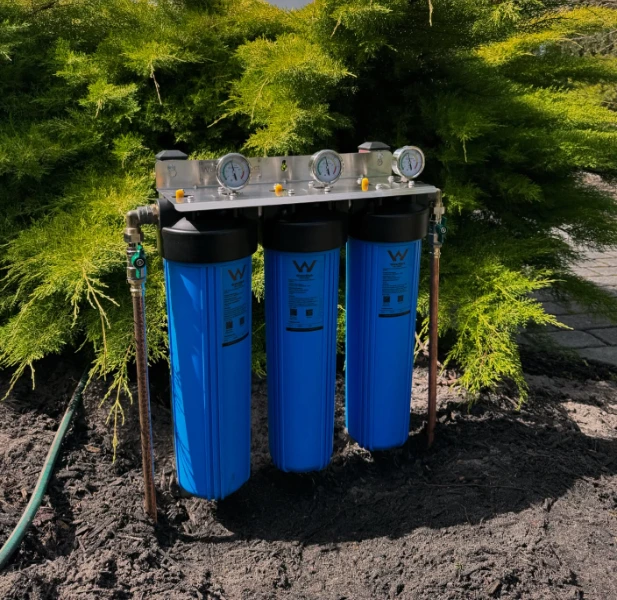
Understanding how reverse osmosis works at home makes it easier to see how it differs from simpler filtration. Modern household units use several stages, each with its own role:
1. Pre-filtration stage:
- Removes sediment, dust, sand, and rust.
- Protects the delicate RO membrane from clogging or damage.
2. Carbon filtration stage:
- Reduces chlorine, chloramine (with suitable carbon media), pesticides, and many common industrial solvents.
- Improves the taste and odor of the water before it reaches the RO membrane.
3. Reverse osmosis membrane stage:
- This is the core of the whole system.
- The membrane blocks the majority of dissolved salts and can reduce fluoride, arsenic, nitrates, lead, mercury, and many other microscopic contaminants.
- Depending on the membrane and the system’s independent certification, RO can reduce a high proportion of dissolved contaminants.
4. Post-filtration or polishing stage:
- Provides a final polish to improve taste.
- Helps ensure the water is fresh, clean, and ready to drink.
5. Mineral filter (optional):
- Adds back minerals such as calcium and magnesium.
- Improves the taste of the water and can help balance pH.
Today’s household systems offer benefits beyond safe drinking water. They also supply better water for cooking and can help reduce scale buildup in kettles and coffee machines. For families, they provide confidence that their drinking water has been treated to reduce a wide range of contaminants.
Technological Innovations and Modern Advancements
Reverse osmosis technology has advanced significantly since the early industrial period. Improved design and efficiency have made reverse osmosis systems more sustainable and practical for both homes and commercial use.
Some important modern advancements are
- Tankless RO systems that deliver purified water on demand and save valuable cabinet space.
- Low-waste membranes and improved system designs that use considerably less water than earlier models.
- Smart digital indicators that track filter life, water quality, and system status.
- Compact designs suitable for under-sink or countertop installation, and in some cases integration with other appliances.
- Multi-stage systems that combine RO with UV purification and/or remineralization.
These advancements are particularly relevant in Australia, where water scarcity is a recurring concern. Households can access purified water while being more mindful of the water used in producing it, and compact designs mean even small apartments in Sydney and Melbourne can accommodate a system.
Why Reverse Osmosis Technology Matters for Australian Households
Australia faces a range of environmental challenges that highlight the value of reverse osmosis for household water purification. Drought, aging water infrastructure, agricultural runoff, and industrial waste all pose varying levels of risk to water quality. Even in urban areas where municipal water is treated and safe to drink, concerns about disinfection by-products, fluoride, or microplastics lead some Australians to seek additional treatment.
Reverse osmosis offers families a number of benefits, including:
Health benefits: Reduces heavy metals and other chemical contaminants linked to long-term health concerns.
Taste benefits: Reduces unpleasant tastes and smells associated with chlorine or algae.
Cost-saving benefits: Removes the need to buy bottled water, which can mean savings of hundreds of dollars a year for households that buy it regularly.
Environmental benefits: Reduces household plastic waste by eliminating the need for bottled water.
Reverse osmosis technology also provides additional benefit to rural Australians who often rely on borewater or untreated surface water by reducing exposure to dissolved contaminants that standard filters do not remove. Water from these sources may also need microbiological treatment such as UV. For households with young children, older residents, or members with weakened immune systems, reducing exposure to contaminants is particularly valuable.
Environmental Impact of Reverse Osmosis Technology
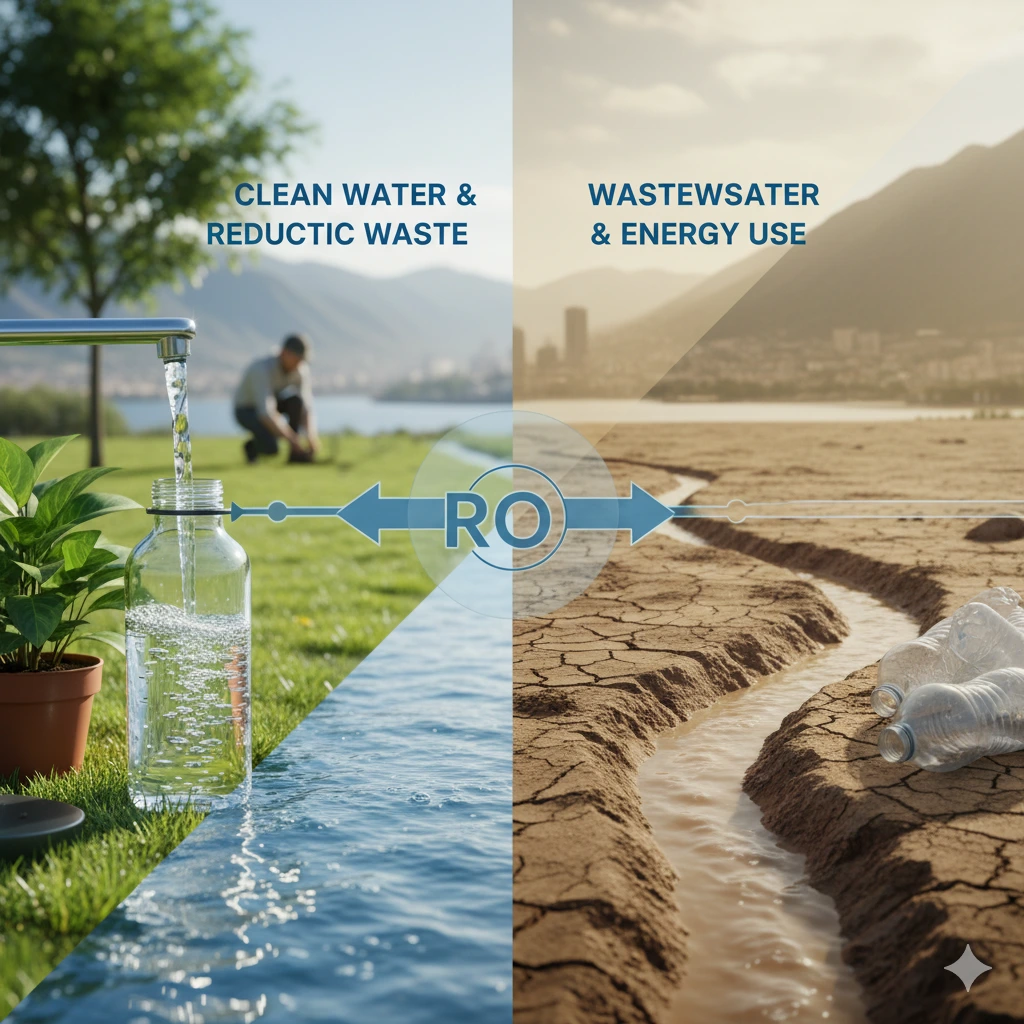
Australia has a strong commitment to sustainability, especially when it comes to the impact of bottled water and plastic waste. By choosing reverse osmosis, households help the environment in several ways:
- Less use of single-use plastic water bottles.
- Lower transport-related emissions associated with bottled water.
- Encouraging more sustainable drinking water habits at home.
Some argue that reverse osmosis systems waste water during filtration, and it is true that some systems do. However, modern high-efficiency designs have improved considerably, and when the avoided plastic waste and transport emissions of bottled water are taken into account, household RO is often the more environmentally favourable choice. Comparing the water recovery rate between models before purchasing is worthwhile.
Public Awareness and Growing Adoption in Australia
Over the last ten years, public awareness of water quality issues in Australia has grown significantly. From news coverage of lead in drinking water to growing awareness of PFAS (so-called “forever chemicals”), families are becoming more proactive about water safety.
Government resources, environmental groups, and health professionals have drawn attention to the potential risks of contaminants and the role of advanced filtration. Interest in filtration has been building for years, and growing demand for RO systems in homes, offices, and schools across Australia reflects that trend.
The Future of Reverse Osmosis Technology
The development of reverse osmosis systems is not yet complete. Over the coming years, the focus is likely to be on making systems more sustainable, more efficient, and more compatible with smart home technology.
Potential trends include:
- AI-driven monitoring that could flag maintenance needs automatically and help maintain optimal performance.
- Nanotechnology-based membranes that may filter water more quickly and use less energy.
- Renewable-powered systems for large-scale desalination in drought-prone areas of Australia.
- More affordable portable RO systems for camping, travel, and emergency situations.
For Australia, this points to greater resilience in water emergencies. As climate change continues to increase drought pressure, reverse osmosis systems are likely to play an even greater role in supporting reliable and safe water supplies for generations to come.
Conclusion
The journey of reverse osmosis from industrial breakthrough to household essential has involved decades of scientific advancement and refinement. What began as a process used in large facilities for seawater desalination is now available as compact, affordable under-sink systems in thousands of homes across Australia.
A certified reverse osmosis system can reduce a wide range of contaminants, improve water taste, and provide peace of mind, making it one of the most comprehensive household water purification options available. For the average Australian, the technology represents more than convenience; it represents health, safety, and sustainability. As it continues to adapt, reverse osmosis will keep playing a part in modern living and in making every glass of water as clean and safe as it should be.