
Table of Contents
Introduction
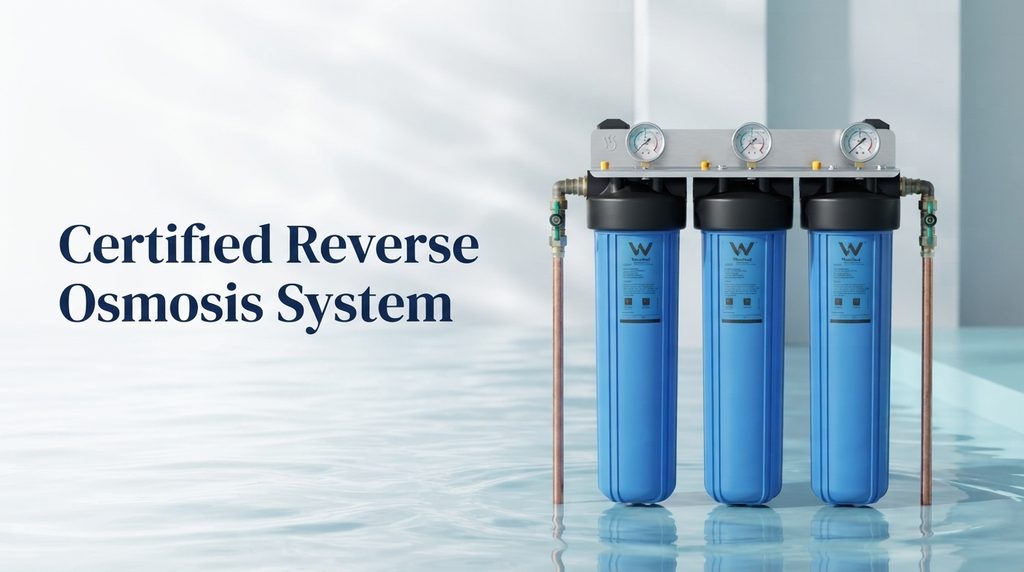
Clean drinking water matters to every household, and many homeowners want more control over the water they use for drinking and cooking. Certified reverse osmosis systems add an extra level of water treatment through multi-stage filtration that can reduce certain contaminants to verified performance levels.
For Melbourne and Victoria residents, choosing the right water filter involves more than comparing installation costs and brand names. Certification standards, filtration performance, maintenance requirements, and professional installation all play a role in finding the right solution. This guide explains how certified reverse osmosis systems work, what certification means, and what to consider before buying.
What Is a Certified Reverse Osmosis System?
A certified reverse osmosis system is a water filtration unit that a recognized certification organization has independently assessed against specific performance and safety requirements. Certification does not mean that a system will remove every possible contaminant from water. Homeowners should identify exactly which contaminants were tested and verified for their chosen model rather than assuming that certification is a blanket guarantee.
In reverse osmosis filtration, water passes through a semi-permeable membrane that blocks most dissolved contaminants while allowing water molecules to pass through. Before reaching the membrane, water typically passes through pre-filters designed to remove sediment, chlorine, and other particles that could reduce the membrane’s effectiveness over time.
NSF/ANSI 58 is a key certification standard for reverse osmosis drinking water systems. It covers material safety, structural integrity, TDS reduction, system efficiency, water recovery, and verified contaminant-reduction performance. Always verify that the certification applies to your specific model, and check which contaminants it has been tested to reduce so homeowners can assess its effectiveness for their needs.
At Demand Filtration, we provide clear, expert guidance to help homeowners understand what filtration systems can realistically achieve, reduce confusion, and build confidence in their choice.
How Reverse Osmosis Filtration Works
Reverse osmosis systems consist of multiple filtration stages, each performing a distinct function. The exact configuration varies between models, but most household systems include a sediment pre-filter, one or more carbon filters, the RO membrane itself, and a post-filtration stage.
The sediment filter captures physical particles such as dirt, rust, and sand. Carbon filters reduce chlorine and improve the taste and odor of the water entering the membrane. The reverse osmosis membrane then performs the core filtration work, removing dissolved substances depending on its design and the contaminants it has been certified to reduce.
An important consideration for Australian households is chloramine, which some water authorities use as a secondary disinfectant instead of, or in addition to, free chlorine. Standard carbon filter performance against chlorine does not automatically translate to the same performance against chloramine. Catalytic carbon is required for effective chloramine reduction. Homeowners should confirm whether their chosen pre-filter has a verified chloramine-reduction claim before assuming standard carbon filtration is sufficient.
After filtration, treated water is typically stored in a tank and dispensed through a dedicated tap. Reverse osmosis systems produce some wastewater during filtration; the amount varies considerably between models, and you should consider this when selecting a system.
A notable characteristic of reverse osmosis is its ability to reduce dissolved minerals and salts, lowering total dissolved solids (TDS). This benefits households seeking highly treated drinking water, but it also reduces some naturally occurring beneficial minerals alongside unwanted dissolved substances. Systems that include a remineralization stage can add selected minerals back into the water after RO treatment, which many users prefer for taste and nutritional reasons.
Demand filtration can help clients understand the filtration stages involved in different systems and choose the model best suited to their household’s needs.
Learn More about Reverse Osmosis Working Mechanism: Click Here.
Why Certification Matters When Choosing an RO System
Many reverse osmosis products make strong performance claims in their marketing material, but not all of those claims are independently verified. Certification provides a more reliable basis for comparison by confirming that a third party tested a system against defined performance standards.
However, a certified product may still not address every contaminant in your water supply. Homeowners should review the certification details, including which contaminants were tested, the reduction levels achieved, and the maintenance needed to sustain those results, to ensure the system meets their specific water quality goals.
Demand Filtration recommends approaching water treatment decisions with verified evidence rather than marketing claims and considering the complete system, including filters, membranes, replacement parts, and ongoing support.
Is Reverse Osmosis Suitable for Melbourne Homes?
Melbourne’s water supply is treated to meet the Australian Drinking Water Guidelines and is generally safe to drink. However, some households prefer additional filtration for reasons including taste, specific contaminant concerns, older plumbing, or greater control over water quality, which can help homeowners feel understood and supported in their choices.
Not every Melbourne home requires a reverse osmosis system. The decision depends on your local water quality, specific filtration goals, property type, and existing plumbing. For many households, an under-sink reverse osmosis system provides treated water specifically for drinking and cooking, which is where most people want the highest quality water, without the complexity and cost of whole-house treatment.
Before installation, homeowners should consider water pressure, available space under the sink, plumbing configuration, and the system’s ongoing maintenance schedule.
Main Benefits of a Certified Reverse Osmosis System
When homeowners select the right system and maintain it properly, reverse osmosis filtration offers several practical benefits.
Improved drinking water quality: Reverse osmosis can reduce certain dissolved compounds and impurities, in line with the verified performance claims of the specific certified model.
Greater control over drinking water: Point-of-use installation means treated water is available at a dedicated kitchen tap, giving households direct control over what they drink and cook with.
Improved taste and odor: Carbon pre-filtration combined with RO membrane Treatment can significantly improve the taste and odor of drinking water by removing chlorine, chloramine, and other compounds that affect flavor.
Reduced reliance on bottled water: A reliable under-sink system can reduce or eliminate the need for bottled water for drinking and cooking purposes.
PFAS reduction on selected certified systems: Some reverse osmosis systems are specifically tested and certified to reduce PFOA and PFOS compounds. This is a model-specific performance claim that should be verified against the system’s certification documentation; it is not a blanket capability of all RO systems. NSF has a separate certification protocol for verifying PFOA and PFOS reduction in household drinking water treatment systems.
A system’s actual performance depends on construction quality, incoming water characteristics, proper installation, and regular filter and membrane replacement on schedule.
What to Check Before Purchasing an RO System
Purchase price alone should not drive the decision when selecting a certified reverse osmosis system. Assess several practical factors first.
Confirm that the system will fit in the available space under the sink, including sufficient room for the filter housing, storage tank, and tubing connections. Check your household’s water pressure, as low incoming pressure can significantly reduce an RO system’s flow rate and filtration efficiency. Understand the replacement schedule for each filter stage and the membrane, and factor those replacement costs into the total cost of ownership.
Wastewater production is another important consideration. Every RO system produces some wastewater during filtration, but the ratio varies by model. A system’s recovery rate, the proportion of incoming water that is converted to filtered water, should be compared between models before purchasing. Demand filtration can help homeowners evaluate these factors to identify the most suitable system for their property and usage.
Certified Reverse Osmosis System vs. Other Water Filtration Options
Melbourne and Victoria homeowners have a range of water filtration options, and comparing them on price alone will likely lead to a system that doesn’t match the household’s actual needs.
Activated carbon filters improve taste, reduce chlorine, and address some organic compounds; they are a practical, affordable solution for households where those are the primary concerns. Whole-house filtration systems treat water at the property entry point, providing filtered water at every tap, shower, and appliance throughout the home. Reverse osmosis systems provide a higher level of filtration for dissolved contaminants at a specific point of use, typically the kitchen, but are not always the most appropriate or cost-effective choice for every situation.
Demand Filtration provides advice on the practical differences between available filtration technologies and helps clients identify the solution that best matches their water quality concerns and household requirements.
Understanding Maintenance and Filter Replacement
A certified reverse osmosis system requires consistent maintenance to sustain its verified performance over time. Like all filtration systems, components gradually lose effectiveness as they reach the end of their service life.
Replace pre-filters and carbon filters according to the manufacturer’s recommended schedule, typically every 6 to 12 months, depending on usage and water quality. The reverse osmosis membrane has a longer service life, generally 2 to 3 years. However, this varies depending on incoming water quality, daily usage volume, water pressure, and the condition of the pre-filters protecting it. Some systems also include a polishing post-filter that requires periodic replacement.
Homeowners should not wait until a noticeable change in water taste or smell occurs before scheduling maintenance. Indicators that servicing is needed include reduced water flow from the filter tap, changes in water quality or taste, unusual sounds from the system, or increased wastewater production. Demand Filtration offers maintenance support to help homeowners keep their systems operating on schedule and at full performance.
The Long-Term Cost of Reverse Osmosis Filtration
The purchase price and installation cost are only the starting point when budgeting for a reverse osmosis system. The total cost of ownership over five or more years includes replacement filter cartridges, membrane replacement, any required plumbing components, and periodic servicing.
Choosing the lowest-priced system may seem cost-effective at first but can lead to higher ongoing costs if replacement cartridges are expensive, need frequent changes, or are hard to source locally. Higher-quality systems often carry lower long-term maintenance costs and more predictable performance over their working life.
Before purchasing, ask the supplier for a clear breakdown of replacement part costs, recommended replacement frequency, warranty terms, and available post-installation technical support. Demand Filtration can help homeowners compare long-term costs between systems rather than focusing on upfront price alone.
Important Limitations of Reverse Osmosis Systems
Reverse osmosis is a highly effective filtration technology, but it is not the right solution for every household or every water quality concern. Understanding its limitations is important for making an informed purchase decision.
Wastewater production: Every reverse osmosis system produces some reject water during filtration. Traditional systems may use about 3–4 litersliters of incoming water to produce 1 liter of filtered water. At the same time, newer high-efficiency models can achieve ratios closer to 2:1 or even 1:1, depending on design and operating conditions. Homeowners concerned about water usage should compare manufacturers’ stated recovery rates between models before purchasing.
Flow rate: The flow of filtered water from an RO tap is typically slower than regular tap water because it depends on storage tank pressure and the rate at which the membrane produces treated water. This is generally adequate for drinking and cooking, but consider it if you regularly need high-volume filtered water.
Space requirements: Under-sink RO systems require space for the filter housing, the storage tank, and associated tubing. Measure the available cabinet space before selecting a specific model.
Point-of-use only: Most residential reverse osmosis systems are designed specifically for drinking and cooking water at a single tap. Households wanting filtered water throughout the property are better served by a whole-house filtration system, either alone or combined with a point-of-use RO unit for higher-purity drinking water.
Choosing the Right RO System for Victorian Homes
The most appropriate certified reverse osmosis system will vary depending on each household’s specific situation. A compact apartment, a family home, and a larger rural property all have different installation constraints, water quality concerns, and daily usage volumes.
The starting point should always be identifying the primary reason for wanting additional filtration, whether that is improved taste, reducing a specific contaminant identified through water testing, providing high-quality water for children, or simply having greater confidence in the household’s drinking water. Choose a system based on verified filtration claims for those specific concerns, not the number of filtration stages or marketing language.
Practical installation factors also need careful consideration. Available cabinet space, existing plumbing configuration, incoming water pressure, drainage connection, and the location of the dedicated filter tap all affect which system is most suitable. Demand Filtration can assess these practical factors and identify the certified RO systems best suited to the specific conditions of a Victorian home.
How Demand Filtration Supports Better Water Treatment Decisions
Choosing a water filtration system is more complicated than it may appear when products carry diverse specifications, varying certification claims, and differing numbers of filtration stages. Demand Filtration helps customers navigate these decisions by focusing on their specific water quality needs and household requirements rather than applying a standard recommendation to every situation.
We provide guidance on available filtration technologies, installation requirements, filter maintenance schedules, and the practical differences between whole-house systems and point-of-use options. Understanding the customer’s actual water quality concern before recommending a system consistently produces better outcomes than selecting on price or stage count alone.
Based in Melbourne and the surrounding area, we can provide qualified local assistance with installation planning and ongoing system management for Victorian homeowners.
Conclusion
A certified reverse osmosis system can be a worthwhile investment for households that want greater control over their drinking water quality. However, the decision requires careful consideration of what certification actually covers, what the system has been independently verified to reduce, what maintenance is required, how much water the system uses, and whether the installation is practical for the property.
The right system isn’t necessarily the most expensive or the one with the most filtration stages; it is the one that genuinely matches the household’s water quality needs and can be maintained consistently over time. Demand Filtration’s team can provide practical, evidence-based guidance to help Victorian homeowners make a confident, well-informed decision about their household water treatment.